
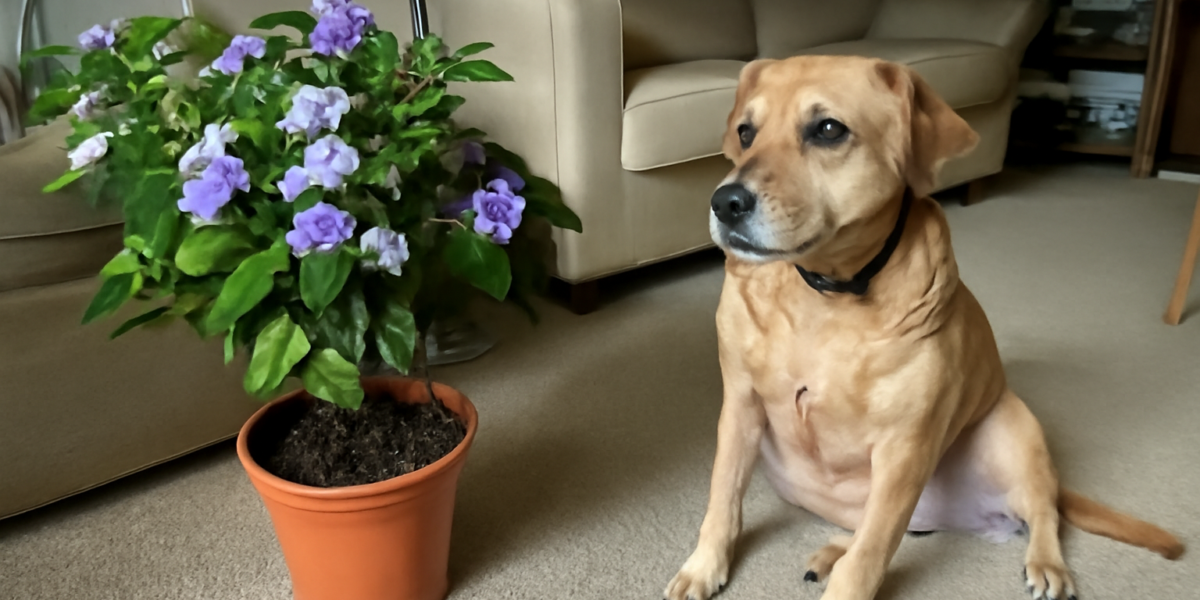
The Short Answer About Brunfelsia
Yes — brunfelsia is severely toxic to pets, especially dogs. Sometimes called yesterday-today-tomorrow plant for its color-changing flowers, brunfelsia (genus Brunfelsia, most commonly Brunfelsia pauciflora) is one of the more dangerous tropical and subtropical ornamentals an owner can have in the yard. Every part of the plant is toxic, and the seeds and berries are particularly concentrated. Dogs are the most commonly affected species — they tend to chew the plant out of curiosity — but cats are also susceptible.
In this article
- The Short Answer About Brunfelsia
- What Brunfelsia Is and Where You Find It
- Why Brunfelsia Is So Dangerous
- Symptoms of Brunfelsia Poisoning
- Why Dogs Are More Often Affected Than Cats
- What to Do If Your Pet Eats Brunfelsia
- What Treatment Looks Like
- Brunfelsia in the Yard — Removal and Prevention
- Brunfelsia and Other Severe-Tier Plants
- Households with Pets and Brunfelsia in the Neighborhood
- Frequently Asked Questions
The severity tier is severe to life-threatening. Brunfelsia contains brunfelsamidine and related neurotoxins that cause seizures, severe muscle tremors, hyperthermia, severe vomiting and diarrhea, and in worst cases respiratory failure. Treat any suspected brunfelsia ingestion the way you would treat oleander, foxglove, or yew exposure: immediate veterinary care is essential, and time-to-treatment matters. This is not a watch-and-see plant.
What Brunfelsia Is and Where You Find It
Brunfelsia is a genus of about 50 evergreen flowering shrubs in the nightshade family (Solanaceae), native to tropical Central and South America and the Caribbean. The most common ornamental species is Brunfelsia pauciflora, marketed under the charming common names yesterday-today-tomorrow plant, kiss-me-quick, morning-noon-and-night, and lady-of-the-night.
The “yesterday-today-tomorrow” nickname comes from the plant’s color-shifting flowers. Each blossom opens deep purple (“yesterday”), fades to lavender (“today”), and then turns white (“tomorrow”) over the course of a few days. A single shrub in bloom carries flowers in all three colors at once, which is part of why the plant is so popular as an ornamental despite its toxicity.
You will see brunfelsia in tropical and subtropical gardens across Florida, Hawaii, southern California, the Caribbean, Australia, Singapore, Malaysia, and parts of South America. It is sold widely in nurseries — often without prominent toxicity labeling. Many owners only discover the danger after a pet emergency.
Why Brunfelsia Is So Dangerous
Brunfelsia contains brunfelsamidine and related neurotoxins, along with a mix of other alkaloids and bitter compounds. The brunfelsamidine is the headline toxin — it acts on the central nervous system to produce seizures and severe tremors. Even relatively small amounts in dogs can produce dramatic neurological effects within hours.
The seeds and berries (small green fruits that follow the flowers) contain the highest concentrations of toxin, but every part of the plant is implicated. Roots, stems, leaves, and flowers all contain enough toxin to cause significant illness. The latex/sap is also irritant on contact with mucous membranes.
Brunfelsia is in the nightshade family, the same group that includes deadly nightshade, jimsonweed, tomato (whose green parts are mildly toxic — see tomato plants and cats), and various ornamental nightshades. Most family members produce some kind of alkaloid toxin, but brunfelsia is at the more severe end of the family spectrum.
Symptoms of Brunfelsia Poisoning
Symptoms typically begin within a few hours of ingestion, though onset can be delayed up to 12 hours in some cases. Early signs include severe vomiting (often with bile, often persistent), profuse diarrhea (sometimes bloody), and abdominal pain. The pet may appear restless, agitated, or unusually anxious.
Neurological signs follow as the toxin reaches the nervous system. These include muscle tremors (initially subtle, progressing to violent shaking), ataxia (wobbly walking, falling over), and seizures. Hyperthermia is a hallmark — the pet’s body temperature rises significantly, sometimes above 105°F (40.5°C), driven by the muscle activity and central nervous system effects.
In severe cases, owners report dramatic presentations: dogs that look like they are having a “rigid extension” seizure, with all four limbs stiff and head extended; profuse drooling; difficulty breathing; and collapse. The hyperthermia is itself dangerous — sustained high body temperature damages organs independent of the toxin’s direct effects.
Why Dogs Are More Often Affected Than Cats
Dogs are the species most commonly seen in brunfelsia emergencies for behavioral reasons. Dogs are more likely to chew unfamiliar plants, more likely to dig up garden beds and ingest roots, and more likely to consume a large quantity of plant material in a single episode. The seeds and berries are especially attractive to dogs because they are bite-sized and have a faintly sweet taste.
Cats are not immune — brunfelsia is toxic to cats by the same mechanism — but cats are less likely to consume a large dose because of their fastidious eating habits and lower interest in unfamiliar plants. Indoor cats with no yard access are essentially safe unless cuttings are brought inside. Outdoor cats may brush against the plant or sample it, but rarely consume large amounts.
Veterinary case reports of brunfelsia poisoning consistently feature dogs as the predominant patient. Singapore vets, Australian vets, Florida vets, and Hawaiian vets all describe the same pattern — a young or food-motivated dog finds the brunfelsia, eats it, and presents in serious condition some hours later. If you have a brunfelsia and a curious dog, this is a real and underappreciated risk.
What to Do If Your Pet Eats Brunfelsia
Treat this as a critical emergency. Call your veterinarian or the nearest emergency clinic immediately — do not wait to see if symptoms develop. The neurological signs can come on suddenly hours after ingestion, and earlier decontamination produces better outcomes. If your regular vet is closed, head to a 24-hour emergency hospital.
While you arrange transport, take a sample of the plant or a clear photograph if you can do so safely. Note the color of the flowers (purple, lavender, and white together is the giveaway for brunfelsia). The plant ID matters because the treatment plan is more aggressive than for many other tropical-plant exposures.
Call ASPCA Animal Poison Control (888-426-4435, fee applies) or Pet Poison Helpline (855-764-7661, fee applies) en route. Both can provide a case number and species-specific guidance to your vet team. Do NOT induce vomiting at home — once neurological signs are developing, induced emesis carries serious aspiration risk. Decontamination decisions belong to the vet.
What Treatment Looks Like
Veterinary treatment for brunfelsia poisoning is intensive. Initial decontamination usually includes induced vomiting (using injectable apomorphine in dogs) and activated charcoal if the pet is alert and stable. If neurological signs are already present, the team may skip induced vomiting and go directly to gastric lavage under sedation.
Supportive care includes IV fluids to combat dehydration and support kidney function, anti-emetic medications, anti-seizure medications (diazepam, midazolam, levetiracetam), and active cooling for hyperthermia. The hyperthermia is itself an emergency — body temperatures above 105°F (40.5°C) require rapid cooling with cool IV fluids, fans, and wet towels.
Hospitalization for 24–72 hours is typical for significant ingestions. Bloodwork monitors kidney and liver function, since the muscle activity from tremors and seizures can cause rhabdomyolysis (muscle breakdown) that stresses the kidneys. Most pets who get prompt aggressive care recover fully; delayed presentations have worse outcomes. Time-to-treatment is everything.
Brunfelsia in the Yard — Removal and Prevention
If you have brunfelsia in a yard a dog can access, the safest move is removal. There is no safe way to keep a chewing dog and a brunfelsia in the same garden — the plant is too dangerous and the seeds and berries are too attractive. Replace the plant with a verified-safe alternative.
If removal is not possible (rented property, neighbor’s plant overhanging your yard, etc.), fence the plant off completely so the dog has zero access. Pick up dropped flowers, fruits, and leaves daily. Wear gloves when pruning — the sap is irritant to humans too. Bag and remove all clippings; never compost where pets can browse.
For visual replacements, several pet-safer purple-flowering options exist. Most lavender species are low-toxicity (see lavender and dogs), and some flowering hibiscus and ixora cultivars produce purple-pink tones. The pet-safe garden plants roundup and the tropical toxic plants Singapore guide offer more substitutions.
Brunfelsia and Other Severe-Tier Plants
If you have a multi-pet household and are auditing your garden for severe-tier toxic plants, brunfelsia belongs in the same category as oleander, yew, foxglove, sago palm, and lily of the valley. Any of these in a pet-accessible yard is a serious accident waiting to happen.
The cardiac glycoside plants (oleander, foxglove, lily of the valley) primarily threaten the heart. The grayanotoxin plants (rhododendrons and azaleas) cause cardiac and neurological signs. Brunfelsia primarily threatens the brain and nervous system. The clinical pictures differ, but all are emergencies, and all warrant the same response: removal, fencing, and pet-aware landscaping.
Cross-reference: if you have any of these plants in your yard, consider redoing the planting plan with pet safety as a priority. Tropical landscape designers can audit a yard and recommend safer alternatives that maintain visual interest and biodiversity.
Households with Pets and Brunfelsia in the Neighborhood
Sometimes the brunfelsia is not yours but a neighbor’s plant overhanging the fence, or growing along a walking route your dog uses. In those cases, the practical advice is leash management. Keep the dog on a short leash near known brunfelsia, and pull them away from the plant before they sniff or chew.
Walking routes through tropical residential neighborhoods often pass dozens of toxic ornamentals, brunfelsia among them. Learning to identify the most dangerous ones — brunfelsia, oleander, sago palm — at a glance is one of the most useful skills for a tropical-living dog owner. The color-shift of brunfelsia flowers (purple, lavender, white together on one bush) is the fastest tell.
For households exploring dog adoption or cat adoption in tropical regions, factor plant safety into the home walk-through. Ask your real estate agent or landlord about garden plants. Many adoptions are followed by quick poisonings because the new pet does not know the yard and the new family has not yet identified the dangers.
Frequently Asked Questions
How quickly do brunfelsia symptoms appear?
Typically within a few hours of ingestion, though onset can be delayed up to 12 hours. Vomiting and GI signs come first, with neurological signs (tremors, seizures, hyperthermia) following. Do not wait for symptoms — call the vet immediately if you suspect ingestion.
Are the berries more toxic than the leaves?
Yes. Seeds and berries contain the highest concentration of toxin and are especially dangerous. They are also bite-sized and attractive to dogs, making them a particular hazard. All parts of the plant are toxic, but the fruit is the worst.
What is the prognosis if my dog ate brunfelsia?
Prognosis depends heavily on how quickly treatment begins. Pets who get to the vet within a few hours of ingestion, before serious neurological signs develop, generally recover fully with intensive care. Pets who present already in seizure or with severe hyperthermia have a worse outlook. Time-to-treatment is critical.
Can I induce vomiting at home with hydrogen peroxide?
No. Modern emergency vet guidance is to call before doing anything. For brunfelsia specifically, by the time you decide to act the pet may be developing neurological signs that make home emesis dangerous (aspiration risk). Decontamination decisions belong to the vet, not the owner.
Should I remove my brunfelsia even if my dog has never chewed plants before?
Yes, if practical. The risk profile is high enough that veterinary toxicologists routinely recommend removal from any yard a dog can access. A “non-chewing” dog may decide to chew once on a hot bored afternoon, and brunfelsia is one of the worst plants to chew once. The peace of mind is worth the cost of replacement.


