
Last updated: May 16, 2026
In this article
- The Direct Answer
- What Shasta Daisy Is
- The ASPCA Position and Severity Tier
- The Chemistry: Pyrethrins and Sesquiterpene Lactones
- Symptoms After Shasta Daisy Ingestion
- What to Do Right Now
- The Chrysanthemum Family Pattern
- Differentiating Shasta Daisy From Look-Alikes
- Garden Strategy for Pet Households
- Cut-Flower and Indoor Considerations
- When to Call the Vet
- Frequently Asked Questions
The Direct Answer
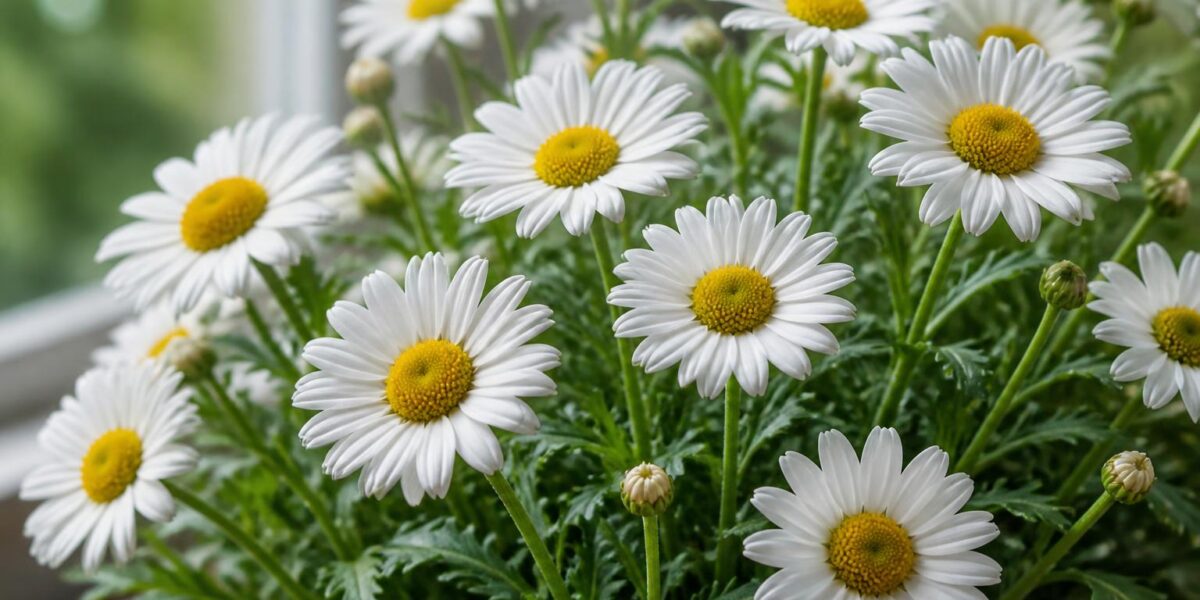
Shasta daisy plants — Leucanthemum × superbum, the classic white-petal-yellow-disc garden daisy that defines summer cottage borders — are toxic to pets. ASPCA lists Leucanthemum on its toxic-plant database for dogs, cats, and horses, and the toxic principles are the same family of sesquiterpene lactones and pyrethrin-related compounds that make true chrysanthemums (Chrysanthemum / Dendranthema) toxic. The clinical reality for typical backyard ingestions is mild-to-moderate gastrointestinal upset, sometimes with skin or oral irritation, occasionally extending to lethargy or mild incoordination at higher doses.
If your dog or cat just ate a Shasta daisy leaf, stem, or flower, the most likely outcome is drooling, vomiting, or soft stool that resolves within a day. Larger ingestions warrant a call to your veterinarian. The plant is not in the severe-tier category like foxglove or oleander, but it is firmly on the toxic side of the ledger and pet-owning gardeners benefit from knowing the chemistry-family connection to chrysanthemums.
What Shasta Daisy Is
The Shasta daisy is Leucanthemum × superbum, a hybrid first developed by horticulturist Luther Burbank in the 1890s near Mount Shasta in California. The classic form has pure white ray petals around a bright yellow flat central disc, blooms in early to mid-summer, and grows in clumps 1-3 feet tall depending on cultivar. Modern cultivars include ‘Becky’ (vigorous tall form), ‘Snowcap’ (compact), ‘Banana Cream’ (yellow-toned), ‘Crazy Daisy’ (fringed petals), and a long list of doubles and frilled forms.
Botanically, Leucanthemum is in the Asteraceae family — the same family as chrysanthemum, Rudbeckia black-eyed Susan, and the safer-on-the-list Echinacea coneflower and Helianthus sunflowers. Family-level placement doesn’t predict toxicity (we cover that genus by genus), but in Leucanthemum’s case the chemistry overlaps significantly with true chrysanthemum, which is why ASPCA’s classification places both on the toxic list. The “Shasta daisy” name refers specifically to this Leucanthemum hybrid; the older botanical name Chrysanthemum maximum is no longer in use, but you may still see “Shasta daisy” listed under Chrysanthemum in older references.
The ASPCA Position and Severity Tier
ASPCA classifies Leucanthemum × superbum as toxic to dogs, cats, and horses. The toxic principles named are sesquiterpene lactones and pyrethrins — the same broad chemistry that flags chrysanthemum. The clinical picture documented by ASPCA includes vomiting, diarrhea, hypersalivation, anorexia, dermatitis (skin irritation on contact), and ataxia (unsteady gait) in larger ingestions. The severity tier is mild-to-moderate: more concerning than a Rudbeckia black-eyed Susan ingestion, less catastrophic than the severe cardiac glycoside plants.
The chrysanthemum-family connection matters because owners who already know to keep their cats away from chrysanthemums or mums often don’t realize Shasta daisies share the same toxic chemistry. The crisis pattern in our pillar pieces on mums and dogs applies to Shasta daisy ingestions at the same severity level.
The Chemistry: Pyrethrins and Sesquiterpene Lactones
Pyrethrins are the natural insecticidal compounds famously concentrated in Tanacetum cinerariifolium (the species used to produce commercial pyrethrum) but present in lower concentrations across many Asteraceae species, including Leucanthemum. Pyrethrins act on insect nerve sodium channels and are the active ingredient in many flea-and-tick products labeled for dogs (cats are dramatically more sensitive to synthetic pyrethroids and should never be exposed to the dog versions of these products).
The natural pyrethrin content of fresh Shasta daisy foliage is much lower than the concentrated insecticide form, which is why we don’t see the dramatic neurological pictures associated with cat exposures to permethrin spot-ons. But the pyrethrin content combined with sesquiterpene lactones is enough to produce GI signs and occasional mild ataxia in significant ingestions. The mechanism is partly direct GI irritation (lactones), partly mild systemic effect (pyrethrin absorption).
Symptoms After Shasta Daisy Ingestion
Watch for symptoms developing within 30 minutes to a few hours after exposure:
- Drooling, lip-smacking, or pawing at the mouth (oral irritation)
- Vomiting — often repeated
- Diarrhea, sometimes mucusy
- Decreased appetite for the next meal or two
- Mild lethargy or hiding behavior (especially in cats)
- Skin redness or itching where plant material contacted
- In larger ingestions: unsteady gait, muscle tremors, or ataxia
What you generally should not see with Shasta daisy alone are seizures, dramatic respiratory changes, or cardiac arrhythmias. Any of those points to a different plant or co-exposure and changes the urgency of the situation. Cats showing neurological signs after a possible plant exposure deserve same-day evaluation regardless of the suspected plant.
What to Do Right Now
If you suspect Shasta daisy ingestion:
- Move your pet away from the plant. Pick up any chewed material so they don’t return to it.
- Rinse their mouth gently with water if they’ll tolerate it, especially if they’re drooling heavily. A damp cloth wipe of the gums is sufficient.
- Note the time of ingestion and the rough amount eaten.
- Do not induce vomiting at home unless directed by a veterinarian. Hydrogen peroxide can cause complications and is not first-line for plant ingestions.
- Watch for the symptoms listed above. Monitor for several hours.
- If vomiting is repeated or doesn’t resolve, if neurological signs develop, or if your pet is small or has underlying conditions, call your veterinarian.
For after-hours or owner reassurance, the ASPCA Animal Poison Control Center at 888-426-4435 (per-call fee) and the Pet Poison Helpline at 855-764-7661 (per-call fee) are 24/7 lines staffed by veterinary toxicologists. Both will tell you whether your specific pet (size, age, health status) and the amount ingested warrant a clinic visit.
The Chrysanthemum Family Pattern
Shasta daisy fits into a pattern of Asteraceae plants that share chrysanthemum-family chemistry. Plants in this group on the ASPCA toxic list include:
- Chrysanthemum / Dendranthema (florist mums, hardy garden mums)
- Leucanthemum × superbum (Shasta daisy)
- Tanacetum (tansy, feverfew, true pyrethrum daisy)
- Rudbeckia (black-eyed Susan) — milder chemistry but on the toxic umbrella
For a household that wants to avoid this whole chemistry family, the practical move is to substitute one of the verified-safe Asteraceae alternatives that don’t share the pyrethrin-lactone chemistry: coneflower (Echinacea), coreopsis tickseed, gaillardia blanket flower, perennial Helianthus, and Liatris blazing star. All deliver similar daisy-form bloom and pollinator value without the chrysanthemum-family chemistry.
Differentiating Shasta Daisy From Look-Alikes
Shasta daisy is the iconic “daisy” form — pure white ray petals around a bright yellow flat disc — and most people recognize it on sight. The closest look-alikes:
- Oxeye daisy (Leucanthemum vulgare) — the wild meadow daisy, smaller and weedier than Shasta but in the same genus, same toxic chemistry
- Painted daisy (Tanacetum coccineum) — pink, red, or white rays with yellow disc; Tanacetum genus, also toxic
- Feverfew (Tanacetum parthenium) — smaller white-rayed daisies with strong scent; Tanacetum, toxic
- Chamomile (Matricaria recutita and Chamaemelum nobile) — small white daisies with yellow center, generally regarded as safe (though some references flag mild GI in pets)
The genus matters more than the bloom appearance. If your white daisy is in the genus Leucanthemum (Shasta daisy or oxeye daisy) or Tanacetum (painted daisy, feverfew, tansy), the toxic chrysanthemum-family chemistry applies. If it’s Echinacea (coneflower), Coreopsis, Gaillardia, or Helianthus, the safe profile applies.
Garden Strategy for Pet Households
Shasta daisy is moderately popular and well-established in many established gardens. The realistic options for a pet household:
- Leave the Shasta daisies and manage exposure: most dogs and cats don’t graze the foliage, and the plant stays in its clump rather than spreading aggressively. If your pet has never touched it in years, the practical risk is low.
- Replace with a safer daisy substitute: coneflower in white-flowered cultivars (‘White Swan’, ‘PowWow White’) gives you a similar visual silhouette without the chrysanthemum chemistry. Anthemis tinctoria (golden marguerite) and Argyranthemum frutescens (Marguerite daisy) are also safe alternatives that resemble the Shasta form.
- Move the planting to a fenced area: if you love your Shasta daisies and your dog tends to graze plants, fence the bed or relocate the clumps to a back-of-yard zone the dog doesn’t access.
For owners deciding from scratch and prioritizing pet safety, simply specify a coneflower or coreopsis instead of Shasta daisy in the design. The bloom timing, structural role, and pollinator value are all comparable.
Cut-Flower and Indoor Considerations
Shasta daisy is a popular cut flower with 5-7 days of vase life. From a pet-safety standpoint, the cut version of Shasta daisy carries the same toxic chemistry as the plant in the ground — a cat who knocks over a vase containing Shasta daisies and chews the stems is exposed to the same compounds. Place vases out of cat reach.
Mixed bouquets that include both Shasta daisy and lily are particularly risky for cats. Lilies are dramatically more dangerous to cats than any of the daisy-family plants, but adding Shasta daisy to the mix doesn’t make a lily-containing bouquet safer — it makes the bouquet hazardous in two different ways. Identify every component of any cut arrangement before placing it within a cat’s reach. Our wider cat-safe planting roster walks through indoor plant alternatives that pair safely with safe outdoor choices.
When to Call the Vet
Most home Shasta daisy ingestions resolve with mild GI signs and don’t require a clinic visit. Call your veterinarian promptly if:
- Your pet ate a large amount of foliage, flowers, or stems
- Vomiting persists for more than 4-6 hours or recurs after fasting
- You see any neurological sign — wobbling, tremor, weakness, ataxia
- Skin contact has produced significant redness, swelling, or itching
- The pet is small, very young, senior, or has underlying health conditions
- You aren’t sure the plant was Shasta daisy and not a more dangerous look-alike
For poisoning calls, your own veterinarian is the right first call. The ASPCA APCC at 888-426-4435 and Pet Poison Helpline at 855-764-7661 are excellent backups that vets themselves consult. Bring the plant material with you to the clinic if at all possible.
Frequently Asked Questions
Are Shasta daisies toxic to dogs?
Yes. Shasta daisies (Leucanthemum × superbum) are listed by the ASPCA as toxic to dogs. The plant contains sesquiterpene lactones and pyrethrin-related compounds in the same chemistry family as chrysanthemums. Symptoms typically include vomiting, drooling, diarrhea, decreased appetite, and mild ataxia in larger ingestions. Most cases are mild-to-moderate severity and resolve with supportive care.
Are Shasta daisies toxic to cats?
Yes, the ASPCA lists Shasta daisies as toxic to cats. Cats are often more clinically affected than dogs by chrysanthemum-family chemistry due to their smaller size and altered metabolism of related compounds. Watch for hiding, drooling, vomiting, and any neurological sign. A cat showing symptoms after Shasta daisy exposure should be seen by a veterinarian.
How is Shasta daisy related to chrysanthemums?
Shasta daisy was historically classified in the genus Chrysanthemum (Chrysanthemum maximum) before being moved to Leucanthemum based on more detailed botanical analysis. The two genera are in the same family (Asteraceae) and share the sesquiterpene lactone and pyrethrin chemistry. Both are on the ASPCA toxic list with similar clinical pictures. Owners who avoid mums for their pets should also avoid Shasta daisies for the same reasons.
What’s the safer alternative if I love the look of a white daisy in my garden?
Coneflower (Echinacea) in white-flowered cultivars like ‘White Swan’ or ‘PowWow White’ gives you a similar visual silhouette without the chrysanthemum chemistry. Other safe daisy-form alternatives include Anthemis tinctoria (golden marguerite, yellow flowers) and Argyranthemum frutescens (Marguerite daisy). All deliver pollinator value comparable to Shasta daisy.
My cat brushed against a Shasta daisy and now has a mild itchy patch. Is this serious?
Mild contact dermatitis from Shasta daisy is documented per ASPCA but typically self-limiting. Rinse the affected area with cool water if your cat will tolerate it, prevent further contact with the plant, and watch for spread or worsening over the next 24 hours. If the irritation worsens, spreads, or your cat is excessively scratching or grooming, call your veterinarian. Persistent dermatitis warrants a clinic visit.


