
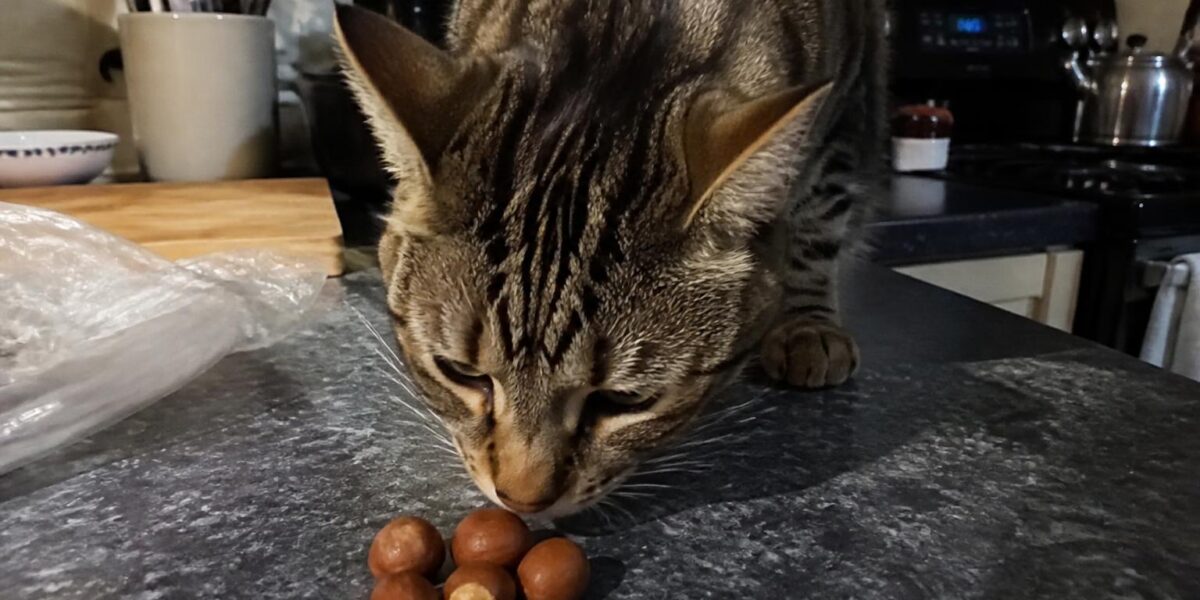
Can Cats Eat Hazelnuts? The Short Answer
Can cats eat hazelnuts? Technically, a hazelnut is not classically toxic to cats the way onions, garlic, or chocolate are, but that does not make it a good idea. Hazelnuts are high in fat, hard to chew, and offer your cat nothing nutritionally, so they are best avoided altogether.
In this article
- Can Cats Eat Hazelnuts? The Short Answer
- Why Hazelnuts Are a Poor Choice for Cats
- Are Flavored or Coated Hazelnuts Dangerous?
- What to Do If Your Cat Eats a Hazelnut
- Other Nuts and Seeds: Where Hazelnuts Fit In
- Better Treats Than Hazelnuts
- Keeping Nuts Out of a Curious Cat’s Reach
- Frequently Asked Questions
A single small crumb of plain hazelnut accidentally dropped on the floor is unlikely to poison a healthy cat. But hazelnuts as a treat or snack fall firmly into the “skip it” category. As obligate carnivores, cats simply have no use for nuts, and the downsides far outweigh any imaginary benefit.
It is worth understanding why something non-toxic can still be a poor choice. With cats, “not poisonous” and “good to eat” are two very different things. A food can be free of dangerous compounds and still cause vomiting, choking, or long-term weight problems. Hazelnuts are a textbook example of a food that is technically harmless in trace amounts but genuinely unsuitable as anything more.
If your cat has swallowed a hazelnut and you are concerned, especially a salted, chocolate-coated, or flavored one, contact your veterinarian for guidance. Keeping the packaging handy helps them assess the risk.
Why Hazelnuts Are a Poor Choice for Cats
The main problems with hazelnuts are fat content, size, and digestibility. Hazelnuts are one of the fattier tree nuts, and a cat’s digestive system is not built to handle that load of plant-based fat. Regular nut snacking can contribute to stomach upset and, over time, weight gain or pancreatitis — a painful and potentially serious inflammation of the pancreas that is often triggered by fatty foods.
The hard, round shape is also a genuine choking and obstruction hazard. A whole hazelnut can lodge in a cat’s throat or cause a blockage in their small digestive tract, which can become a surgical emergency. Kittens and small cats are especially at risk because of their narrow airways and tiny intestines.
Finally, hazelnuts deliver no usable nutrition for a carnivore. There is no vitamin, mineral, or protein in a hazelnut that your cat cannot get more safely from meat. Cats need taurine, animal protein, and specific fatty acids that come from animal sources, none of which hazelnuts supply. So even setting aside the risks, there is simply no reason to offer them.
Some cats are also drawn to the smell or crunch of nuts and may beg for them, but a cat’s interest is never proof that a food is good for them. Many cats will happily try things that upset their stomachs, which is exactly why it falls to us to make the safe call on their behalf.
Are Flavored or Coated Hazelnuts Dangerous?
Plain hazelnuts are the least concerning version, but most hazelnuts people keep around the house are not plain. Watch out for these dangerous forms:
- Chocolate-covered hazelnuts — chocolate is toxic to cats and can cause heart problems, tremors, and seizures.
- Chocolate-hazelnut spreads — these combine chocolate, sugar, and sometimes other additives, all unsuitable for cats.
- Salted or seasoned hazelnuts — excess sodium is hard on a cat’s kidneys and heart and can cause increased thirst or, in extreme cases, salt toxicity.
- Candied or honey-roasted hazelnuts — the added sugar offers nothing and can upset digestion.
- Hazelnuts in baked goods — cakes and cookies bring butter, sugar, and sometimes raisins or chocolate into the mix, compounding the risk.
If your cat eats any chocolate-containing hazelnut product, treat it as urgent and call your vet right away. You can read more about why in our guide to chocolate and cats. The combination of chocolate and high fat is far more dangerous than the nut alone, and even a small amount of chocolate can cause a cat serious harm.
What to Do If Your Cat Eats a Hazelnut
If your cat snags a plain hazelnut crumb, there is usually no need to panic. Watch them closely for the next day or so. A small amount may pass without any problem, while a larger piece could cause trouble. Make sure fresh water is available and let your cat rest.
Keep an eye out for these warning signs:
- Vomiting or repeated gagging
- Diarrhea or loose stools
- Coughing, choking, or pawing at the mouth
- Loss of appetite or lethargy
- Abdominal pain or a hunched posture
- Straining with no bowel movement, which can suggest a blockage
Choking or signs of a blockage — including repeated vomiting, no bowel movements, or visible distress — are emergencies. Contact your veterinarian immediately if you see them. Likewise, call promptly if your cat ate a large quantity or a chocolate-coated, salted, or otherwise flavored hazelnut. When you call, be ready to say how much your cat ate and what form it was in, as this helps your vet decide whether your cat needs to be seen.
Other Nuts and Seeds: Where Hazelnuts Fit In
Hazelnuts are not unique. Most nuts share the same high-fat, choking-risk profile, and a few are outright dangerous. Across the board, nuts are a category to limit or avoid for cats, and there is no nut that earns a place in a feline diet.
For comparison, take a look at our guides to almonds, walnuts, and macadamia nuts — the macadamia article in particular explains why some nuts deserve extra caution. Seeds like pumpkin seeds can be slightly more tolerable in tiny amounts, but they still are not a necessary part of a cat’s diet and carry their own fat and choking considerations.
The pattern across all of these is consistent: high fat, hard texture, no taurine, and no real benefit. Once you understand that, it becomes easy to make a quick decision the next time your cat shows interest in a bowl of nuts.
Better Treats Than Hazelnuts
If you want to reward your cat, reach for something that matches their carnivore nature. A small piece of cooked, unseasoned chicken, turkey, or fish makes a far better treat than any nut, and most cats find it far more exciting. These options deliver real protein your cat can use rather than empty fat.
Commercial cat treats formulated for feline digestion are another safe option in moderation. Keep all treats to no more than about 10 percent of daily calories, and your cat will be both happier and healthier than they would be chasing hazelnuts.
If you have recently welcomed a rescue cat, building good treat habits early pays off for years. Keeping risky human foods off the menu and choosing vet-approved options sets the tone for a healthy life. Learn more about giving a cat a loving start through our adopt a cat resources.
Keeping Nuts Out of a Curious Cat’s Reach
Most accidental hazelnut ingestions happen not because someone fed the cat a nut, but because a bowl was left out, a baking ingredient was spilled, or a holiday spread was within paw’s reach. Cats are curious and often investigate new smells, so prevention is mostly about good habits in the kitchen and around snacks.
Store nuts in sealed containers in a cupboard rather than an open bowl on the counter. Be especially careful during gatherings, when guests may leave plates of mixed nuts, chocolate-coated treats, or baked goods on low tables. Let visitors know that the cat should not be fed any human food, since well-meaning guests are a common source of trouble.
If you bake with hazelnuts or hazelnut spread, clean up crumbs and spills promptly and keep your cat out of the kitchen while you work. These small steps prevent the most common scenarios in which a cat ends up eating something they should not.
A little awareness goes a long way. Cats cannot tell which foods are safe, so it falls to us to make their environment a place where the riskiest items are simply out of reach.
Frequently Asked Questions
Are hazelnuts toxic to cats?
Plain hazelnuts are not classically toxic the way chocolate or onions are, but they are high in fat and pose a choking risk. Chocolate-covered or flavored hazelnuts can be genuinely dangerous and should be avoided entirely.
My cat licked some chocolate-hazelnut spread — what should I do?
Chocolate is toxic to cats, so contact your veterinarian right away, even for a small amount. Note how much your cat ate and watch for vomiting, restlessness, or tremors. Bring the jar or label so the vet can check the ingredients.
Can hazelnuts cause a blockage in cats?
Yes. A whole hazelnut is hard and round, which can lodge in the throat or intestines, especially in small cats or kittens. Repeated vomiting, no stool, or visible distress are emergencies that warrant an immediate vet visit.
Is there any benefit to giving my cat hazelnuts?
No. Cats are obligate carnivores and get all the nutrition they need from meat. Hazelnuts add fat and risk without any nutritional payoff, so it is best to keep them off the menu entirely.
What about hazelnut milk for cats?
Hazelnut milk is unnecessary and often contains added sugar, flavorings, or thickeners. Cats do not need plant milks of any kind, and the fat and additives can upset their stomachs, so it is best avoided.


