
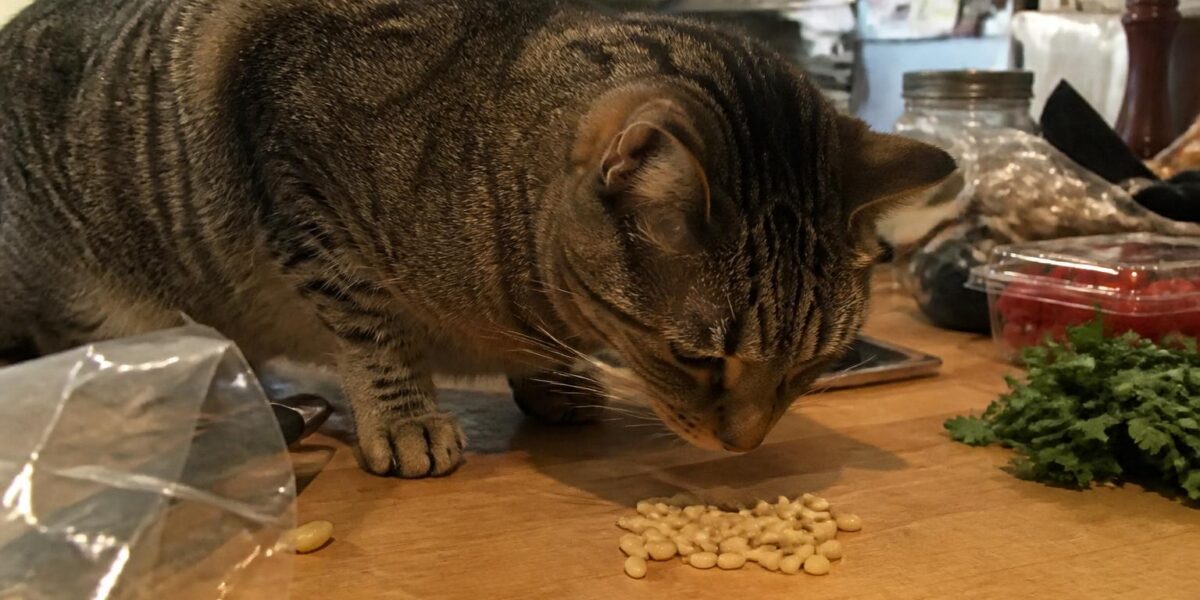
Can Cats Eat Pine Nuts? The Short Answer
Can cats eat pine nuts? Pine nuts are not classically toxic to cats, but they are very high in fat and offer your cat nothing useful, so they are best avoided. The realistic verdict is “moderation to avoid” — a single accidental crumb is unlikely to poison a healthy cat, but pine nuts should never be a deliberate treat.
In this article
Cats are obligate carnivores. Their bodies are built to digest meat, not fatty seeds and nuts. Pine nuts add a heavy dose of fat with no nutritional payoff, and they can lead to stomach upset, choking, or longer-term issues if eaten regularly.
The “not toxic but still not good” distinction matters with cats. A food can be free of poisonous compounds and still cause vomiting, weight gain, or a painful bout of pancreatitis. Pine nuts sit squarely in that category: harmless in a stray crumb, but inappropriate as anything more. The smartest approach is simply to keep them off the menu.
If your cat eats a notable amount of pine nuts, or a pesto or dish containing them, contact your veterinarian for advice, especially if other ingredients like garlic or onion were involved.
Why Pine Nuts Are a Poor Choice for Cats
The biggest issue with pine nuts is their fat content. Pine nuts are among the richest, fattiest seeds, and a cat’s digestive system is not equipped to handle that much plant fat. Eating them can trigger vomiting and diarrhea, and over time repeated fatty treats may contribute to weight gain or even pancreatitis, a painful inflammation of the pancreas that can require veterinary treatment.
Pine nuts are also small, hard, and slippery, which makes them a choking hazard, especially for kittens and small cats. Several eaten together could potentially cause a digestive blockage in a cat’s narrow intestines. Because they are so small, it is also easy for a cat to gulp several at once before you notice.
There is also a quirk worth knowing: some people experience a lingering metallic aftertaste called “pine mouth” after eating pine nuts. While this is a human phenomenon, it is a reminder that pine nuts can affect taste and digestion in ways we do not fully understand, which is all the more reason to skip them for cats.
And as with all nuts and seeds, there is simply no nutritional case. Cats need taurine and animal protein, neither of which pine nuts provide. Even the healthy fats and minerals they contain are irrelevant to a feline whose needs are already met by a complete diet.
Watch Out for Pine Nuts in Prepared Foods
Pine nuts rarely appear on their own. They are most commonly found in dishes that contain other ingredients dangerous to cats. Be especially careful with:
- Pesto — usually loaded with garlic and onion, both toxic to cats, plus oil and cheese.
- Salads and pasta dishes — often seasoned with salt, dressing, and aromatics.
- Salted or roasted pine nuts — the added sodium is hard on a cat’s kidneys and heart.
- Candied or honey-glazed pine nuts — the added sugar offers nothing and can upset digestion.
- Baked goods and granola — sugar, butter, raisins, and other additives compound the risk.
If your cat eats pesto or a dish with garlic or onion, take it seriously. Read more in our guides to garlic and onions, and call your vet if your cat ate a meaningful amount. In these prepared foods, the accompanying ingredients are usually a bigger threat than the pine nuts themselves.
What to Do If Your Cat Eats Pine Nuts
If your cat snatches a plain pine nut or two, watch them closely rather than panicking. A tiny amount may pass without problems, but keep an eye out for:
- Vomiting or repeated gagging
- Diarrhea or loose stools
- Coughing, choking, or pawing at the mouth
- Loss of appetite or lethargy
- Abdominal pain or a hunched, uncomfortable posture
- Straining with no stool, which can signal a blockage
Signs of choking or a blockage — ongoing vomiting, no bowel movements, or obvious distress — are emergencies. Contact your veterinarian right away if you notice them, and call promptly if your cat ate a large quantity or a dish containing toxic ingredients. When you call, be ready to describe how much your cat ate and in what form, since this helps your vet decide whether your cat needs to be seen.
How Pine Nuts Compare to Other Nuts and Seeds
Pine nuts are not unique in their drawbacks. Most nuts are too fatty and pose choking risks for cats, and a few are outright dangerous. As a rule, the nut and seed category is one to limit or avoid, and no nut is something a cat needs.
For comparison, see our guides to almonds, walnuts, and macadamia nuts — the macadamia guide explains why extra caution is warranted with certain nuts. Some seeds, like sunflower seeds, are slightly more tolerable in tiny amounts but still unnecessary and high in fat.
Once you recognize the shared pattern — high fat, hard texture, no taurine, no benefit — it becomes easy to make a quick, confident decision whenever your cat eyes a bowl of nuts.
Better Treats Than Pine Nuts
To reward your cat, choose something that suits a carnivore. A small piece of cooked, unseasoned chicken, turkey, or fish is far more enjoyable for your cat and far better for their health than any nut or seed, and it provides protein they can actually use.
Commercial treats made for feline digestion are another safe option in moderation. Keep all treats to no more than about 10 percent of daily calories, and skip the pine nuts entirely.
If you have recently welcomed a rescue cat, building good treat habits early helps protect their weight and digestion for years to come. Learn more about giving a cat a healthy start through our adopt a cat resources.
Keeping Nuts Out of a Curious Cat’s Reach
Most accidental pine nut ingestions happen not because someone deliberately fed the cat, but because nuts were left out, a salad or pasta dish was within reach, or a jar of pesto was open on the counter. Cats are naturally curious and often investigate new smells, so prevention is largely about good habits around food.
Store nuts and nut-containing foods in sealed containers rather than open bowls, and be especially careful with prepared dishes that combine pine nuts with garlic, onion, or oil. During meals and gatherings, keep plates out of paw’s reach and let guests know the cat should not be offered any human food.
If you cook with pine nuts or pesto, clean up spills promptly and keep your cat out of the kitchen while you work. These small steps prevent the most common situations in which a cat ends up eating something they should not, whether it is the nuts themselves or the more dangerous ingredients they are mixed with.
Because a cat cannot tell which foods are safe, it falls to us to make their environment one where the riskiest items are simply out of reach. A little awareness goes a long way toward keeping a curious cat healthy.
Frequently Asked Questions
Are pine nuts toxic to cats?
Pine nuts are not classically toxic to cats, but they are very high in fat and can cause stomach upset, choking, or pancreatitis. They offer no nutritional benefit, so it is best to avoid them.
My cat ate pesto with pine nuts — should I worry?
Yes, pesto is a concern, mainly because of the garlic and onion it usually contains, both of which are toxic to cats. Call your veterinarian, note how much your cat ate, and watch for vomiting, weakness, or lethargy.
Can pine nuts make a cat sick?
They can. The high fat content may cause vomiting and diarrhea, and in larger or repeated amounts can contribute to pancreatitis. Their small, hard shape also poses a choking risk for cats.
Is there any reason to feed my cat pine nuts?
No. Cats are obligate carnivores and get everything they need from meat-based food. Pine nuts add only fat and risk, with no nutritional benefit, so they should stay off the menu.
What if my cat keeps begging for pine nuts?
A cat’s interest is never proof a food is good for them. Redirect that begging toward a small piece of plain cooked meat or a vet-approved cat treat, which satisfies the urge without the fat and choking risk of pine nuts.


