
Last updated: May 16, 2026
In this article
- Cycas Revoluta is a Veterinary Emergency
- What the Latin Name Tells You
- Cycasin and the Other Toxic Compounds
- The Three-Phase Clinical Course
- Why the Seeds are the Worst Part
- First-Aid and Decontamination
- Treatment and Prognosis
- Why You Should Not Keep Cycas Revoluta in a Pet Household
- Look-Alikes and Naming Confusion
- Frequently Asked Questions
Cycas Revoluta is a Veterinary Emergency
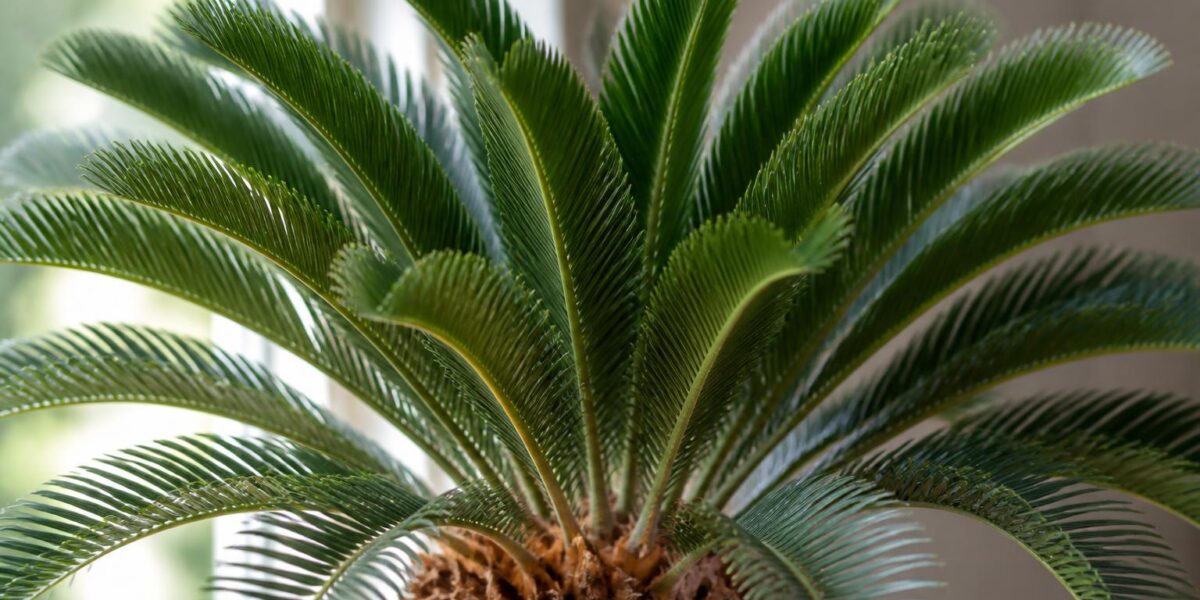
Cycas revoluta is the botanical name for the plant sold under the common names sago palm, king sago, or Japanese sago palm. If you searched the Latin name and you have pets, you need to read the next paragraph carefully and act on it before you finish the article. This is the most dangerous houseplant and landscape plant in common circulation in the United States. The American Society for the Prevention of Cruelty to Animals (ASPCA) lists Cycas revoluta as severely toxic to both cats and dogs, and ASPCA Animal Poison Control Center records consistently identify sago palm as one of the leading causes of fatal plant ingestion in pets nationwide.
If your cat or dog has chewed or eaten any part of a Cycas revoluta — leaves, fronds, bark, or especially the seeds (which look like orange-red marbles) — stop reading and call your veterinarian or an emergency animal hospital right now. While you are en route, also call the ASPCA Animal Poison Control Center at 888-426-4435 (per-call fee applies) or the Pet Poison Helpline at 855-764-7661. Bring the plant or a clear photo and bring any leaf or seed material you can collect. Survival depends on early aggressive care, not on watching for symptoms.
This Latin-name article is the technical companion to our common-name pillars. The sago palms toxic to cats, sago palms toxic to dogs, and sago palm toxic to dogs articles cover the same compound and clinical course from the common-name angle. The information below is the same, framed for the reader who searched Cycas revoluta directly.
What the Latin Name Tells You
Cycas revoluta is not actually a palm. It is a cycad, a member of an ancient plant lineage that predates flowering plants by more than 200 million years. Cycads were dominant in the Mesozoic and have largely been replaced by flowering plants today, but a handful of species — including Cycas revoluta — survive as ornamental garden and landscape plants because they are tough, slow-growing, and architecturally striking.
The “palm” common name is a misnomer because the leaves resemble fronds. Botanically, Cycas revoluta is in the order Cycadales, family Cycadaceae, and is more closely related to ginkgo trees and conifers than to true palms. This matters because all members of the Cycadaceae produce the same toxic compound, cycasin. Other cycads — Zamia, Macrozamia, Dioon — share the toxicity profile and are equally dangerous to pets.
You will encounter Cycas revoluta in three contexts: as a slow-growing landscape plant in warm-climate yards (USDA zones 9-11, common across Florida, the Gulf Coast, southern California, and the southwestern US); as a small indoor pot specimen sold at big-box garden centers nationwide; and as an outdoor patio specimen in colder climates where it is brought indoors for winter. Each context creates pet-exposure scenarios. The seeds are particularly attractive to dogs because they look and smell like fallen fruit.
Cycasin and the Other Toxic Compounds
The active toxin in Cycas revoluta is cycasin, a glycoside (a sugar-bound compound) that is metabolized in the gut by intestinal bacteria into a highly reactive intermediate called methylazoxymethanol, often abbreviated MAM. MAM is a potent hepatotoxin and neurotoxin — it damages liver cells and brain tissue at low concentrations. The metabolic pathway is the reason there is a delay between ingestion and the worst clinical signs: cycasin itself is relatively inert, and the damage starts after the gut bacteria convert it.
The plant also contains a non-protein amino acid called BMAA (beta-methylamino-L-alanine), which has been studied as a contributor to neurotoxicity in humans and animals over long-term exposure. In acute single-dose pet exposures, BMAA’s role is overshadowed by cycasin, but it adds to the overall toxicity profile.
Concentrations of cycasin vary across the plant. The seeds contain the highest levels by weight, and a single seed has been associated with severe poisoning in dogs in the published veterinary literature. The leaves and bark contain meaningful amounts as well; even chewing on a frond without swallowing leaf fragments can deliver enough cycasin to be dangerous in a small cat or dog.
The Three-Phase Clinical Course
Cycas revoluta poisoning typically progresses through three phases. The first phase is gastrointestinal and shows up within 15 minutes to a few hours after ingestion. Vomiting, often with blood, is usually the first sign. Drooling, diarrhea (often bloody), abdominal pain, and lethargy follow. Pets in this phase look obviously sick — they are not “off” or “a little quiet,” they are unmistakably unwell. This phase can last 24 hours.
The second phase is the dangerous one. Twelve to 96 hours after ingestion, depending on dose, the liver begins to fail. Signs include jaundice (yellowing of the gums, ear flaps, and the whites of the eyes), continued vomiting, weakness, ascites (fluid accumulation in the abdomen), bleeding (from gums, in stool, or from the nose), seizures, and disorientation. Liver enzyme blood tests show massive elevations during this phase. Without aggressive supportive care, this is when pets die.
The third phase, in survivors, is recovery — but the liver damage may not fully reverse. Pets that survive a sago palm ingestion often have permanently elevated liver enzymes, ongoing dietary restrictions, and a higher risk of further hepatic problems for the rest of their lives. The published case-series numbers in veterinary literature describe a mortality rate that has historically been near 50 percent even with treatment, which is part of why this plant is treated as such a high-stakes exposure.
Why the Seeds are the Worst Part
Mature Cycas revoluta produces large, distinctive seeds inside woody female cones. The seeds are golf-ball-sized, vivid orange to red, and resemble round fruit. Dogs in particular are drawn to them; a sago palm seed looks and smells more like food than the leaves do. The seed coat (sarcotesta) and the kernel both contain very high cycasin concentrations.
Veterinary case reports describe severe poisoning from ingestion of a single seed in medium-sized dogs. There is no margin for “well, it was just one.” If your dog or cat has chewed or swallowed a sago palm seed, this is an emergency, and the time-to-vet window is measured in hours, not days. Bring any remaining seeds, the cone, or photographs of the plant for identification.
Households with mature Cycas revoluta in their landscape should remove the female cones before they shed seeds. If the seeds have already dropped, rake the area carefully and bag them in sealed trash. Do not compost them — wildlife visiting the compost pile is at the same risk that your own pet faces. Even with the seeds removed, a curious dog can dig up old fallen seeds buried in mulch months later.
First-Aid and Decontamination
The honest answer about home first aid for Cycas revoluta is that there is no good home option. Decontamination is more effective the earlier it happens, but inducing vomiting at home with hydrogen peroxide can be unsafe — wrong dose, wrong species, or wrong timing risks aspiration pneumonia or esophageal damage. Activated charcoal binds cycasin somewhat, but multi-dose administration with sorbitol cathartics is far more effective than the single oral dose you can manage at home.
Call ahead to your emergency vet so the team is ready when you arrive. Bring the plant material, the tag if you have it, your best estimate of how much was eaten, and the time of ingestion. If you saw the chewing happen, that timestamp is critical for triage. The veterinary team will likely induce vomiting under controlled conditions, give activated charcoal in repeat doses, start IV fluids, draw baseline liver enzyme labs, and admit your pet for monitoring.
While you are en route, do not give food or water. Do not give milk or vegetable oil thinking it will dilute the toxin — those interventions delay vomit induction and complicate gastric lavage if needed. Do not wait for symptoms to appear before going. The window for decontamination closes as the cycasin moves from the stomach into the small intestine and bloodstream.
Treatment and Prognosis
Treatment for Cycas revoluta poisoning is intensive supportive care. The veterinary team will typically run aggressive IV fluid therapy, repeated activated charcoal doses, anti-emetics to control vomiting, antibiotics to prevent secondary infection from gut bleeding, blood products if coagulation has been affected (the failing liver stops producing clotting factors), liver-protective medications including N-acetylcysteine and SAMe, and serial liver enzyme and bile acid blood work.
Hospitalization typically runs three to five days minimum, sometimes much longer. Pets that survive the acute phase usually continue on oral hepatoprotective medications and a hepatic support diet for weeks to months afterward. Follow-up bloodwork at one week, one month, and three months tracks recovery.
Prognosis correlates strongly with how quickly treatment started. Pets seen within an hour or two of ingestion, before clinical signs develop, have substantially better outcomes than pets seen after vomiting and lethargy have set in. Pets that progress to the second-phase liver failure with jaundice and bleeding face a guarded-to-poor prognosis. This is the reason early veterinary contact matters so much for sago palm exposures specifically.
Why You Should Not Keep Cycas Revoluta in a Pet Household
Many of the toxic plants discussed across this site can reasonably stay in pet households with elevation, supervision, and pruning — dracaena, ficus, philodendron, even certain lily varieties. Cycas revoluta is not in that category. The combination of severe toxicity, attractive seed appearance, the plant’s rugged tolerance for being chewed (so it does not visibly wilt to warn you something has been damaged), and the irreversible nature of liver injury makes it a categorically different risk.
If you have just learned that your sago palm is a sago palm and you have pets, the recommendation is straightforward: rehome the plant, donate it to a pet-free landscape, or remove it. Indoor pot specimens are easy to give away — local plant swaps, gardening groups, and pet-free relatives will usually take a healthy sago. Outdoor landscape specimens are a bigger removal job but well worth the labor; have a professional landscaper remove the plant entirely, including the underground root crown, and dispose of all plant material rather than composting it.
For replacement landscape and houseplants that give you a similar architectural look, the areca palm (areca palms safe for pets) and the parlor palm (Chamaedorea elegans) are non-toxic options that fill the same visual role indoors. Outdoor warm-climate alternatives include true palms like the lady palm (Rhapis excelsa), king sago look-alikes from the cordyline family (which are not safe — verify each), and sculptural agave or yucca for the same architectural effect. Cross-reference any outdoor plant against the ASPCA toxic plant list before buying.
Look-Alikes and Naming Confusion
Cycas revoluta is sometimes confused with true palms (areca, kentia, parlor) at a quick glance because of the frond-like leaves. The cycad has stiffer, sharper, more leathery leaves with sharply pointed tips, and the trunk is short and stout rather than tall and slender. If you are unsure whether a landscape plant is a sago palm or a true palm, treat it as a sago palm until a knowledgeable nursery or landscaper has confirmed otherwise. Mistaken identity has put pets in emergency rooms.
Other cycads — Cycas circinalis (queen sago), Zamia furfuracea (cardboard palm or cardboard cycad), Macrozamia species, and Dioon species — share Cycas revoluta’s toxicity. They are all severely hepatotoxic, and the same emergency response applies for any of them. The cardboard palm (Zamia furfuracea) in particular is sold widely as a “tropical houseplant” and many owners do not realize it is in the cycad family.
For broader pet-safe houseplant browsing while you replace your sago palm, see the cat-safe houseplants roundup, the cat-safe houseplants guide, and the dog-safe houseplants guide. They include several palm-like options that are confirmed non-toxic by ASPCA.
Frequently Asked Questions
How much Cycas revoluta is dangerous?
There is no safe quantity for any pet. Veterinary case reports describe severe poisoning from a single seed in medium-sized dogs and from small leaf chews in cats. Treat any ingestion of any part of the plant — fronds, bark, root crown, or seeds — as an emergency requiring immediate veterinary contact. Do not try to estimate whether “just a little” is safe; it is not.
My pet chewed a leaf but seems fine — do I still need to see a vet?
Yes. The first phase of cycasin poisoning is gastrointestinal and may not start for 30 minutes to a few hours. The second phase, liver failure, may not start for 24 to 96 hours. A pet that “seems fine” two hours after ingestion is in exactly the window where decontamination still helps and waiting is most harmful. Call your vet or the ASPCA APCC at 888-426-4435 immediately and follow their triage instructions.
Are cardboard palm and queen sago equally dangerous?
Yes. Both are cycads, both contain cycasin, and both produce the same severe hepatotoxicity. Cardboard palm (Zamia furfuracea) is especially common in indoor plant collections because it is small and easy to grow, and many owners do not realize it shares the sago palm’s toxicity. Treat any cycad as severely toxic.
Is the soil around a Cycas revoluta also a hazard?
The plant material is the primary hazard. Fallen fronds and especially fallen seeds in the surrounding soil and mulch are the practical risk in landscape settings. Cycasin does not leach into surrounding soil at meaningful concentrations through root activity, but seeds and leaves that fall and decay there are still toxic. Rake and bag any fallen material; supervise pets in the area.
What pet-safe plants give me the architectural sago palm look?
Indoor: areca palm (Dypsis lutescens), parlor palm (Chamaedorea elegans), Kentia palm (Howea forsteriana), bamboo palm (Chamaedorea seifrizii), and lady palm (Rhapis excelsa) are all listed by ASPCA as non-toxic and provide a similar tropical frond appearance. Outdoor (warm-climate): the same true-palm species work as landscape plants. Avoid any cycad regardless of common name.


