
Last updated: May 16, 2026
In this article
- Bougainvillea Bonsai and Pet Safety at a Glance
- Bonsai Toxicity in One Sentence
- What Bougainvillea Bonsai Looks Like
- Why Bougainvillea Is Generally Considered Low-Toxicity
- Symptoms in Pets After Bougainvillea Bonsai Ingestion
- The Thorns: A Genuine Mechanical Hazard
- First Aid: What to Do at Home
- When to Call the Vet
- How Bougainvillea Bonsai Compares to Other Bonsai Species
- Pet-Proofing a Bougainvillea Bonsai
- Comparing Bougainvillea Bonsai to the Rest of Your Plant Collection
- Frequently Asked Questions
Bougainvillea Bonsai and Pet Safety at a Glance
A bonsai is a miniaturized version of a full-size plant — its toxicity profile matches the underlying species exactly. So a bougainvillea bonsai (Bougainvillea glabra or B. spectabilis trained in a shallow tray) shares the toxicity profile of a 20-foot landscape bougainvillea vine. The good news is that bougainvillea is generally considered low-toxicity for cats and dogs: the milky sap is a mild irritant rather than a serious poison, and most exposures resolve without medical intervention. The less-good news is that bougainvillea defends itself with hard, sharp thorns — and on a bonsai trained to spread laterally at face level for cats, those thorns are a legitimate mechanical injury hazard.
So the framing for bougainvillea bonsai is split: low chemical risk, but real physical hazard. A pet that chews a leaf or licks a small amount of sap is likely to experience at most mild oral irritation and a brief episode of GI upset. A cat that bats at a thorny branch or a dog that pushes its muzzle into a flower cluster can end up with a corneal scratch, a paw puncture, or a torn lip. Below we cover both sides — the chemical and the mechanical — with practical first aid and placement tips.
Bonsai Toxicity in One Sentence
The single most important concept for any bonsai owner: a bonsai is the same plant as a full-grown specimen of the same species, just smaller and trained into a particular shape. The toxicity (or safety) of a bonsai is identical to the underlying species. A bougainvillea bonsai is no more or less toxic than a sprawling outdoor bougainvillea — but the bonsai’s compact display puts the thorns at face level for both cats and small dogs.
For broader context on safer bonsai species, see the B122 sibling guides: juniper bonsai, pine bonsai, and Chinese elm bonsai are the standout low-risk options without thorn hazards. For toxic-tier bonsai, see ficus bonsai, jade tree bonsai, schefflera bonsai, ginseng ficus bonsai, and the severe-tier azalea bonsai.
What Bougainvillea Bonsai Looks Like
Bougainvillea (Bougainvillea glabra, B. spectabilis, and various hybrids) is a tropical and subtropical vining shrub native to South America. The species is famous for its spectacular display of papery, brightly colored bracts — magenta, pink, orange, white, and red — that surround the small inconspicuous true flowers. As a landscape vine it can climb 20 to 40 feet on a trellis or wall.
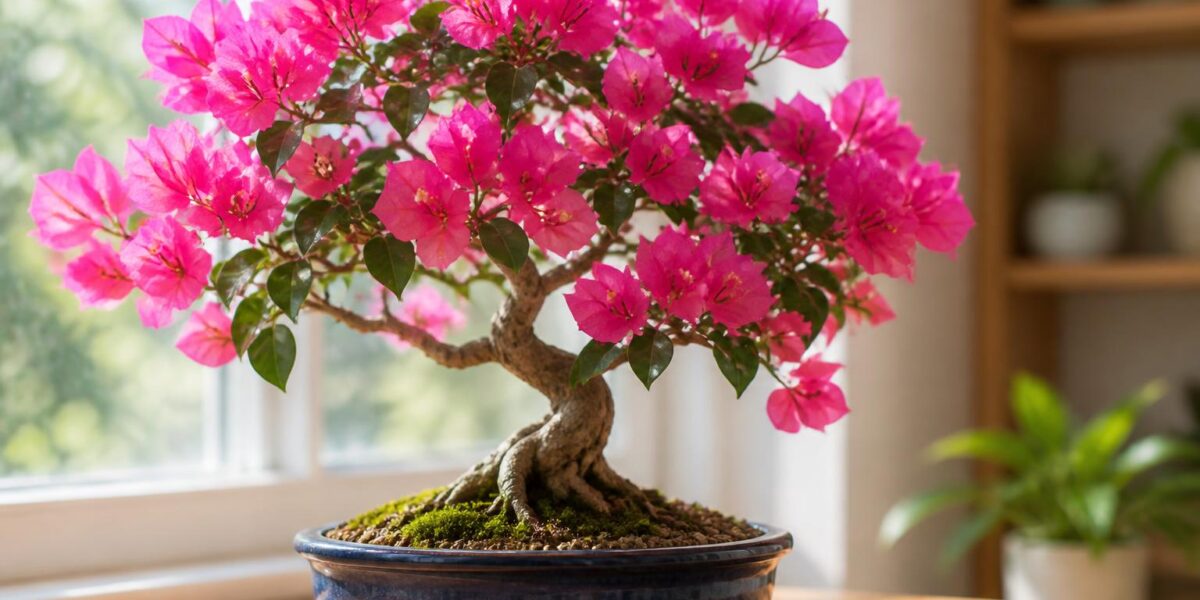
As a bonsai, bougainvillea is trained for the dramatic bract display in a smaller, sculptural form: usually 12 to 24 inches tall with a thick gnarled trunk, lateral spreading branches, and bright bract color in season. The leaves are small, rounded, and dull green. Critically, the species defends itself with hard, woody, recurved thorns at every branch node — these thorns persist on bonsai specimens and are exactly the right length and angle to scratch a cat’s face or a dog’s muzzle. Modern thornless cultivars exist but are not common in the bonsai trade.
Why Bougainvillea Is Generally Considered Low-Toxicity
The ASPCA does not list bougainvillea as toxic to cats or dogs in the severe sense. Veterinary toxicology databases describe the species as causing mild GI upset and occasional contact dermatitis from the milky sap, but no published cases of severe systemic poisoning. The sap contains low concentrations of irritating alkaloids and small amounts of crystalline compounds that can cause mild oral burning if chewed in volume, but the concentrations are well below what would constitute a significant poisoning risk.
For umbrella context on bougainvillea and pets in general, see are bougainvillea toxic to cats, are bougainvillea toxic to dogs, and the broader bougainvillea and pets guide. The general framing is that bougainvillea is far less of a chemical concern than the thorn hazard discussed below.
Symptoms in Pets After Bougainvillea Bonsai Ingestion
Most cats and dogs that nibble bougainvillea bonsai foliage show no symptoms or only mild ones. When signs do appear, expect drooling, mild oral irritation (lip-licking, pawing at the mouth), one or two episodes of vomiting, soft stool, and brief reduced appetite — usually self-limiting within 12 to 24 hours. Some pets develop a mild contact dermatitis from sap on the muzzle or paws: a transient pink-red flush of the skin that resolves within a day.
Severe presentations — repeated forceful vomiting, blood in vomit or stool, profound lethargy, tremors, or any change in mental status — are not consistent with bougainvillea alone. If you see those signs, consider whether your pet may have eaten a different, more dangerous plant in the same area, or whether a thorn injury may be more serious than initially apparent (deep paw puncture, eye injury). Bring a photo or sample of any chewed plant material to the appointment if you call your vet.
The Thorns: A Genuine Mechanical Hazard
Bougainvillea thorns are the part of the plant most likely to send a pet to the vet. They are 1/4 inch to 1 inch long, woody, sharp, and often recurved (curved like a fishhook). The thorns sit at every branch node along the canopy of the bonsai. A cat batting at a brightly colored bract, a dog sniffing a low branch, or a kitten leaping from a nearby surface can easily catch a thorn in the lip, gum, paw pad, or — most concerning — the eye.
Bougainvillea thorn injuries are also notorious in human medicine for causing a delayed inflammatory reaction called “bougainvillea synovitis” if a thorn lodges in a joint. The same risk applies to pets: a paw pad puncture from a bougainvillea thorn can seed a low-grade joint infection that develops days after the initial wound looks healed. Veterinary attention for any thorn puncture that does not stop bleeding promptly, that affects the eye, or that produces swelling 24 to 48 hours later, is warranted.
First Aid: What to Do at Home
For a chemical exposure (chewing or licking sap), gently wipe the muzzle and paws with a damp cloth, offer fresh water, and watch for the mild GI signs above over 12 to 24 hours. Most cases resolve on their own. For a thorn injury, examine the wound carefully: remove any visible thorn fragment if it can be lifted out cleanly with tweezers, apply gentle pressure with a clean cloth to control bleeding, and rinse the area with clean water or saline.
For eye involvement (squinting, tearing, redness, pawing at the eye after bougainvillea contact), do not flush at home — call the vet immediately. Corneal scratches can ulcerate quickly and need professional examination with fluorescein staining. For chemical concerns, call your veterinarian or a 24/7 poison-control hotline: ASPCA Animal Poison Control at 888-426-4435 or the Pet Poison Helpline at 855-764-7661. Do not induce vomiting at home unless directed; for a low-toxicity plant like bougainvillea, the risks of induced vomiting outweigh any benefit.
When to Call the Vet
Reach out to your vet if vomiting continues past two or three episodes, if any thorn puncture affects the eye or eyelid, if a paw pad puncture continues to bleed past 15 to 20 minutes of pressure, if the wound shows worsening swelling or discharge 24 to 48 hours later (possible deep tissue infection or thorn fragment retention), or if your pet refuses to bear weight on a paw injured by a thorn. Small dogs, puppies, kittens, and pets with bleeding disorders need a lower threshold for veterinary contact.
If your pet shows symptoms that do not match a low-toxicity plant — repeated forceful vomiting, neurologic signs, profound lethargy — those signs are not consistent with bougainvillea alone. Consider whether your pet may have eaten a different, genuinely toxic plant in the same area (lily, sago palm, oleander, aroid family species, or — in a bonsai household — a more toxic bonsai species such as wisteria, azalea, or boxwood).
How Bougainvillea Bonsai Compares to Other Bonsai Species
Among the bonsai species in batch B122 and B123, bougainvillea sits in the lower-chemical-risk category but with thorns that no other common bonsai species has. Compared to the genuinely toxic peers — wisteria bonsai (severe-tier glycoside), boxwood bonsai (alkaloid moderate), ficus bonsai, jade tree bonsai, azalea bonsai (severe-tier grayanotoxin) — bougainvillea is comparatively gentle on the chemistry side.
Compared to the safer peers — juniper bonsai, pine bonsai, Chinese elm bonsai, olive bonsai, and Japanese maple bonsai (presumed safe) — bougainvillea adds the thorn factor, which most of those alternatives lack. If thorn risk is unacceptable in your household, choose one of the thornless safe species instead.
Pet-Proofing a Bougainvillea Bonsai
The chemical side of bougainvillea bonsai care is straightforward: wear gloves when pruning to avoid the irritant sap on your skin, prune cuttings into a sealed bin rather than leaving them on the floor where pets might chew them, and wipe up any milky sap droplets that may stain a counter or decking. The thorn side requires more thought.
Place the bonsai on a stable, elevated surface where neither cat nor dog can casually face-plant into the canopy. Avoid display locations where a leaping or jumping pet can land near the plant — a cat tower right next to the bonsai shelf is asking for a thorn-eye injury. If you want a thorny dramatic-bract bonsai but have a face-batting cat, the safer compromise is to enjoy the plant outdoors during the warm season (where it thrives anyway) and bring it inside only on a hard-to-reach perch during cold months. For a bonsai you want indoors all year with both pets present, the practical recommendation is to choose one of the thornless safer species: juniper, Chinese elm, olive, or pine.
Comparing Bougainvillea Bonsai to the Rest of Your Plant Collection
Bougainvillea bonsai is a striking display plant when its bracts color up, but the thorn risk makes it a deliberate choice rather than a default one. For pet-safe alternatives, see the cat-safe houseplants list and the pet-safe garden plants guide. Rescue-minded readers can browse cats waiting for homes and dogs available for adoption while you set up a pet-safe display area in your home.
If you are weighing whether to add a bougainvillea bonsai to a multi-pet home, the decision tree is: (1) Are your pets likely to investigate the plant at face level? If yes, the thorn risk dominates. (2) Is the bonsai going to a pet-free room or surface? If yes, the chemical risk is minor and the plant is fine. (3) Do you have an alternative species that achieves a similar dramatic look without thorns? Olive bonsai or Chinese elm bonsai both produce sculptural compact displays without thorn hazards.
Frequently Asked Questions
Are bougainvillea bracts (the colored “petals”) more toxic than the leaves?
The colored bracts are technically modified leaves; their chemistry is similar to the green foliage. Both are mildly irritating in volume but not severely toxic. The thorns at the base of bract clusters are a more significant concern than the bracts themselves.
What if my dog gets a bougainvillea thorn in its paw?
Examine the puncture, remove any visible thorn fragment with tweezers, apply pressure to control bleeding, and rinse with clean water or saline. Watch for swelling or discharge over the next 24 to 48 hours; deep tissue infection from retained thorn fragments is a recognized complication. Call your vet if bleeding persists, swelling develops, or your pet refuses to bear weight.
Is the milky sap from bougainvillea dangerous?
The milky sap is a mild contact and oral irritant. It can cause a transient pink-red flush on the muzzle or paws and brief mouth discomfort if chewed. Most cases resolve within a day without treatment. It is not severely toxic.
Can a cat be hurt by simply walking past a bougainvillea bonsai?
Walking past is not a problem; the risk is the cat batting at branches or leaping near the canopy. Place the bonsai where casual feline acrobatics cannot reach the thorns.
Are there thornless bougainvillea bonsai cultivars?
Some commercial bougainvillea cultivars (notably “Miss Alice” and a few hybrids) are described as thornless or near-thornless. They are uncommon in the bonsai trade. If pet safety is a priority, a thornless cultivar reduces the mechanical risk significantly while preserving the bract display.


