
Last updated: May 16, 2026
In this article
- Wisteria Bonsai and Pet Safety at a Glance
- Bonsai Toxicity in One Sentence
- What Wisteria Bonsai Looks Like
- Why Wisteria Bonsai Is Severe-Tier Toxic
- Symptoms in Pets After Wisteria Bonsai Exposure
- First Aid: What to Do at Home
- Veterinary Treatment
- How Wisteria Bonsai Differs From Other Bonsai Risks
- Wisteria Seeds and Seedpods: The Highest-Risk Plant Parts
- Pet-Proofing a Wisteria Bonsai (or Choosing a Safer Bonsai)
- Frequently Asked Questions
Wisteria Bonsai and Pet Safety at a Glance
A bonsai is a miniaturized version of a full-size plant — its toxicity profile matches the underlying species exactly. So a wisteria bonsai (Wisteria floribunda or W. sinensis trained in a shallow tray) shares the full toxicity of a 30-foot landscape wisteria vine. And wisteria is genuinely dangerous: it contains wisterin, a glycoside, plus toxic lectins, both concentrated most heavily in the seeds and seedpods but present throughout the plant including flowers, bark, and leaves. Wisteria bonsai is severe-tier toxic to cats and dogs, on par with oleander or foxglove for emergency response, and warrants urgent veterinary contact for any meaningful exposure.
Symptoms after wisteria ingestion are violent and rapid: severe vomiting (often repeated and forceful), profuse diarrhea sometimes streaked with blood, drooling, abdominal pain, dehydration, and in larger ingestions possible neurologic signs including ataxia, depression, and collapse. Even a single seed or a small mouthful of flowers has caused emergency hospitalization in published cases. If you suspect any wisteria bonsai exposure, this is a 24/7 phone-the-vet situation, not a wait-and-see one.
Bonsai Toxicity in One Sentence
The single most important concept for any bonsai owner: a bonsai is the same plant as a full-grown specimen of the same species, just smaller and trained into a particular shape. The toxicity (or safety) of a bonsai is identical to the underlying species. A wisteria bonsai is as life-threatening as a landscape wisteria vine — every bit as catastrophic from wisterin and lectins. Bonsai species selection is therefore a genuine pet-safety decision.
For broader context on safer bonsai species, see the B122 sibling guides: juniper bonsai, pine bonsai, and Chinese elm bonsai are the standout low-risk options. For other toxic-tier bonsai, see ficus bonsai, jade tree bonsai, schefflera bonsai, ginseng ficus bonsai, and the severe-tier azalea bonsai.
What Wisteria Bonsai Looks Like
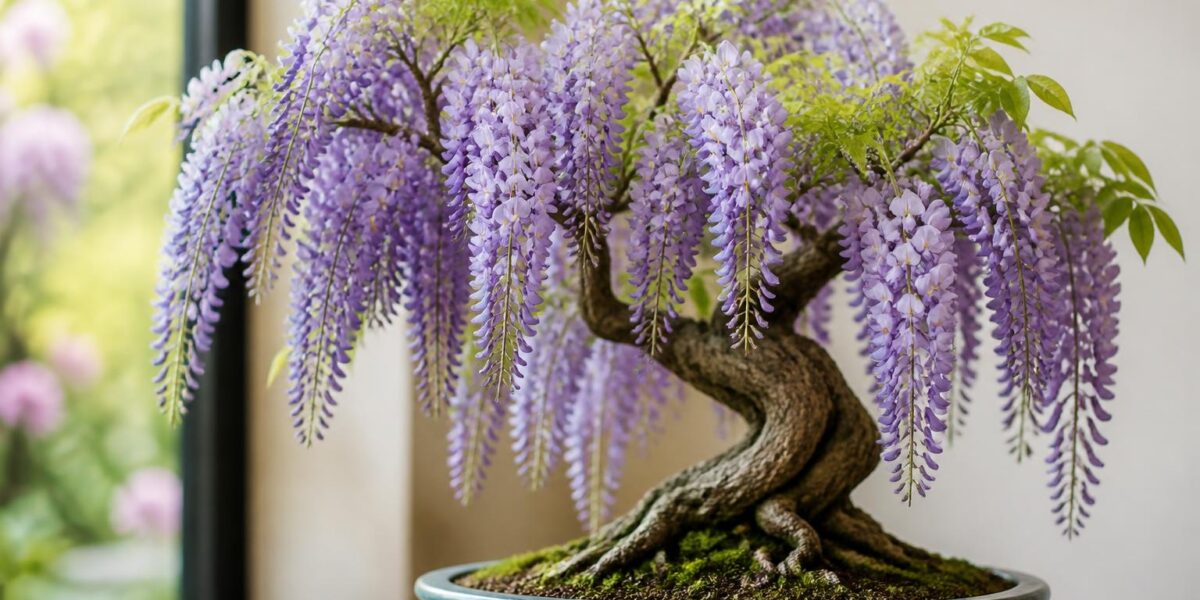
The Wisteria genus includes Asian and North American species; the bonsai trade focuses on the two Asian species most often: Wisteria floribunda (Japanese wisteria, twining clockwise, with very long racemes up to 18 inches) and Wisteria sinensis (Chinese wisteria, twining counterclockwise, with shorter denser racemes). Both produce dramatic cascades of pea-like blue, purple, white, or pink flowers in spring, followed by velvet-podded seed cases in late summer.
As a bonsai, wisteria is trained for the dramatic spring flower display. Specimens are usually 12 to 24 inches tall with thick gnarled trunks, a few short trained branches, and proportionally massive flower clusters that hang well below the canopy when in bloom. The compound leaves are pinnate with seven to thirteen leaflets per leaf. Velvet-fuzzy seedpods can develop after flowering, although bonsai specimens often have flowers pruned before pod formation. Every part of every Wisteria species is toxic.
Why Wisteria Bonsai Is Severe-Tier Toxic
Wisteria contains two principal toxic compound classes. The first is wisterin (sometimes spelled wistarine), a glycoside that triggers severe gastroenteric irritation and significant fluid loss. The second is a group of toxic lectins (resin-like proteins) that disrupt cell membrane function and intensify the GI response. Together these compounds cause the violent vomiting and diarrhea that define wisteria poisoning.
Concentration varies by plant part. The seeds and seedpods are by far the most toxic — a single seed has caused symptomatic poisoning in dogs in clinical case reports. Flowers and bark are also significantly toxic. Leaves are toxic but less concentrated. There is no part of the plant that is safe; all should be considered hazardous to a curious pet. Wisteria sits in the same severe-tier conversation as oleander, foxglove, and lily of the valley — see oleander and cats, foxglove and cats, lily of the valley and cats, and lily of the valley and dogs for comparable severe-tier framings.
Symptoms in Pets After Wisteria Bonsai Exposure
Wisteria poisoning typically begins within 30 minutes to 2 hours of ingestion. Early signs include profuse drooling, repeated forceful vomiting (often with chewed plant material visible), abdominal pain, restlessness, and the development of profuse watery diarrhea — sometimes streaked with blood as the GI lining is irritated. Vomiting may continue every few minutes for hours and is notable for its severity compared to most other plant poisonings.
As fluid loss progresses, dehydration sets in: tacky or pale gums, sunken eyes, weakness, and reduced skin turgor. In larger ingestions or in smaller pets, neurologic signs may appear: ataxia (wobbling), profound depression, collapse, and in severe untreated cases hypotensive shock. Cats and small dogs are at greater risk simply due to body weight; a fragment of plant material that would mildly upset a 60-pound dog can be a true emergency for a 6-pound cat. Please see the cat- and dog-specific guides at are wisteria toxic to cats, are wisteria toxic to dogs, and is wisteria toxic to dogs for species-specific detail.
First Aid: What to Do at Home
If you suspect or witness wisteria bonsai exposure, treat it as an emergency. Move your pet away from the plant and gently sweep any remaining plant material out of the mouth — wipe the muzzle and paws with a damp cloth. Note the time of exposure, what part of the plant was eaten (seed, pod, flower, leaf, bark), and the approximate quantity. If a pod was eaten, count any remaining seeds to estimate how many were ingested.
Call your veterinarian or a 24/7 poison-control hotline immediately: ASPCA Animal Poison Control at 888-426-4435 or the Pet Poison Helpline at 855-764-7661. Do not wait for symptoms — wisteria’s onset can be rapid, and earlier decontamination is more effective. Do not induce vomiting at home unless directed by a veterinary professional. Hydrogen peroxide can cause aspiration pneumonia, esophageal injury, or hemorrhagic gastritis — particularly hazardous in small or brachycephalic breeds, and contraindicated in cats. A clinic with controlled emetics is far safer.
Veterinary Treatment
Treatment is supportive and aggressive. After early decontamination — induced emesis if the ingestion is recent enough and the pet is stable, followed by activated charcoal — the focus shifts to fluid replacement. Wisteria’s signature feature is severe fluid loss from vomiting and diarrhea, so IV fluid therapy is the cornerstone of treatment. Antiemetics such as maropitant (Cerenia) help control vomiting; gastroprotectants such as omeprazole or sucralfate may be used to soothe the irritated GI lining.
Bloodwork is checked at presentation and may be repeated to monitor electrolytes, kidney function, and blood pressure. In severe cases admission to a 24-hour hospital is warranted; mild cases may be managed as a day patient with IV fluids and observation. Most pets that receive prompt treatment recover within 24 to 72 hours, although diarrhea may linger for several days. Untreated severe cases — particularly in small pets — can progress to shock and death.
How Wisteria Bonsai Differs From Other Bonsai Risks
Wisteria bonsai earns its severe-tier label largely from the unique punch of its toxin combination — a glycoside plus lectins — and the rapidity of fluid loss. By contrast, many other toxic bonsai species cause significant but more manageable symptoms: ficus bonsai sap is irritant but not severe-tier; jade tree bonsai causes drooling and ataxia but rarely shock; schefflera bonsai is calcium-oxalate-based mild-to-moderate toxicity; ginseng ficus shares ficus risks. The genuine severe-tier bonsai peers are azalea (grayanotoxin, see azalea bonsai) and cherry blossom (cyanogenic glycosides), which sit in the same emergency-response tier.
Boxwood bonsai (boxwood bonsai) is in the moderate-toxic tier — alkaloid + saponin — significant but typically less violent than wisteria. Bougainvillea bonsai (bougainvillea bonsai) is generally low-toxicity with mechanical (thorn) hazards. Pomegranate bonsai (pomegranate bonsai) is mild caution territory. Olive bonsai (olive bonsai) is safe. Japanese maple bonsai (Japanese maple bonsai) is presumed safe for cats and dogs. Wisteria sits clearly above all of these in risk.
Wisteria Seeds and Seedpods: The Highest-Risk Plant Parts
Wisteria’s velvet-fuzzy seedpods are a particular hazard because they look like edible bean pods and develop in late summer when curious dogs and cats may investigate. Each pod contains two to eight hard, brown, lentil-shaped seeds, and each seed is a concentrated dose of wisterin and lectins. Reported cases include serious symptoms after a single seed in small dogs.
If your wisteria bonsai produces flowers, the standard pet-safety practice is to prune the flower clusters before pod formation begins. This both protects the bonsai’s energy reserves (encouraging future flowering) and removes the highest-risk plant parts before they become available to a pet. If pods do develop, harvest them all once they begin to brown and dispose of them in a sealed container that pets cannot access. Do not compost wisteria pods in an open compost pile a dog can reach.
Pet-Proofing a Wisteria Bonsai (or Choosing a Safer Bonsai)
The simplest pet-proofing strategy is honest: wisteria bonsai is not the right plant for households with curious cats or persistent-chewing dogs. The 24-inch tall display shape puts the plant directly in the line of casual investigation by both species, and the toxicity is severe enough that one accidental incident is one too many. If you already own a wisteria bonsai, the practical defenses are placement on a high, stable, hard-to-reach surface; supervision when pets are in the room; and prompt removal of fallen flowers, leaves, and any developing pods.
If you are choosing a first bonsai and want pet safety to be a priority, the strongly recommended species are juniper, pine, Chinese elm, and (within B123) olive and Japanese maple (presumed safe). Browse cats waiting for homes and dogs available for adoption while you decide on the right plant for your household.
Frequently Asked Questions
How dangerous is one wisteria seed to a small dog?
Reported cases include serious gastroenteric symptoms after a single seed in small dogs. Treat any seed ingestion as a veterinary emergency and call ASPCA APCC (888-426-4435) or Pet Poison Helpline (855-764-7661) immediately. Do not wait for symptoms.
Is the wisteria bonsai flower less toxic than the seeds?
Flowers are less concentrated than seeds, but they are still meaningfully toxic and have caused symptomatic poisoning in dogs. Do not assume any part of wisteria is safe to chew.
How quickly do wisteria poisoning symptoms appear?
Onset is usually within 30 minutes to 2 hours of ingestion. Severe vomiting and diarrhea are the hallmarks. Neurologic signs and dehydration follow with larger ingestions.
Should I induce vomiting at home if my dog ate a wisteria pod?
No. Call your vet or a 24/7 poison-control hotline first. Hydrogen peroxide-induced vomiting carries real risks of aspiration and esophageal injury. Clinic emetics are safer and more reliable.
Can my cat be poisoned by walking past a wisteria bonsai?
Casual proximity is not a problem — wisteria toxicity requires ingestion. The risk is the cat batting fallen flowers, chewing dropped leaves, or investigating a developing pod that has hit the soil. Place the bonsai out of cat reach and clean up dropped plant material promptly.


