
Last updated: May 16, 2026
In this article
- Are Cilantro Plants Safe for Pets? The Quick Answer
- Meet Coriandrum Sativum
- Why Cilantro Is Non-Toxic
- Cilantro Versus Coriander: Same Plant, Different Stage
- What to Expect From a Curious Pet
- The Large-Quantity Caveat
- Cilantro in the Kitchen Herb Garden
- Cats, Dogs, and the Aromatic Question
- Coriander Seeds and Pets
- Cilantro for Outdoor Foraging Pets
- Vet Routing and Final Reassurance
- Frequently Asked Questions
Are Cilantro Plants Safe for Pets? The Quick Answer
Yes, cilantro plants are safe for pets. The ASPCA does not list Coriandrum sativum, the herb known as cilantro in North America and coriander across most of the rest of the world, as toxic to cats, dogs, or horses. A pet that nibbles a leafy stem in the herb garden, sneaks a bite of fresh cilantro from the cutting board, or grazes on a windowsill pot will not be poisoned. The leaves, stems, seeds, flowers, and roots all share the same non-toxic profile.
The reassurance comes with the standard volume caveat that applies to any non-toxic plant. Large quantities of leafy material can cause mild stomach upset in pets simply because their guts are not built to digest big volumes of fibrous greens at once. A foraging snack is fine. An entire mature cilantro plant chewed down to the soil in one go may earn a pet a brief bout of vomiting or a soft stool. This guide covers the plant biology, the cilantro-versus-coriander naming, what to expect from a curious pet, and how to fit cilantro into a pet-friendly herb garden.
Meet Coriandrum Sativum
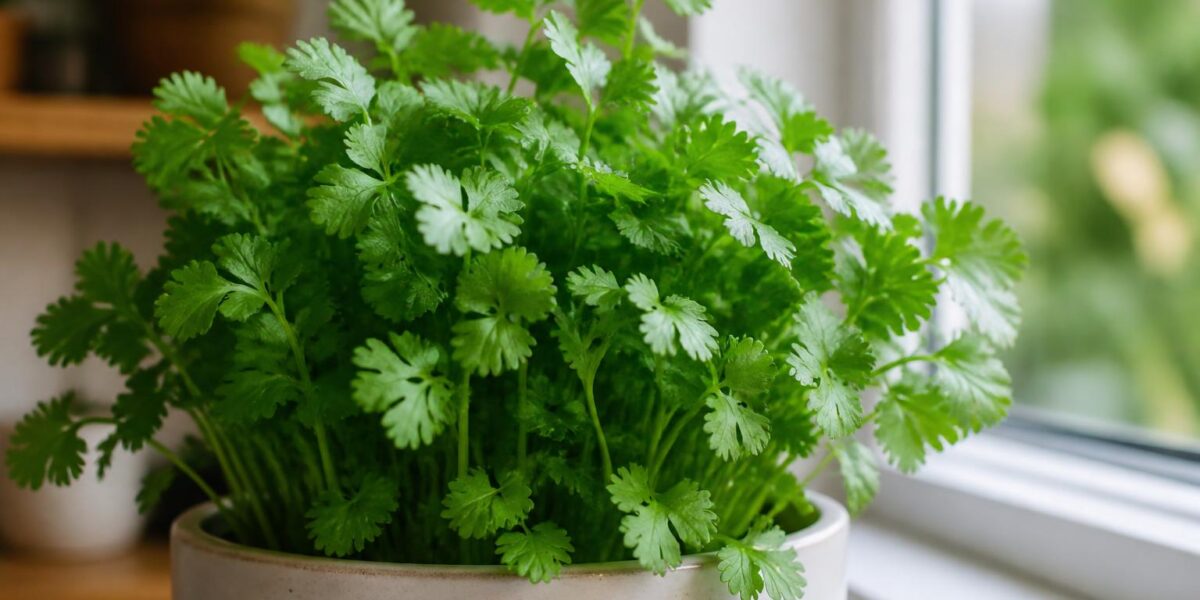
Cilantro is a fast-growing annual herb in the carrot family (Apiaceae), native to a broad band of southern Europe, North Africa, and Western Asia. The plant has been cultivated for thousands of years and now grows in kitchen gardens worldwide. It produces soft, lacy, parsley-like lower leaves and finer feathery upper leaves once it begins to bolt to flower. The white-to-pinkish umbrella-shaped flower clusters mature into round dry seed heads, which are the spice known as coriander seed.
The plant is genuinely two crops in one. The fresh green leaves, called cilantro in North America and most of the English-speaking world (or “fresh coriander” in the United Kingdom), have a bright citrusy herbaceous flavor used heavily in Mexican, Indian, Thai, Vietnamese, and Middle Eastern cooking. The dry seeds, called coriander, have a warm earthy citrus-floral flavor used in baking, curry blends, pickling, and beer brewing. The two culinary uses come from the same plant at different life stages.
Why Cilantro Is Non-Toxic
The chemistry of a cilantro leaf is dominated by aromatic compounds called aldehydes, including the polarizing decanal that some people perceive as soapy. The seeds contain different compounds, mostly linalool and pinenes that give the warm earthy spice flavor. None of these aromatic compounds are present at concentrations that cause poisoning in small mammals. There are no cardiac glycosides, no significant alkaloids, no cyanogenic compounds, and no calcium oxalate raphides in any part of the plant.
The ASPCA listing reflects this benign chemistry. Cilantro joins the kitchen-herb green-light list with basil, dill, parsley, and fennel. Three of those, including cilantro, are members of the same Apiaceae family, which makes garden-planning straightforward: the soft-leaved feathery herbs are mostly safe, with chamomile being the main exception covered separately.
Cilantro Versus Coriander: Same Plant, Different Stage
Pet owners and home cooks sometimes assume “cilantro” and “coriander” are different plants, especially in recipe contexts. They are not. The ASPCA listing covers the entire plant: leaves, stems, flowers, seeds, and roots. A pet that chews on the leafy stage, the bolted flower stage, or finds a stash of dry coriander seeds is exposed to the same general non-toxic profile.
Practically, the seed stage is more concentrated in flavor compounds because the plant has packaged them into a small dry seed for dispersal. A spoonful of cilantro leaves and a spoonful of coriander seeds carry different amounts of aromatic oils, but the difference is one of culinary intensity rather than veterinary risk. A pet that eats a few seeds is not in danger, although the dry seeds can be a mild gut irritant in volume just because of fiber content.
What to Expect From a Curious Pet
Most pets that meet a cilantro plant will sniff, perhaps lick a leaf, occasionally chew a stem, and move on. The strong citrusy aroma is divisive among humans and equally divisive among cats and dogs. Some animals find the smell appealing and will return to nibble; others find it off-putting and will avoid the plant entirely. Neither response is dangerous.
If your pet swallows several leaves or a small handful of stems, the most likely outcome is no observable effect. The next most likely is a mild stomach upset over twelve hours with one or two episodes of vomiting or a soft stool, the same response a dog might have after grazing on lawn clippings. Provide fresh water, wait it out, and resume normal feeding when your pet is interested.
The Large-Quantity Caveat
The honest volume caveat: a pet that consumes an entire mature cilantro plant or a substantial scoop of dry coriander seeds has eaten a large bolus of fibrous plant matter, and the gut may need to process that load with extra effort. Persistent vomiting, ongoing diarrhea past a day, lethargy, refusal to eat, or any abdominal distress warrants a call to your veterinarian, the ASPCA Animal Poison Control Center at 888-426-4435, or the Pet Poison Helpline at 855-764-7661. The poison-control lines are staffed twenty-four hours a day and can confirm the non-toxic plant listing while screening for other causes.
The same caveat applies to lettuce, grass, basil, dandelion greens, and any other leafy plant a pet might forage in volume. The plant is not the problem; the volume is. The strong flavor of cilantro tends to be self-limiting for most pets, although individuals with a taste for the herb may revisit a planter repeatedly.
Cilantro in the Kitchen Herb Garden
Cilantro grows happily in a sunny windowsill pot, an outdoor container, or a kitchen-garden bed. It prefers cool weather and bolts to flower quickly in summer heat, so home gardeners often replant from seed every few weeks across the growing season to keep a steady supply of leaves. Once a plant bolts, the leaves get bitter and feathery, but the flowers are pollinator magnets and the seed heads are easy to harvest.
If your herb garden includes other Apiaceae herbs like dill, parsley, and fennel, you can interplant them all without pet-safety concerns. The Apiaceae family is broadly herb-garden-friendly, although there are toxic family members like poison hemlock and giant hogweed that you should never have in a home garden anyway. Confirm any unfamiliar Apiaceae addition against the ASPCA database before planting.
Cats, Dogs, and the Aromatic Question
Cats sometimes show mild interest in cilantro foliage, perhaps because the strong scent is intriguing rather than repellent. The reaction is much weaker than the catnip response and usually limited to sniffing and a tentative chew. Dogs are usually indifferent unless they have a general plant-grazing habit. Neither species needs to be actively kept away from cilantro for safety reasons.
If your cat is a determined plant-grazer, the bigger picture is enrichment. A wand toy, a window perch for outdoor birdwatching, and a food puzzle ball typically redirect grazing energy. Our cat-safe houseplants guide covers indoor greenery options, and the adopt-a-cat hub includes a plant audit and enrichment checklist. For dog households, the adopt-a-dog hub and pet-safe garden plants guide cover broader garden planning.
Coriander Seeds and Pets
Dry coriander seeds are commonly stored in kitchen pantries and occasionally fall on the floor during cooking. A few seeds eaten by accident are no concern. A bowl of seeds knocked over and consumed could cause stomach upset because of the volume of dry concentrated material. The chemistry is non-toxic, but the fiber and concentrated essential-oil load can irritate a sensitive gut.
Concentrated coriander essential oil is a different category. Like most essential oils, it carries the aromatic compounds at a much higher dose than the fresh leaf or seed and can cause toxicity. Our essential oils toxic to cats guide covers the concentrated-oil concern in detail. Keep diffusers away from pet living areas and never apply essential oils directly to a pet.
Cilantro for Outdoor Foraging Pets
Outdoor cats and dogs in households with vegetable gardens may encounter cilantro plants in flower or going to seed. Each stage of the plant cycle stays non-toxic, although the bolted plant with its airy white flowers is more attractive to pollinators and may host a busy ecosystem of hoverflies and small bees. Pets are not at chemical risk from any part of the plant, but bee stings and wasp stings remain general garden hazards worth supervising.
If your dog regularly raids the herb bed and pulls up cilantro, the realistic management move is fencing or a raised planter rather than the herb itself. Cilantro is safe enough that you do not need to dig it out of a pet-accessible bed unless your pet is causing problems for the plant, in which case the plant is the one needing protection. A short barrier or a raised wood-frame bed at counter height keeps the cilantro intact while letting pets enjoy the rest of the garden.
Vet Routing and Final Reassurance
Cilantro is one of the most pet-friendly culinary herbs you can grow. The plant is non-toxic, foraging amounts are unproblematic, and the same generic vet-routing applies only to very large ingestions or to concurrent issues. Keep your own veterinarian’s number, the ASPCA Animal Poison Control Center at 888-426-4435, and the Pet Poison Helpline at 855-764-7661 saved in your phone for general pet emergencies, but cilantro is not where the worry needs to sit.
For a broader pet-friendly herb-and-vegetable lineup, our pet-safe garden plants guide layers cilantro into a wider planting plan. Sibling-batch articles cover the rest of the kitchen-herb safe list and a few of the herb cousins that do require caution.
Frequently Asked Questions
Can my dog eat fresh cilantro from a salad?
Plain fresh cilantro leaves in small amounts are safe for dogs. Watch out for the rest of the salad, since onions, garlic, dressings high in fat, and heavily seasoned ingredients can cause concerns that the cilantro itself does not.
Is cilantro safe for cats?
Yes. The ASPCA does not list cilantro as toxic to cats. Most cats show only mild interest in the aromatic leaves, and normal nibbling is not a concern. The same large-volume caveat applies as to any leafy plant.
What about coriander seeds in pet treats?
Whole coriander seeds appear in some commercial pet biscuits as an aromatic ingredient and are non-toxic at the levels used. Homemade treats with a sprinkle of coriander are also fine for most pets, although the rest of the recipe matters more than the spice.
Can cilantro freshen my pet’s breath?
Some pet owners report that their dogs enjoy a few cilantro leaves and that breath is briefly more herbaceous afterward. There is no veterinary evidence that cilantro provides any specific dental or breath benefit, and dental disease should always be addressed with a veterinarian.
Are coriander essential oils safe to diffuse around pets?
Concentrated essential oils, including coriander oil, can cause toxicity in cats and dogs even when only diffused into the air. Keep diffusers in well-ventilated rooms away from pet living areas and never apply essential oils directly to your pet’s skin or coat.


