
Last updated: May 16, 2026
In this article
- Are Forsythia Plants Safe for Pets?
- What Is Forsythia and Why It’s a Garden Staple
- Why Forsythia Is Considered Pet-Safe
- Realistic Risks From Forsythia Chewing
- What to Watch For After Forsythia Exposure
- What To Do If Your Pet Eats Forsythia
- Forsythia in Cut Flower Arrangements
- Pet-Friendly Garden Companions for Forsythia
- Shrubs to Avoid Near Pets
- When to Call the Vet
- Frequently Asked Questions
Are Forsythia Plants Safe for Pets?
Yes. Forsythia (Forsythia × intermedia and related species) is listed on the ASPCA’s non-toxic plant database for both dogs and cats. The bright yellow early-spring flowering shrub that lights up so many North American and European gardens in March and April is one of the more reassuring landscape plants from a pet-safety standpoint. There is no flagship toxin — no cardiac glycosides, no grayanotoxins, no cyanogenic compounds at clinically meaningful levels — that makes forsythia a poisoning concern for the typical household pet.
If your dog or cat has chewed forsythia leaves, flowers, or branches, you can take a breath. The most likely outcome is mild gastrointestinal upset from the unfamiliar plant material — perhaps some vomiting or soft stool — but not a poisoning event. This is the kind of garden shrub that should reassure owners who are auditing their landscape for pet hazards.
That said, “non-toxic” never means “100 percent risk-free.” Even safe plants can cause GI upset if a pet eats a large quantity, and physical hazards (woody splinters, choking on branch fragments) exist with any chewable shrub. If your pet is showing symptoms beyond mild GI signs, contact your veterinarian, the ASPCA Animal Poison Control Center at 888-426-4435, or the Pet Poison Helpline at 855-764-7661.
What Is Forsythia and Why It’s a Garden Staple
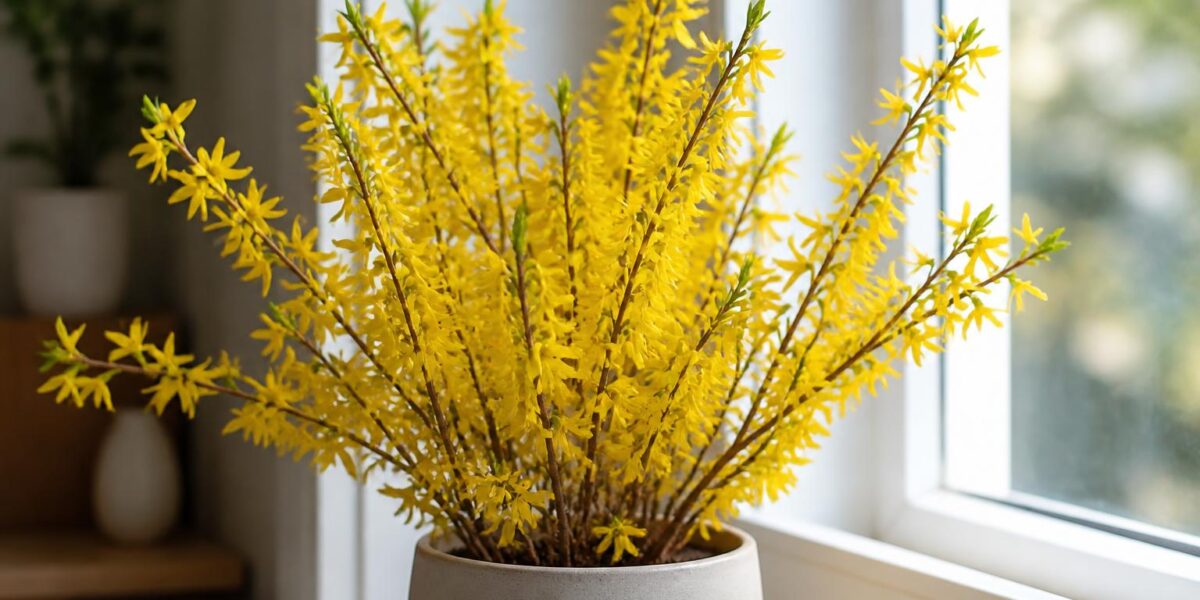
Forsythia is a genus of deciduous shrubs in the olive family (Oleaceae), native primarily to East Asia, with one species native to southeastern Europe. The most commonly cultivated garden plant is Forsythia × intermedia — a hybrid between F. suspensa and F. viridissima — which produces the iconic vivid yellow bell-shaped flowers on bare branches in early spring, before the leaves emerge.
Mature shrubs reach six to ten feet tall and equally wide, with arching branches that root where they touch the ground. The flowers are followed by simple, oval green leaves through the growing season, then yellow or purplish fall color before leaf drop. There are no berries to speak of — forsythia rarely produces seed in cultivation — which removes one common avenue of pet ingestion entirely.
Forsythia is widely planted as foundation plantings, hedges, and as specimen shrubs. It is also commonly used in cuttings — branches forced into bloom indoors — which means many households see forsythia inside in vases during late winter. Both indoor cuttings and outdoor shrubs are considered low-toxicity for pets.
Why Forsythia Is Considered Pet-Safe
Forsythia does contain some plant secondary metabolites — phillyrin, forsythin, forsythoside compounds, and various lignans — that are studied in herbal medicine contexts. None of these are present in concentrations that produce clinically significant poisoning in dogs or cats at typical chewing-encounter doses.
The ASPCA’s non-toxic classification reflects veterinary clinical experience: pets who chew forsythia generally do not present with poisoning symptoms. The most common reaction is the mild GI upset that any plant material — even lettuce — can cause when consumed in unusual quantities by a pet.
This is in contrast to other yellow spring-flowering plants that ARE toxic, such as daffodils for cats and daffodils for dogs, where the bulb contains lycorine and related alkaloids; or buttercups for cats and buttercups for dogs, which contain protoanemonin. The yellow color is purely coincidental — toxicity has nothing to do with flower color.
Realistic Risks From Forsythia Chewing
Even with a non-toxic plant, a few realistic considerations apply:
Mild GI upset from large ingestions. A pet that strips leaves off a forsythia branch and eats a substantial volume of plant material may vomit or have soft stools. The cause is typically just the bulk of indigestible plant fiber, not chemical toxicity.
Mechanical risks from woody branches. Forsythia branches are flexible but can splinter when chewed. A puppy chewing on a stick from a pruned branch could potentially get a splinter lodged in the gum, palate, or back of the throat. Vet exam is appropriate if you suspect this.
Choking risk in small dogs. Long, thin forsythia twigs swallowed by smaller dogs can rarely cause an obstruction. This is uncommon but worth knowing.
Pesticide and herbicide residues. If your forsythia has been treated with chemical sprays, the residue is more concerning than the plant itself. Avoid letting pets chew freshly sprayed plants for at least the period specified on the product label.
What to Watch For After Forsythia Exposure
Most pets show no signs at all after chewing forsythia. If symptoms do appear, the realistic patterns are:
Vomiting once or twice within a few hours. Self-limiting in most cases. Soft stools or mild diarrhea, often within 12 to 24 hours. Reduced appetite for a single meal. Drooling from leaf chewing (often related to the unfamiliar texture, not chemical irritation).
The signs you would NOT expect from forsythia are: severe lethargy, persistent vomiting, blood in vomit or stool, abdominal pain that does not resolve, neurological signs (tremors, seizures, weakness), or cardiac signs. If any of these appear, the cause is probably something else — perhaps a different plant your pet got into, a non-plant ingestion, or an unrelated medical issue. Get a vet exam.
What To Do If Your Pet Eats Forsythia
For mild forsythia exposure with no symptoms, most pets need no intervention beyond casual monitoring. Watch for 12 to 24 hours, offer fresh water, and continue normal feeding.
If mild GI signs appear, withhold food for 4 to 6 hours, offer small amounts of water, then reintroduce a bland diet (boiled chicken and rice for dogs, plain canned food for cats) if your vet approves. Most cases resolve uneventfully within 24 to 48 hours.
For larger ingestions or any pet with persistent symptoms, call your vet or poison control. The ASPCA APCC at 888-426-4435 and the Pet Poison Helpline at 855-764-7661 are 24/7 resources.
Do not induce vomiting at home for forsythia ingestion. There is no toxic dose to remove, and inappropriate emesis can cause aspiration or other complications.
Forsythia in Cut Flower Arrangements
One specific scenario worth addressing is forsythia branches forced into early bloom indoors during late winter. Many gardeners cut bare branches in February or March, bring them inside, and put them in tall vases — the flowers open in 7 to 14 days from the warmth of indoor air.
For households with cats, cut forsythia in a vase is generally low-risk, but the same precautions apply as with any cut floral display. Cats may bat at branches and knock vases over (broken glass and water spillage are the bigger hazards than the plant itself). Cats also occasionally chew flowers — forsythia flowers are safe.
For dogs, the main cut-flower concern is whether a dog tips a vase off a low table and chews on the branches or drinks the vase water. Plain forsythia branch water is not concerning, but if you have used a floral preservative additive, that is a separate question — most floral preservatives contain mild biocides that can cause GI upset.
Pet-Friendly Garden Companions for Forsythia
If you are designing a pet-friendly border or foundation planting around your forsythia, several other safe shrubs pair well:
The non-toxic mock orange (Philadelphus), with fragrant white flowers in early summer, takes over the bloom calendar after forsythia finishes. Weigela with its pink trumpet flowers blooms in late spring. Spirea is another low-concern flowering shrub. Camellia japonica is safe in regions where it grows.
For broader pet-safe garden planning, our pillar guides on cat-safe houseplants and dog-safe houseplants cover indoor analogs.
Shrubs to Avoid Near Pets
Some popular flowering shrubs are NOT safe and warrant a separate audit if you are reviewing your landscape:
Azaleas and rhododendrons contain grayanotoxins (severe-tier).
Hydrangeas contain cyanogenic glycosides (mild to moderate, including panicle hydrangeas).
Daphne contains mezerein and daphnetoxin (moderate to severe).
Pieris contains grayanotoxins (severe).
Honeysuckle berries can be a moderate concern.
Lilac is generally considered safe but worth confirming.
Among the popular yellow spring bloomers, forsythia is one of the few that pet owners can plant without significant concern.
When to Call the Vet
For routine forsythia exposure, vet contact is rarely needed. Call if you observe: vomiting that does not stop after a few episodes, persistent diarrhea, abdominal pain (hunched posture, reluctance to move), or any symptom that escalates rather than resolves. Also call if you are uncertain whether your pet ate forsythia or one of the more concerning shrubs above.
Cats who stop eating for 24+ hours, regardless of suspected cause, should be examined — feline hepatic lipidosis is a real concern with sustained appetite loss in cats.
Frequently Asked Questions
Is forsythia toxic to dogs?
No. Forsythia is on the ASPCA non-toxic plant list for dogs. The most likely outcome of chewing is mild GI upset from indigestible plant fiber, not poisoning.
Is forsythia toxic to cats?
No. Forsythia is on the ASPCA non-toxic plant list for cats as well. Cats rarely chew forsythia in significant quantities, but exposure is generally low-concern.
My dog ate forsythia leaves and is vomiting. What should I do?
Mild vomiting after eating any unfamiliar plant material is common and usually self-resolving. Withhold food for 4 to 6 hours, offer small amounts of water, and reintroduce bland food if the vomiting stops. If vomiting persists, call your vet.
Can I have forsythia branches in a vase indoors with my cat in the house?
Yes. Cut forsythia in a vase is considered safe. The realistic hazards are the vase itself (cats knocking over and breaking glass) and any floral preservative in the vase water, not the plant.
Is forsythia related to other yellow spring flowers like daffodils or buttercups?
No. Forsythia is in the olive family (Oleaceae), unrelated to daffodils (Amaryllidaceae) or buttercups (Ranunculaceae). The yellow color is coincidental — daffodils and buttercups ARE toxic, but the toxicity is unrelated to flower color.


