
Last updated: May 16, 2026
In this article
- Are Panicle Hydrangea Plants Toxic to Pets?
- What Are Panicle Hydrangeas and Why They Are Everywhere
- Cyanogenic Glycosides: The Real Story
- Symptoms of Panicle Hydrangea Exposure in Dogs
- Symptoms of Panicle Hydrangea Exposure in Cats
- What To Do If Your Pet Eats Panicle Hydrangea
- Why Panicle Hydrangeas End Up in Pet Households
- Pet-Proofing a Yard With Panicle Hydrangeas
- Cut Panicle Hydrangeas Indoors
- Other Hydrangea Species and Toxic Shrubs to Audit
- When to Go to the Emergency Vet
- Frequently Asked Questions
Are Panicle Hydrangea Plants Toxic to Pets?
Yes. Panicle hydrangeas (Hydrangea paniculata) — including the wildly popular cultivars ‘Limelight,’ ‘Annabelle’ (technically a smooth hydrangea, but often grouped commercially), ‘Pinky Winky,’ ‘Bobo,’ ‘Quick Fire,’ and ‘Vanilla Strawberry’ — are listed by the ASPCA as toxic to dogs, cats, and horses. The toxicity comes from cyanogenic glycosides, primarily hydrangin, present in the leaves, buds, and flowers. When chewed and digested, these compounds can release small amounts of hydrogen cyanide.
The honest framing matters here: panicle hydrangea is on the toxic list, but for most household pets in most realistic scenarios, the clinical severity is mild to moderate, not severe. The cyanogenic glycoside content is relatively low, and most dogs or cats stop chewing before they consume enough to develop systemic cyanide toxicity. The realistic outcome of a typical chewing event is gastrointestinal upset — vomiting, diarrhea, lethargy — rather than the dramatic cyanide poisoning sometimes implied by sensationalized sources.
That said, large ingestions can be more serious, and individual sensitivity varies. If your pet has chewed panicle hydrangea, contact your veterinarian, the ASPCA Animal Poison Control Center at 888-426-4435, or the Pet Poison Helpline at 855-764-7661. Our broader guides at hydrangeas for cats and hydrangeas for dogs cover the genus across species.
What Are Panicle Hydrangeas and Why They Are Everywhere
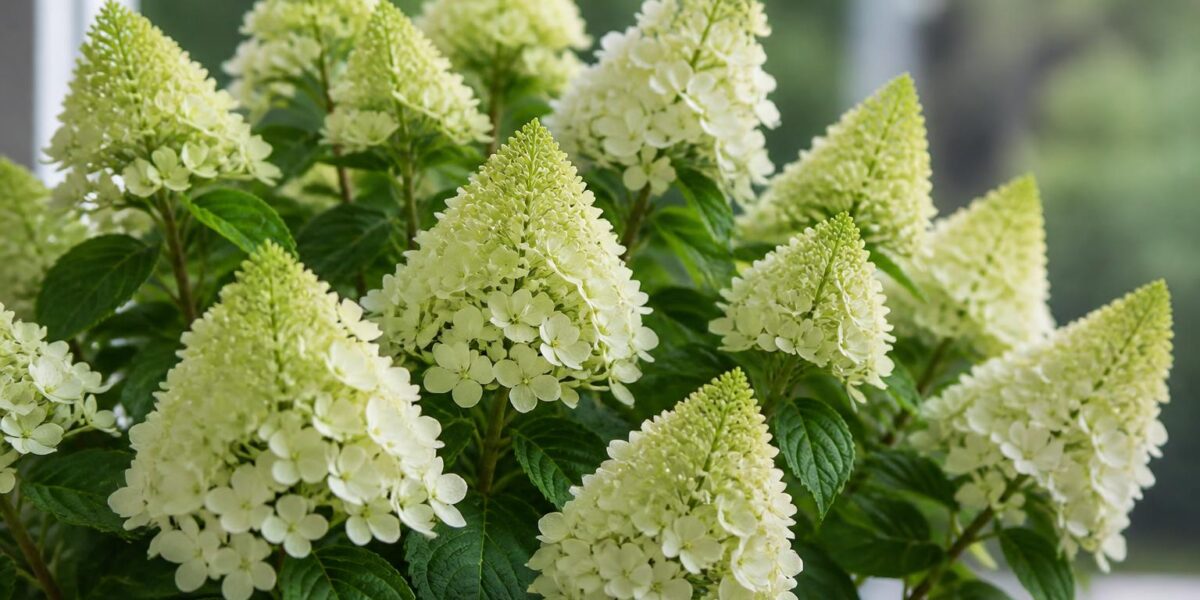
Hydrangea paniculata is a deciduous flowering shrub or small tree native to China, Japan, Korea, and the Russian Far East. Unlike the more famous bigleaf hydrangeas (Hydrangea macrophylla, the blue-pink variety), panicle hydrangeas have cone-shaped (panicle) flower clusters that emerge white or cream in mid-summer and often blush pink or red as they age into fall.
The cultivar boom of the past 20 years has put panicle hydrangeas into nearly every garden center in North America and Europe. ‘Limelight’ (lime-green to white panicles) and ‘Pinky Winky’ (white turning pink) are two of the most-sold flowering shrubs of the past decade. ‘Bobo’ and ‘Little Lime’ are dwarf varieties under three feet tall — at exactly the chewing height for medium-sized dogs.
‘Annabelle’ is technically Hydrangea arborescens (smooth hydrangea), not paniculata, but is often shelved alongside panicle hydrangeas at retail and shares the same toxicity considerations. We will use “panicle hydrangea” loosely throughout this article to cover the entire commonly-encountered group of cone-flowering hydrangeas, since the practical pet-safety guidance is the same.
Cyanogenic Glycosides: The Real Story
Hydrangin is the primary cyanogenic glycoside found across the Hydrangea genus, including paniculata. When plant tissue is chewed and the cell walls are damaged, hydrangin can release hydrogen cyanide enzymatically. This is the same biochemical mechanism that makes apple seeds, peach pits, and bitter almonds dangerous in large quantities.
The critical context: panicle hydrangea cyanogenic glycoside concentration is relatively low compared to truly dangerous cyanogenic plants like wild cherry leaves, which kill livestock that graze them. A pet would need to consume a substantial volume of leaves and flowers to develop systemic cyanide toxicity. Most pets do not eat enough — they chew, taste the bitter compounds, and stop.
The most realistic clinical picture is therefore not classic cyanide poisoning (cherry-red mucous membranes, rapid breathing, sudden death) but rather a more typical plant-ingestion GI upset, sometimes with mild systemic signs. ASPCA classifies it as moderately toxic, which reflects this realistic profile.
Sensational online sources sometimes overstate hydrangea toxicity, frightening pet owners. Veterinary toxicologists generally take a measured view: yes, hydrangeas are toxic and should not be in a pet’s chewing zone if avoidable, but a single chewed leaf is not a death sentence. Frame the response with appropriate concern but without panic.
Symptoms of Panicle Hydrangea Exposure in Dogs
Most affected dogs show GI signs within 6 to 24 hours:
Vomiting — the most common sign, often within a few hours of ingestion. Diarrhea, sometimes with mucus, within 12 to 24 hours. Loss of appetite for one or more meals. Lethargy and reduced interest in normal activities. Mild abdominal discomfort signaled by hunched posture.
Less commonly with larger ingestions: increased respiratory rate, weakness, abnormal heart rhythm, or pallor of the gums. These are signs of more significant cyanide-related effects and warrant emergency veterinary care. They are uncommon at typical garden-encounter doses but possible if a dog consumed a substantial quantity of leaves and flower clusters.
Severe toxicosis — cherry-red gums, severe respiratory distress, collapse, seizures — is rare from panicle hydrangea ingestion at realistic exposure levels but is the worst-case scenario.
Symptoms of Panicle Hydrangea Exposure in Cats
Cats typically ingest smaller quantities than dogs and tend to present with milder signs:
Vomiting once or twice. Reduced appetite — often the most reliable feline symptom. Hiding, withdrawal, or unusual quietness. Mild diarrhea. Drooling from leaf chewing.
Cats who develop significant signs warrant prompt evaluation. Cats are also at risk for hepatic lipidosis if appetite loss persists for 24+ hours from any cause, so prolonged anorexia after hydrangea ingestion needs vet care even if the cyanide-related effects are mild.
What To Do If Your Pet Eats Panicle Hydrangea
Get the pet away from the shrub and pick up any remaining accessible plant material to prevent further ingestion. Note approximately how much was eaten — a chewed leaf is different from a stripped branch is different from a pile of consumed flower clusters.
Call. Veterinarian first; if unavailable, ASPCA APCC at 888-426-4435 or Pet Poison Helpline at 855-764-7661. Have ready: pet weight, plant identification (or photos), approximate quantity, time of ingestion, and current symptoms. Toxicologists will help triage based on these factors.
Do NOT induce vomiting at home unless explicitly directed by a veterinary professional. The decision to decontaminate depends on time since ingestion, quantity, and the pet’s clinical status — get expert guidance before acting.
Monitor for 24 to 48 hours. Most cases resolve uneventfully with supportive care. Offer fresh water, withhold food briefly if vomiting, reintroduce a bland diet (boiled chicken and rice for dogs, plain canned food for cats) if vomiting stops and the vet approves.
Escalate if any signs of more significant toxicity appear: rapid breathing, weakness, pale or cherry-red gums, collapse, or seizures. These warrant emergency veterinary treatment, which may include IV fluids, oxygen support, and in rare severe cases, cyanide antidotes.
Why Panicle Hydrangeas End Up in Pet Households
Panicle hydrangeas are aggressively marketed because they are easier to grow than their bigleaf cousins. They are sun-tolerant, drought-tolerant once established, and bloom reliably regardless of soil pH. Cultivars like ‘Limelight’ have become signature plants in modern landscape design — every front foundation planting in the suburbs seems to include at least one.
The dwarf cultivars are particularly common in mixed perennial borders and as accent plants near walkways. ‘Bobo’ tops out around 30 inches; ‘Little Lime’ around four feet. These are exactly at chewing height for medium dogs and well within reach of cats who explore garden beds.
If you have purchased a flowering shrub in the past five years and it produces large cone-shaped white flower clusters that age to pink, there is a good chance it is a panicle hydrangea. Worth confirming if you have pets.
Pet-Proofing a Yard With Panicle Hydrangeas
You do not necessarily need to remove panicle hydrangeas from a pet household. Sensible management is usually sufficient:
Train a reliable “leave it” cue for any chewing-prone dog. This is the single highest-impact behavioral intervention.
Position panicle hydrangeas where they are not directly accessible to chronic chewers. A foundation planting behind a low decorative fence, or in a back bed accessed only by walking around the lawn, removes the casual-encounter exposure.
Pick up dropped leaves and spent flower clusters during the growing season. Fallen plant material is more accessible than material on the shrub and creates an easier ingestion opportunity.
For households with persistent puppy chewers or cats who graze the garden, consider replacing panicle hydrangea with a non-toxic alternative. Mock orange, weigela, spirea, forsythia, and camellia japonica all offer pet-safer flowering options.
Cut Panicle Hydrangeas Indoors
One often-overlooked exposure is cut hydrangea flowers in a vase indoors. The dried flower trade has made panicle hydrangea panicles a popular dried arrangement element — they hold their color and shape for months. Both fresh-cut and dried hydrangea flowers retain their cyanogenic glycoside content.
For households with cats, cut or dried panicle hydrangea on tables or in vases is a real ingestion risk because cats explore vertical surfaces. The flowers themselves contain hydrangin and chewing-on-dried-petals scenarios are reported.
For dogs, the risk is lower because dogs do not typically jump on tables to chew flowers, but tipped-over arrangements or low-table displays in homes with curious dogs are still worth managing.
If you bring panicle hydrangea cuttings indoors, place them in rooms your pets do not access, on high surfaces verified to be cat-jump-proof, and clean up any dropped petals or fragments.
Other Hydrangea Species and Toxic Shrubs to Audit
If you have one panicle hydrangea, you may have other toxic shrubs in the same yard. The full landscape audit list:
Other hydrangeas — bigleaf (H. macrophylla), oakleaf (H. quercifolia), climbing (H. petiolaris) — share similar cyanogenic glycoside profiles. Our hydrangea guide for cats and guide for dogs cover the genus broadly.
Azaleas and rhododendrons — grayanotoxin, severe-tier.
Pieris — same toxin family as azaleas.
Daphne — moderate to severe.
Honeysuckle — moderate, mostly berry-related.
Pittosporum — moderate.
For broader pet-safe garden planning, see cat-safe houseplants and dog-safe houseplants.
When to Go to the Emergency Vet
Call your vet or head to the ER if you observe: persistent vomiting (more than 2 to 3 episodes in a few hours), inability to keep water down for 12+ hours, severe lethargy or weakness, abnormal gum color (pale, cherry-red, or bluish), rapid or labored breathing, weakness or collapse, or seizures. Any sign of significant systemic toxicity warrants immediate evaluation.
For mild ingestions in healthy adult pets with no symptoms after 6 to 12 hours, home monitoring is often appropriate after a poison-control consultation. For cats, smaller dogs, or any case with quantity uncertainty, lean toward the vet exam.
Frequently Asked Questions
How dangerous is panicle hydrangea really? I keep seeing scary headlines.
Panicle hydrangea is genuinely toxic — ASPCA-listed — but the realistic clinical severity at typical chewing-encounter doses is mild to moderate, not severe. Most affected pets show GI upset that resolves with supportive care. Severe systemic cyanide toxicity is uncommon at realistic exposure levels but possible with large ingestions.
My dog ate one panicle hydrangea leaf. Should I worry?
One leaf is unlikely to cause significant symptoms in an adult dog. Monitor for 12 to 24 hours and call your vet or poison control if any signs develop. The toxicologist can tell you whether home monitoring is appropriate or whether the situation warrants a clinic visit.
Are dried panicle hydrangea flowers in arrangements still toxic?
Yes. Drying does not eliminate cyanogenic glycosides. Dried flowers used in indoor arrangements retain their toxicity and should be kept away from chewing pets.
Are ‘Annabelle’ hydrangeas the same as panicle hydrangeas?
‘Annabelle’ is technically Hydrangea arborescens (smooth hydrangea), not Hydrangea paniculata. Toxicity profiles are similar, however, and the practical pet-safety guidance is identical for both.
What does cyanide poisoning look like in pets?
Severe cyanide toxicity presents with rapid breathing, cherry-red mucous membranes, weakness, and collapse — but this picture is rare from realistic hydrangea ingestion. The far more common presentation is GI upset: vomiting, diarrhea, lethargy, reduced appetite. Severe signs warrant immediate emergency care.


