
Last updated: May 16, 2026
In this article
- The Quick Answer on Sansevieria and Pets
- What Sansevieria Plants Actually Are
- Why Saponins Are the Concern
- Comparing Sansevieria to Other Houseplants
- Cats vs. Dogs With Sansevieria
- Symptoms to Watch For
- What to Do If Your Pet Chewed a Sansevieria
- Living With Sansevieria and a Pet
- Pet-Safer Houseplant Alternatives
- Frequently Asked Questions
The Quick Answer on Sansevieria and Pets
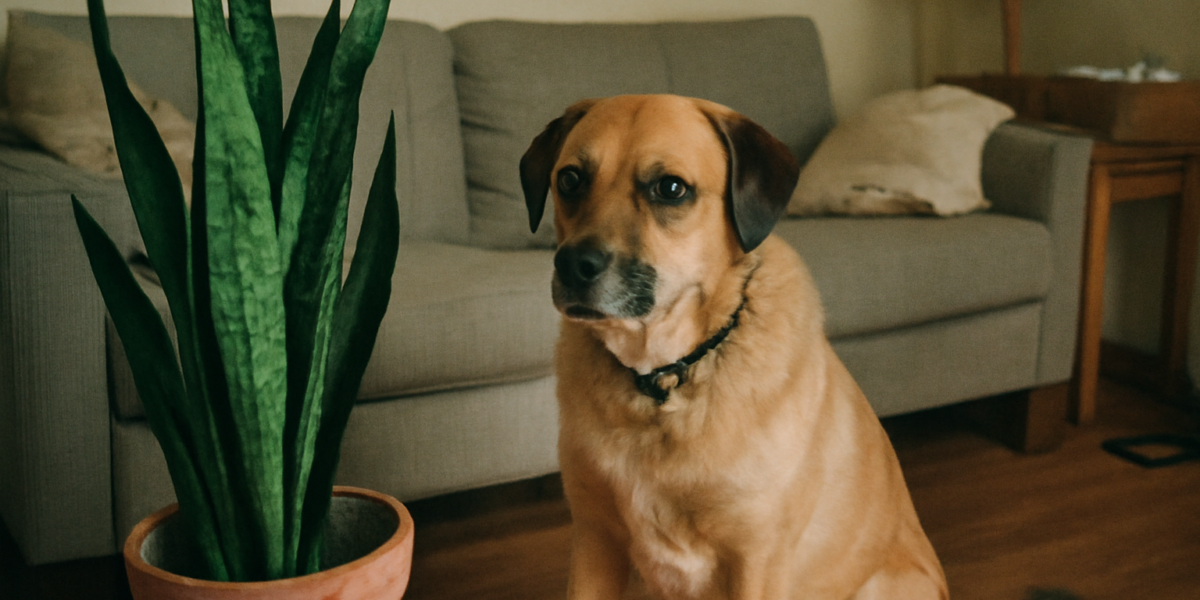
Sansevieria — the genus most owners know as snake plant or mother-in-law’s tongue — is listed as toxic to cats and dogs by the ASPCA. Every species and cultivar in the group shares the same chemistry: saponins concentrated in the leaves, with mild oral irritation, drooling, vomiting, and diarrhea as the typical clinical picture after a chew. The severity tier is mild-to-moderate. So when owners ask whether sansevieria toxic pets is a real concern, the answer is yes, but the realistic outcome of a typical chew is GI upset rather than systemic emergency.
One taxonomic note before we go further. In 2017, plant taxonomists reclassified Sansevieria into the genus Dracaena based on DNA evidence, so you may see “Sansevieria trifasciata” and “Dracaena trifasciata” used for the same plant in modern reference materials, nursery tags, and plant apps. Both names are valid in current literature. Either way, the pet-safety story is the same — saponin chemistry, ASPCA toxic listing, mild oral and GI irritation. We use Sansevieria throughout this article because that is still the more familiar name to most plant owners, but if your local nursery has labeled the plant Dracaena trifasciata, you have the same plant.
What Sansevieria Plants Actually Are
Sansevieria (or Dracaena, post-reclassification) is a genus of evergreen succulent perennials native to dry rocky habitats across Africa and parts of southern Asia. The genus is famous in the houseplant world for being almost impossible to kill — it tolerates low light, infrequent watering, and indoor air conditioning that wilts many other plants. It is also famous in pet households for showing up on every “best low-maintenance houseplant” list while quietly carrying a toxic profile that those lists rarely emphasize.
The species and cultivars you are most likely to encounter:
- Sansevieria trifasciata — the classic snake plant with upright sword-shaped leaves edged in yellow (‘Laurentii’) or banded in green (‘Hahnii’ / bird’s-nest dwarf form)
- Sansevieria cylindrica — cylindrical leaves like upright spears, sometimes braided for retail display
- Sansevieria masoniana — “whale fin” with a single huge paddle-shaped leaf
- Sansevieria moonshine — silvery green wide leaves
- Sansevieria zeylanica — similar to trifasciata but with green-on-green banding instead of yellow margins
- Sansevieria Bantel’s Sensation — narrow leaves striped white and green
- Sansevieria hahnii — short rosette form, often labeled “bird’s nest” or dwarf snake plant
All of these share the saponin chemistry. There is no “safe variety” within the genus. The variegated cultivars, the dwarf forms, the cylindrical form, the giant whale fin, and any other named selection are all toxic to the same degree. The common names “mother-in-law’s tongue” and “viper’s bowstring hemp” both refer to the same plant.
Why Saponins Are the Concern
Saponins are a class of plant chemicals named for their soap-like foaming behavior in water. They are widespread in the plant kingdom — present in some legumes, in horse chestnuts, in the soapwort plant that gives the chemistry family its name, and in Sansevieria. In low concentrations they are mostly inert; in higher concentrations they irritate mucous membranes and can disrupt cell membranes by interfering with cholesterol-rich lipid layers.
For pets eating Sansevieria leaves, the saponin effect is mostly local — irritation of the lips, gums, tongue, esophagus, and stomach. The result is the classic symptom set: drooling, lip-smacking, pawing at the mouth, vomiting, sometimes diarrhea. The compound family is also why a damp finger rubbed across a chewed Sansevieria leaf might produce a faintly soapy slick. In larger ingestions, saponins can produce more pronounced GI symptoms and occasionally lethargy or weakness, but Sansevieria toxicity in dogs and cats does not typically progress to cardiac, kidney, or neurological emergencies in the way some other houseplant toxins (like Lilium in cats) do.
The practical implication: a typical leaf-nibble on a Sansevieria is uncomfortable for the pet but not life-threatening. The exposure that warrants more concern is a small or sensitive animal that ingested a substantial portion of leaf, an animal showing prolonged or repeated vomiting, or a pet with underlying GI or cardiac conditions where even a moderate disturbance could cascade.
Comparing Sansevieria to Other Houseplants
Sansevieria sits in the broader picture of toxic indoor plants like this. The most common other toxic houseplants — pothos, philodendron, peace lily, monstera, anthurium, dieffenbachia — all share the calcium oxalate raphide chemistry of the Aroid family (Araceae). Sansevieria is not an Aroid; it is in the asparagus family (Asparagaceae). Its toxin family is different (saponins versus calcium oxalate raphides), but the clinical picture in pets is broadly similar — oral and GI irritation rather than systemic emergency.
For comparison to those Aroid neighbors:
- Calcium oxalate raphide plants like pothos and philodendron cause a sharper immediate oral pain because the raphides are needle-like crystals that mechanically embed in tissue
- Saponin plants like Sansevieria cause more of a generalized irritation, less acute and sharp at the moment of the chew
- Both clusters share vomiting and drooling as common downstream symptoms
For the existing umbrella articles on snake plants specifically, see snake plants and cats, snake plants and dogs, and the alternate snake plant guide. Those cover the broader picture; this article extends with the variety-specific deep dive.
Cats vs. Dogs With Sansevieria
Cats and dogs both react to Sansevieria saponins with similar oral and GI symptoms, but the realistic exposure pattern differs between the species. Cats are more likely to find a Sansevieria interesting because the upright sword-shaped leaves invite the same batting and chewing behavior that any tall stiff houseplant does. The classic scenario is a cat that has lived peacefully alongside a snake plant for years and then, during a boredom phase or a teething phase in younger animals, suddenly starts chewing on it.
Dogs are less likely to encounter Sansevieria at floor level if the plant is on a stand or table, but puppies and counter-surfing dogs absolutely do reach it. Dogs are also more likely to chew large quantities once they start, which is why the more substantial saponin exposures we see in clinics tend to be dogs rather than cats.
Severity per pound of body weight is broadly similar between cats and dogs for Sansevieria. There is no species-specific vulnerability the way there is for, say, Lilium in cats (true lilies are catastrophic for cats and merely mildly upsetting for dogs). The variable is exposure scale, not species sensitivity.
Symptoms to Watch For
Symptoms of Sansevieria ingestion typically begin within minutes to a couple of hours of the chew. Watch for:
- Drooling, foaming, or lip-smacking immediately after
- Pawing at the mouth or rubbing the face on the floor or furniture
- Vomiting, sometimes with recognizable plant fiber
- Loss of appetite for a meal or two
- Diarrhea or loose stool over the following hours
- Mild lethargy or quiet behavior
The threshold for veterinary care is exposure-dependent and pet-dependent. A medium adult dog who took one bite out of a leaf and is drooling but otherwise alert is usually a watch-at-home case. A small dog or cat who chewed multiple leaves, a pet with prolonged or repeated vomiting, a pet that becomes lethargic and refuses water, or any pet with neurological signs — call your veterinarian. ASPCA Animal Poison Control at 888-426-4435 and Pet Poison Helpline at 855-764-7661 are both staffed twenty-four hours and can advise on whether your specific exposure warrants a clinic visit.
What to Do If Your Pet Chewed a Sansevieria
If you find your pet with a chewed Sansevieria leaf, here is the practical path. First, stay calm — this is not a life-threatening exposure for typical foraging amounts. Remove any remaining leaf material from the pet’s mouth gently, using a damp cloth if needed. Offer fresh water; many pets will drink to soothe the oral irritation. Take the plant out of reach for the rest of the day so the pet does not return for more.
Watch for the next twelve to twenty-four hours. Mild drooling, one or two episodes of vomiting, and brief food refusal are common and self-resolving. If symptoms persist, escalate to your veterinarian. Do not induce vomiting at home unless a veterinary professional has explicitly directed you to do so. Saponin-containing plant material is irritating going down and can be more irritating coming back up.
Take a photo of the plant before you call your vet. Confirming the species (Sansevieria, sometimes labeled Dracaena trifasciata) and roughly how much leaf was chewed helps the veterinary team make care decisions. The size of your pet, age, and any underlying health conditions also matter.
Living With Sansevieria and a Pet
If you already own Sansevieria and have a new pet, or you are weighing whether to bring one home into a pet household, you have options that do not require getting rid of the plant. The practical setup:
- Move the plant to a shelf, mantel, or hanging-style stand that the pet cannot reach by jumping (cats) or counter-surfing (dogs)
- Skip the floor-level pot stand entirely; Sansevieria is happy in a high-light position above pet level
- If you have a chronic plant-chewing cat, consider gating the room with the Sansevieria in it during unsupervised hours
- Pick up shed leaves promptly — fallen Sansevieria leaves can be just as chew-attractive on the floor as they are on the plant
- If you propagate by leaf-cutting, do that work in a closed room with the door shut against pet entry
For broader cat-friendly indoor plant choices, our cat-safe houseplants guide lists species that give similar architectural look without the saponin profile. For broader pet-safe garden and indoor planning, the pet-safe garden plants guide is the companion piece.
Pet-Safer Houseplant Alternatives
If you love the upright sword-leaf aesthetic of Sansevieria but want a non-toxic alternative, you have decent options. Spider plants (Chlorophytum comosum) give an arching strap-leaf look and are listed non-toxic by ASPCA. Ponytail palms (Beaucarnea recurvata) give a trunk-and-fountain look in a different shape and are non-toxic. Bromeliads (various species) give bold architectural leaves and are non-toxic. Various Peperomia species and prayer plants (Maranta) give different but appealing leaf textures.
Areca palms, parlor palms, baby rubber plant (Peperomia obtusifolia despite the misleading “rubber plant” name — different from toxic Ficus elastica), and watermelon peperomia all appear in our broader safe-houseplant references. None of them are perfect Sansevieria substitutes aesthetically, but together they cover most of the design needs Sansevieria typically fills.
Frequently Asked Questions
Are all Sansevieria varieties toxic to pets?
Yes. All Sansevieria species and cultivars share the same saponin chemistry. There is no safe variety within the genus, including dwarf forms (S. hahnii), cylindrical forms (S. cylindrica), whale fin (S. masoniana), or variegated cultivars (Bantel’s Sensation, moonshine, Laurentii).
Why is the plant sometimes called Dracaena trifasciata now?
Plant taxonomists reclassified Sansevieria into the genus Dracaena in 2017 based on DNA evidence. Both names refer to the same plant; both are still used in the literature. The toxicity story is unchanged regardless of which name your nursery uses.
Will a small Sansevieria chew kill my cat?
Almost never. Sansevieria toxicity is mild-to-moderate and presents primarily as oral irritation, drooling, vomiting, and diarrhea. Most cats recover fully within a day. Severe outcomes are rare and usually involve very small or already-sick animals or extremely large ingestions.
What is the difference between snake plant toxicity and pothos toxicity?
Snake plant (Sansevieria) contains saponins; pothos and most Aroid houseplants contain calcium oxalate raphides. Both cause oral and GI irritation. Pothos exposure tends to produce sharper acute oral pain because the calcium oxalate crystals are needle-shaped, while snake plant exposure tends to produce more generalized GI upset.
Who should I call if my pet ate Sansevieria?
Start with your own veterinarian. ASPCA Animal Poison Control is at 888-426-4435 and Pet Poison Helpline at 855-764-7661 — both are staffed twenty-four hours. For more on the broader snake-plant story, see snake plants and cats and snake plants and dogs. If you are also thinking about adoption, our adopt cats and adopt dogs hubs are good places to start.


