
Last updated: May 16, 2026
In this article
- The Short Answer on String of Dolphins and Pets
- What String of Dolphins Actually Is
- The Toxic Compounds in Senecio Plants
- Symptoms to Watch For
- Why Severity Usually Stays Manageable
- What to Do If Your Pet Chewed String of Dolphins
- What the Vet Will Likely Do
- String of Dolphins Versus String of Turtles
- String of Dolphins Versus String of Bananas
- Pet-Safer Trailing Houseplant Alternatives
- Keeping Your String of Dolphins and Your Pet
- The Bigger Picture for Senecio in Your Home
- Frequently Asked Questions
The Short Answer on String of Dolphins and Pets
String of dolphins is toxic to both cats and dogs. The plant, sold under the botanical name Senecio peregrinus, is a hybrid of two other Senecio species, and the entire Senecio genus carries a chemistry that pet owners need to take seriously. Severity for a small acute ingestion sits in the mild-to-moderate band, with vomiting, diarrhea, drooling, and lethargy as the usual signs, but the genus also carries a chronic liver-damage concern that sets it apart from a typical houseplant chew.
If your cat or dog has just chewed a string of dolphins vine, move the plant out of reach, pick any visible green fragments out of the mouth, and call your veterinarian. The ASPCA Animal Poison Control Center at 888-426-4435 and the Pet Poison Helpline at 855-764-7661 both take owner calls around the clock for a consultation fee. Do not induce vomiting at home. Treat the trailing succulent on the windowsill as a real plant exposure, not a harmless taste.
What String of Dolphins Actually Is
String of dolphins is a trailing succulent named for the leaf shape, which sits along the stem like a row of leaping cartoon dolphins. Each leaf has the curved back, fluked tail, and side fin that give the plant its visual gimmick. It is one of the most recognizable Instagram succulents of the last decade and is sold in hanging pots, glass terrariums, and small starter plugs in nearly every garden center that carries houseplants.
The plant is a horticultural hybrid created by crossing string of pearls (Senecio rowleyanus) with candle plant (Senecio articulatus). It carries traits from both parents, including the trailing growth habit of string of pearls and the slightly more upright leaf orientation of candle plant. Like most succulents in the Senecio group, it is drought tolerant, propagates easily from cuttings, and tolerates bright indirect light better than direct sun.
The Senecio genus is enormous, spanning more than a thousand species, and the family it sits in is Asteraceae, the daisy family. That botanical placement matters because Asteraceae and the broader Senecio group are well documented in veterinary toxicology as a problem genus.
The Toxic Compounds in Senecio Plants
Senecio plants contain pyrrolizidine alkaloids, a class of plant defense compounds that have a documented chronic effect on the liver in livestock and laboratory animals. They are the same family of compounds that give common ragwort its bad reputation among horse and cattle owners. The acute pet exposures we see in companion animals tend to present as gastrointestinal upset rather than dramatic liver injury, in part because the doses pets ingest are usually small relative to body size.
On top of the alkaloid concern, the milky sap present in Senecio leaves and stems contains irritant compounds that produce immediate oral discomfort, drooling, and sometimes vomiting on the first chew. This is the part of the toxicity that pet owners notice first and is responsible for most reported acute cases. The chemistry overlaps with what veterinarians describe in string of pearls exposures in cats and string of pearls exposures in dogs, the closest sibling plant.
For a one-time small chew, the practical risk is acute GI signs and a sore mouth. The chronic alkaloid concern matters most when an animal has repeated exposure over weeks, which happens occasionally with dogs that learn to chew low-hanging vines or with cats that nibble whenever they can reach the trailing strands. Repeated exposure is the scenario that earns a vet conversation about liver enzymes.
Symptoms to Watch For
Signs of string of dolphins ingestion typically appear within thirty minutes to a few hours of the chew. Common presentations include the following.
- Drooling, lip-licking, or pawing at the mouth from sap irritation
- Vomiting, sometimes with shredded green plant fragments
- Loose stools or watery diarrhea, sometimes within a few hours
- Lethargy, sleeping more than usual, or unwillingness to play
- Mild loss of appetite or refusal of one meal
- Foul or unusual breath odor in the hours after a chew
Cats sometimes react with sneezing, watery eyes, or facial pawing if sap touches whiskers and is then groomed onto the face. Dogs that ate larger amounts may develop abdominal tenderness, where they flinch when you press gently on the belly. Severe presentations are uncommon for one-off small ingestions but can include persistent vomiting, weakness, or pale gums that warrant an emergency visit.
Why Severity Usually Stays Manageable
Most string of dolphins exposures resolve within twenty-four to forty-eight hours with supportive care alone. The plant’s bitter, milky sap is genuinely unpleasant and most pets do not return for a second mouthful after the first chew. Cats, in particular, tend to bite once, react with a horror-stricken face, and walk away from the plant for good. The dose-limiting factor is the plant’s own taste.
The exception is the bored or food-motivated dog. A young Labrador or Beagle with nothing better to do can strip a hanging string of dolphins down to bare stem in minutes if the pot is reachable. Larger ingestions in dogs produce more dramatic GI signs and a longer recovery, and these are the cases where veterinary fluids, antiemetic medication, and a soft-food rest period make the difference.
Across the Senecio “string of” plants, the practical severity tier sits roughly the same as string of hearts exposures in many veterinary references, although string of hearts is technically a Ceropegia, not a Senecio. The acute presentation looks similar enough that pet owners often confuse the two; the two genera share the trailing-succulent niche on plant shop shelves.
What to Do If Your Pet Chewed String of Dolphins
Stay calm and work through these steps in order.
- Move the plant out of reach so the pet cannot return for another mouthful while you are dealing with the first.
- Gently wipe any visible plant material out of the mouth with a soft, damp cloth. Do not jam fingers down a frightened animal’s throat.
- Offer cool, fresh water. A small lick of plain yogurt or kefir can help settle a sore mouth.
- Call your veterinarian or one of the poison control hotlines. Bring the plant tag or a photo of the plant to the call so the vet can confirm the species.
- Watch for ongoing vomiting, diarrhea, or lethargy across the next twenty-four hours. Worsening signs warrant an in-person exam.
Do not give over-the-counter human anti-nausea medications, do not induce vomiting with hydrogen peroxide at home, and do not assume that because the plant is small the dose is harmless. Decontamination decisions belong to a veterinarian who knows the patient’s body weight, age, and any underlying conditions.
What the Vet Will Likely Do
For most acute string of dolphins exposures, the workup is relatively quick. Your vet will examine the mouth, palpate the abdomen, check hydration, and decide whether the patient needs fluids, antiemetic medication, or simply observation at home with a bland diet. Severity-of-symptoms drives the decision more than the species of plant alone, because individual pets react differently to the same dose.
Bloodwork is usually not necessary for a small one-time chew. It becomes appropriate when the animal has had repeated exposure across weeks (the scenario where pyrrolizidine alkaloids matter most), when the patient is showing persistent or unusual signs, or when the pet has a pre-existing liver condition that complicates the picture. Liver enzyme monitoring is the kind of follow-up your vet might suggest if you have caught your dog grazing the same trailing vine multiple times.
String of Dolphins Versus String of Turtles
This is the single most important confusion to clear up because it directly affects how worried you need to be. String of dolphins (Senecio peregrinus) is in the daisy family and is toxic. String of turtles (Peperomia prostrata) is in the pepper family (Piperaceae), is unrelated, and is non-toxic to cats and dogs according to ASPCA listings for the Peperomia genus. The marine-animal common names mask a complete chemical and botanical difference.
The visual cues help once you know what to look for. String of dolphins has fleshy, plump, blue-green leaves shaped like leaping dolphins, often with a lighter “belly” stripe. String of turtles has small, almost flat, dark-green leaves with pale silver-green markings that look like turtle-shell plates, growing on thin red-tinted stems. The leaves of dolphins are juicy succulents; the leaves of turtles are thin and almost paper-textured.
If you bought a “string of” plant from a shop and the tag is missing, take a photo and ask the seller. The botanical name on the original grower’s tag is the only reliable way to know which family you have at home.
String of Dolphins Versus String of Bananas
Within the toxic Senecio group, string of dolphins is closely related to string of bananas (Senecio radicans). Both are succulent trailing plants with curved, banana-shaped or dolphin-shaped leaves, both share the same pyrrolizidine alkaloid chemistry, and both cause similar acute GI signs in pets. From a toxicology standpoint, the two are interchangeable risks; the only difference for an owner is the leaf shape on the shelf.
String of pearls (Senecio rowleyanus), one of the parent species of the dolphin hybrid, has spherical pea-like leaves and is the most commonly reported of the toxic strings in pet poisoning calls because it is the most popular. If your household already has a string of pearls and you have learned to manage it, the management plan for string of dolphins is identical.
Pet-Safer Trailing Houseplant Alternatives
If you love the cascading vine aesthetic and have a curious cat or chewing dog, several non-toxic plants give you the same look without the Senecio risk. String of turtles is the closest visual swap on the trailing-succulent shelf and is non-toxic. Peperomia varieties in general are a reliable safe-houseplant pick. Haworthia gives you the small succulent look in a non-trailing rosette form.
For trailing texture specifically, look at spider plants, hoya kerrii, and parlor palms (the last gives you a different shape but is one of the safest tropicals you can hang). Our cat-safe houseplants guide goes through the full list with light requirements and trade-offs. The visual gap between dolphins and turtles is small enough that most people who switch do not miss the Senecio plant at all.
Keeping Your String of Dolphins and Your Pet
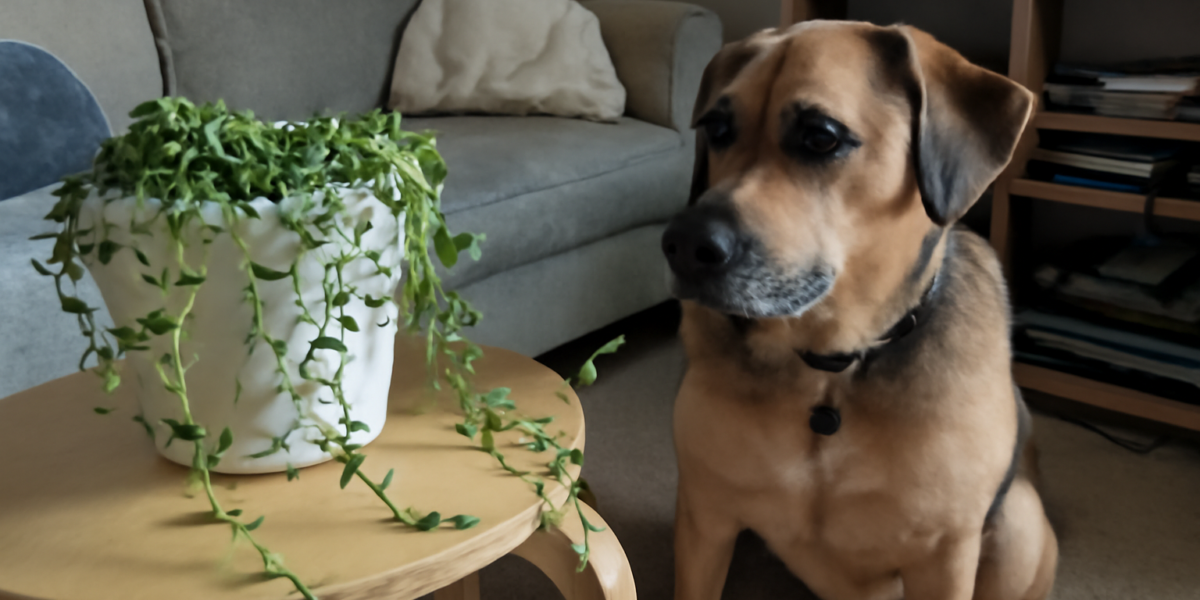
You do not have to throw out the plant if you can manage access. Hanging from a ceiling hook in a room the pet does not enter is the simplest option. Glass terrariums work for short-stranded specimens. Closed sunrooms or covered porches off-limits to the cat are another. The trick is that the trailing habit of this plant is precisely what makes it tempting to a swatting cat or a counter-surfing dog, so the plant has to be physically out of reach, not just out of sight.
For households with kittens, puppies, senior pets with reduced judgment, or any pet with a history of plant chewing, rehoming the plant to a friend is usually the kindest choice. Pets that chew houseplants are often bored or under-stimulated. Offering safe options like cat grass or oat grass redirects the chewing onto something digestible.
The Bigger Picture for Senecio in Your Home
String of dolphins, string of bananas, string of pearls, and the various ragwort relatives sold as ornamental “vermillion plant” all share the same chemistry. Ragwort exposures in dogs are the textbook case for the chronic pyrrolizidine alkaloid concern, although ragwort lives in pasture and wild margins rather than living rooms. The same family of compounds, expressed differently, sits in the houseplant version.
If you are setting up a home for a pet you are about to adopt, our cat adoption hub and dog adoption hub include household-prep guides that walk you through the plants, foods, and chemicals worth removing or relocating before the new animal arrives. An afternoon of plant audit is a fair trade for years of relaxed, succulent-filled windowsills.
Frequently Asked Questions
My cat licked a string of dolphins leaf but did not chew it. Should I worry?
A surface lick releases very little sap and most cats are fine. Watch for drooling, pawing at the mouth, or vomiting across the next two hours. If your cat seems comfortable and is eating that evening, the exposure was minimal. If you are unsure, a poison control call costs less than peace of mind is worth.
How is string of dolphins different from string of turtles?
They are in completely different plant families. String of dolphins is a Senecio (daisy family) and is toxic to pets. String of turtles is a Peperomia (pepper family) and is non-toxic. The marine-animal common names cause real confusion at the plant shop. Always check the botanical name on the tag.
How long do string of dolphins symptoms last in pets?
Mild GI signs and a sore mouth typically resolve within twenty-four to forty-eight hours. Drooling and a refusal to eat one meal are common. Persistent vomiting, weakness, or symptoms beyond two days are unusual and warrant a vet exam.
Is string of dolphins more or less toxic than string of pearls?
They share the same Senecio chemistry and the practical severity is similar. String of dolphins is a hybrid of string of pearls and candle plant, so the toxic compounds are inherited. Treat them as equivalent risks for management purposes.
Can I make string of dolphins safe by hanging it high?
Hanging high is a real reduction in risk for most cats and most dogs, but a determined cat will still find a launching surface. The reliable safety upgrade is to put the plant in a room the pet cannot enter, or to swap to a non-toxic trailing plant like string of turtles.


