
Last updated: May 16, 2026
In this article
- Reassurance First: Vanilla Plants Are Not Specifically Listed as Toxic
- Meet the Vanilla Orchid: Vanilla Planifolia
- Why Orchids as a Family Are Generally Pet-Safe
- Vanilla Plant Versus Vanilla Extract: The Critical Distinction
- Vanilla Beans, Vanilla Sugar, and Vanilla in Baked Goods
- Symptoms That Would Warrant a Vet Call (Plant Versus Extract)
- Why Cats Are More Vulnerable to Vanilla Extract
- Caring for a Vanilla Plant in a Pet Household
- How Vanilla Compares with Other Pet-Safe Herb-Garden Plants
- Pollination, Vanilla Beans, and the Curious Cat
- Frequently Asked Questions
Reassurance First: Vanilla Plants Are Not Specifically Listed as Toxic
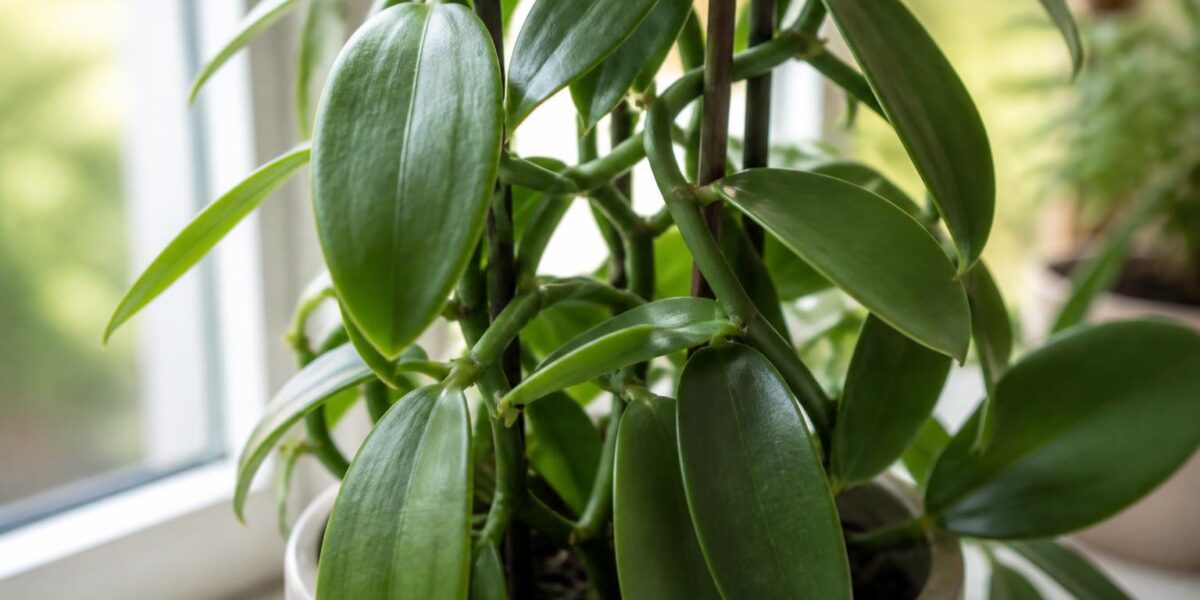
If you have a vanilla orchid (Vanilla planifolia or its close relatives) in your conservatory, greenhouse, or warm sunroom, the good news is straightforward: the live plant itself is not on ASPCA’s list of toxic plants and is generally considered safe around dogs and cats. Vanilla is a tropical climbing orchid in the family Orchidaceae, and orchids as a family are very rarely associated with serious pet toxicity. A pet that nibbled a leaf or chewed on a vine is unlikely to develop more than transient mild GI upset, if anything at all.
That said, this article makes one important distinction up front: the plant is not the same as vanilla extract. The bottle of vanilla extract in your kitchen is roughly 35% alcohol by volume — a real pet hazard, especially for cats and small dogs. The plant-versus-extract distinction is the single most important practical safety message for pet-owner gardeners growing vanilla, and the rest of this guide unpacks why.
Meet the Vanilla Orchid: Vanilla Planifolia
Vanilla is one of the only orchids cultivated for food. The genus contains over a hundred species, but commercial vanilla almost exclusively comes from Vanilla planifolia, a vining tropical orchid native to Mexico and Central America. Two related species — Vanilla tahitensis (Tahitian vanilla) and Vanilla pompona (West Indian vanilla) — are also grown commercially in smaller quantities and have similar safety profiles.
The plant grows as a long, fleshy green vine that climbs trees or supports in the wild. In cultivation it is grown on stakes or up walls, often in greenhouses where temperature and humidity can be controlled. The pale yellow-green flowers open for only a single day; pollination produces the long green seed pods that, after months of curing, become the familiar dried vanilla beans of commerce. Home growers who flower a vanilla orchid usually pollinate by hand because the natural pollinator (a specific Mexican bee) is not present elsewhere.
Why Orchids as a Family Are Generally Pet-Safe
Orchidaceae is one of the largest plant families on earth, with tens of thousands of species, and it is striking how few of them are documented as significantly toxic to pets. The most popular indoor orchid genera — Phalaenopsis (moth orchid), Cattleya, Dendrobium, Oncidium, Cymbidium — are generally listed as non-toxic by ASPCA. Vanilla fits this same pattern.
This does not mean orchids are dietary additions. A pet that chews a fleshy orchid leaf or vine can still develop mild stomach upset from the simple fact of swallowing fibrous plant material outside its normal diet. Cats sometimes vomit after eating leaves regardless of species. The reassurance is that the chemical risk is low; the mechanical risk is the same as any plant chewing.
Vanilla Plant Versus Vanilla Extract: The Critical Distinction
This is the section every pet-owner-gardener should read carefully. Vanilla extract — the liquid in your baking cabinet — is made by soaking cured vanilla beans in alcohol. United States FDA standards require commercial vanilla extract to contain at least 35% alcohol by volume, which is roughly the same alcohol content as whiskey or rum. A small dog that licks up a tablespoon of spilled vanilla extract is essentially being dosed with a shot of liquor.
Alcohol toxicity in pets shows as wobbliness, disorientation, vomiting, slowed breathing, low body temperature, and in severe cases coma or death. Cats, small dogs, and any pet under five pounds are particularly vulnerable. If your pet has lapped up vanilla extract, treat it as ethanol exposure and call your veterinarian, ASPCA APCC at 888-426-4435, or Pet Poison Helpline at 855-764-7661 immediately. Bring the bottle so the team can read the alcohol percentage from the label.
“Pure vanilla flavor” or “imitation vanilla” products are also worth checking — many imitation vanillas use propylene glycol or other carriers, and propylene glycol carries its own pet-safety questions, particularly for cats. Read the label and assume any liquid kitchen flavoring is more dangerous than the plant it represents.
Vanilla Beans, Vanilla Sugar, and Vanilla in Baked Goods
A whole dried vanilla bean — the pod itself — is not specifically toxic. A pet that chewed and swallowed one is more likely to have a mild GI upset and possibly mechanical irritation from the fibrous pod than a chemical poisoning. Vanilla sugar (sugar infused with split vanilla beans) is mostly a sugar concern, not a vanilla concern; large sugar ingestions cause GI upset and risk pancreatitis in pets prone to it.
Vanilla in baked goods is usually present at very low concentrations after baking, since the alcohol carrier evaporates during cooking. A pet that stole a vanilla cupcake is being exposed to the broader baked-good toxins (chocolate, raisins, xylitol, macadamia, butter and fat) much more than to vanilla itself. Always read the recipe before deciding how worried to be.
Symptoms That Would Warrant a Vet Call (Plant Versus Extract)
Distinguish what you saw your pet eat:
- Live vanilla plant chewed: Possible mild drooling, possible single episode of vomiting from leaf-eating itself rather than chemistry, possible diarrhea. Watch for 24 hours; call vet if signs persist or worsen.
- Vanilla bean (whole pod) swallowed: Mostly a mechanical concern. Watch for repeated retching, gagging, or signs of GI obstruction in small pets. Call vet if anything seems off.
- Vanilla extract spilled and lapped up: Treat as alcohol exposure. Symptoms include wobbliness, disorientation, slowed breathing, low body temperature, hypoglycemia. Call vet, ASPCA, or Pet Poison Helpline immediately.
- Imitation vanilla flavoring spilled and lapped up: Read the label for alcohol, propylene glycol, or other carriers. Call your vet with the ingredient list ready.
The plant ingestion is generally a low-priority watch-at-home situation. The extract ingestion is generally a vet call. Knowing the difference saves owners both unnecessary panic and dangerous false reassurance.
Why Cats Are More Vulnerable to Vanilla Extract
Cats metabolize alcohol much more slowly than dogs or humans, and their smaller body size means a recipe-amount of vanilla extract represents a much larger per-kilogram dose than the same volume would in a 60-pound dog. A teaspoon of vanilla extract spilled on a kitchen counter that a cat then walks through and grooms off its paws is a real, dose-relevant exposure.
Beyond the ethanol itself, cats lack the liver enzymes to clear many aromatic and phenolic compounds efficiently. While the vanilla plant does not produce a high enough essential-oil load to be a problem, concentrated vanilla absolutes used in artisan perfumery and aromatherapy can be more concerning around cats. As with the cinnamon and bay-laurel discussions, the rule is that concentrated essential oils deserve more caution than the live plant.
Caring for a Vanilla Plant in a Pet Household
Vanilla orchids are demanding to grow but rewarding to keep. They want warm temperatures (60 to 90 degrees Fahrenheit), high humidity (60 to 80 percent), bright but indirect light, and a moss-and-bark medium that drains well. They climb, sometimes aggressively, and need a sturdy support — a moss pole, a wall trellis, or a fence post in a tropical greenhouse.
For a pet-owner, the practical concerns are mostly about height and access. A trained vanilla vine that has grown above shoulder height is out of reach for almost any pet. A young vine still close to the soil line is reachable for cats and small dogs. Place the support and the pot where pets cannot brush against fresh growth, sweep dropped leaves promptly, and avoid using systemic chemical pesticides on a plant your pets share air with — orchid scale and mealybug treatment can be done with mild horticultural oils that are pet-safer than synthetic insecticides.
How Vanilla Compares with Other Pet-Safe Herb-Garden Plants
Vanilla is one of the more reassuring entries in the herb-and-spice plant safety landscape. Within Walk Me Home Rescue’s library, the comparable read for similarly pet-safe culinary plants is our basil overview, which covers another widely grown culinary herb that ASPCA has not flagged. The single-species safety overviews of cilantro, dill, and parsley belong on the same shortlist for kitchen herb gardens around pets.
For broader pet-safe planting, the cat-safe houseplants guide is the right starting point, with the dog-safe houseplants guide as the dog-household companion. Vanilla orchids fit in the warm-conservatory subset of those lists.
Pollination, Vanilla Beans, and the Curious Cat
One of the genuinely entertaining aspects of growing vanilla at home is hand-pollinating the flowers. Each bloom opens for a single morning. If pollination is successful, the developing green seed pod will hang from the vine for six to nine months before harvest. During that long maturation, a cat with vine access can occasionally bat at or chew on the developing pods. This is a low-toxicity event chemically — the pods are essentially the same plant tissue as the leaves — but a chewed-off pod ends the year’s harvest.
If you have a cat that is unusually interested in vine plants, consider a hanging support that puts the pods well out of reach during the maturation window. Cats that show signs of “catnip-like” attraction to plants can sometimes be redirected to a small catnip pot or catmint patch in another part of the house, leaving the vanilla undisturbed.
Frequently Asked Questions
My cat licked vanilla ice cream off my spoon — is that dangerous?
The vanilla itself is not the concern; the dairy and sugar load are bigger issues for most cats, who are usually somewhat lactose-intolerant. A small lick is unlikely to cause more than possible mild stomach upset. Skip the regular ice cream practice, but a one-time accidental lick is not an emergency.
Is vanilla extract really that dangerous?
Yes, in proportion to body size. Commercial vanilla extract is at least 35% alcohol, comparable to whiskey. A tablespoon spilled and lapped up by a 5-pound cat or small dog is a real ethanol exposure that warrants a call to your vet, ASPCA APCC at 888-426-4435, or Pet Poison Helpline at 855-764-7661.
Can I keep a vanilla orchid in a room with cats?
Yes. The plant itself is generally safe per ASPCA framing for orchids broadly. Place the support and the pot so the lower vine is out of cat reach if your cat is a chewer, and avoid concentrated vanilla absolutes or alcohol-based extract spills in cat-accessible areas.
What if my dog ate a whole dried vanilla bean?
Watch for repeated retching, gagging, or signs of obstruction, especially in small dogs. The pod is fibrous and not easily digested. Most dogs pass them through without trouble, but call your vet if anything looks like a foreign-body picture: persistent vomiting, abdominal pain, refusal to eat, or lethargy.
Are imitation vanilla flavorings safer for pets than real vanilla extract?
Not necessarily. Many imitation vanillas use propylene glycol or other carriers that have their own pet-safety considerations, particularly for cats. Read the label, treat any liquid flavoring as a meaningful exposure, and call your vet with the ingredient list if a pet ingests a noticeable volume.


