
Last updated: May 16, 2026
In this article
- Are Witch Hazel Plants Safe for Pets?
- What Witch Hazel Is and Why It Blooms in the Cold
- Why Witch Hazel (the Shrub) Is Considered Pet-Safe
- Realistic Risks From Witch Hazel Chewing
- Commercial Witch Hazel Astringent: A Different Product
- What to Watch For After Witch Hazel Exposure
- What To Do If Your Pet Eats Witch Hazel
- Pet-Friendly Garden Companions for Witch Hazel
- Shrubs to Avoid Near Pets
- When to Call the Vet
- Frequently Asked Questions
Are Witch Hazel Plants Safe for Pets?
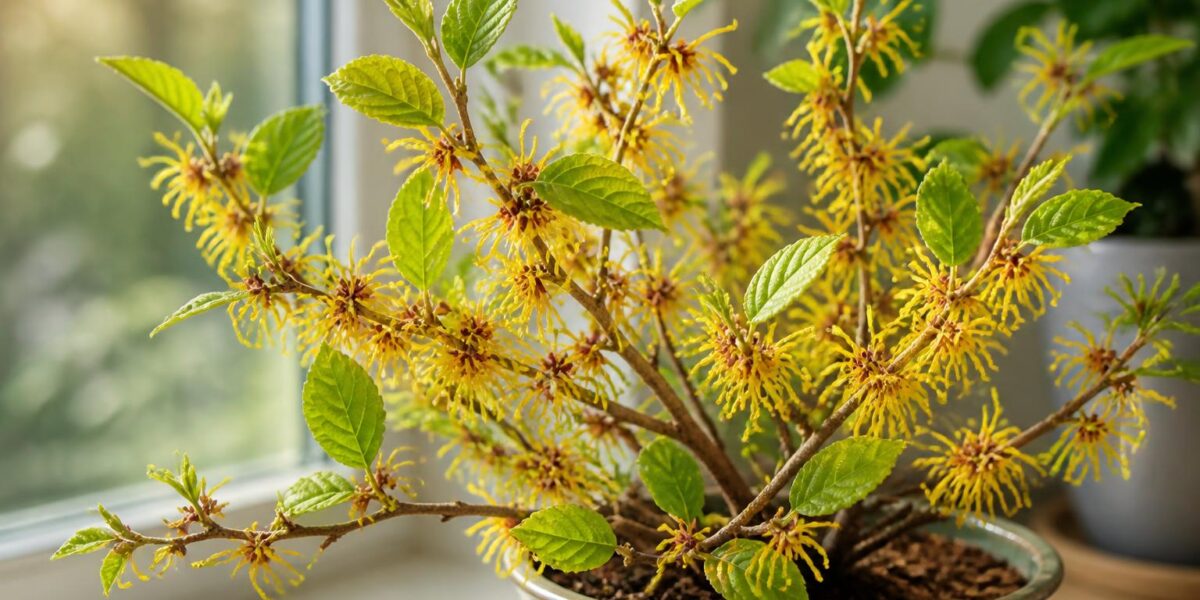
Yes. Witch hazel — the name covers the native Hamamelis virginiana (common or American witch hazel), the spring-blooming Hamamelis vernalis (Ozark witch hazel), and the popular hybrid Hamamelis × intermedia cultivars like ‘Arnold Promise’, ‘Diane’, and ‘Jelena’ — is not listed on the ASPCA’s toxic plant database for either dogs or cats. The shrub is generally considered safe for backyard plantings, the woodland-edge naturalized garden, and the late-fall to late-winter bloom slot in mixed borders. There is no flagship toxin associated with the genus that puts a household pet at meaningful poisoning risk from chewing the leaves, twigs, or the wispy yellow, orange, or red ribbon-like flowers.
If your dog or cat has nibbled witch hazel in the yard, the realistic outcome is nothing at all, or at most a brief episode of mild gastrointestinal upset from the unfamiliar plant fiber. The shrub is slow-growing and not particularly attractive to pets — the leaves are leathery, the flowers are wispy and few in number, and there are no berries to entice scavenging. Most pet exposures are incidental.
That said, there is a separate question worth addressing: commercial witch hazel astringent (the clear liquid you buy at the drugstore for skin care) is a distilled extract that includes alcohol, and its safety profile is different from the safety profile of the live shrub in your yard. We address that distinction in detail below. If your pet is showing symptoms beyond mild GI upset, contact your veterinarian, the ASPCA Animal Poison Control Center at 888-426-4435, or the Pet Poison Helpline at 855-764-7661.
What Witch Hazel Is and Why It Blooms in the Cold
Witch hazel is the genus Hamamelis, a small group of deciduous shrubs and small trees in the Hamamelidaceae family. The native eastern North American species, Hamamelis virginiana, blooms with wispy yellow ribbon-like flowers in October and November as the leaves drop — making it nearly unique among woody plants for blooming in late autumn. The Ozark species (H. vernalis) and the Asian species (H. mollis from China, H. japonica from Japan) and their hybrids bloom in late winter, typically January through March, on bare branches before leaves emerge.
The plants reach 8 to 25 feet tall depending on species, with broad-spreading multi-stemmed forms and characteristically asymmetric oval leaves with shallow lobes — the leaf shape often described as “lopsided” because the two halves of each leaf don’t quite line up at the base. Fall foliage on H. virginiana is typically a clean butter yellow. Mature shrubs tolerate part shade, prefer moist organically rich soil, and are relatively pest- and disease-free.
Witch hazel has a long human-medicine history that pre-dates ASPCA classifications by centuries. Native American traditional use included poultices and bark decoctions for skin and muscle care. Commercial witch hazel extract — sold as a topical astringent at every drugstore — is distilled from the bark and twigs of H. virginiana. That commercial extract is a different product from the living shrub, and we’ll come back to that distinction.
Why Witch Hazel (the Shrub) Is Considered Pet-Safe
Hamamelis virginiana and the other Hamamelis species are not on the ASPCA’s toxic plant database for cats, dogs, or horses, and they do not appear on major regional veterinary poison-control most-common-call lists. The plant produces tannins, hamamelitannin, gallic acid, and small amounts of phenolic compounds — all of which are present in the leaves and bark — but at concentrations that have not been associated with clinically significant pet poisoning at typical chewing-encounter doses.
The tannin content does mean the plant tissue is mildly astringent (the pucker-the-mouth quality you taste in strong tea or unripe persimmons) and that is part of why most pets walk away after a single exploratory nibble. Tannins in volume can cause GI irritation, but a pet would have to consume an unrealistic amount of witch hazel leaf or bark to reach a problem dose.
What this means in practice: the ASPCA’s non-listing for the witch hazel shrub reflects veterinary clinical experience. Pets who chew witch hazel leaves or twigs generally do not present with poisoning. The most common reaction is the same mild GI upset that any plant fiber can cause when consumed in unusual amounts.
Realistic Risks From Witch Hazel Chewing
Even with a non-toxic shrub, a few realistic considerations apply.
Mild GI upset from large ingestions. A pet that strips a substantial volume of leaves or chews on bark may vomit or pass soft stools from the bulk of indigestible plant fiber and tannin astringency. Self-limiting in most cases, usually inside 24 hours.
Mechanical risks from woody twigs. Witch hazel branches are flexible but can splinter when chewed by an enthusiastic dog. A puppy or small dog chewing on a stick from a pruned branch could rarely lodge a splinter in the gum, palate, or throat. A vet exam is appropriate if you suspect this.
Choking risk in small dogs. Long, thin twigs swallowed whole could rarely cause obstruction. Uncommon but worth being aware of.
Pesticide and herbicide residues. If your witch hazel has been treated with chemical sprays, the residue is more concerning than the plant itself. Avoid letting pets graze immediately after spraying, and follow re-entry intervals on the label.
Commercial Witch Hazel Astringent: A Different Product
This deserves its own section because the question comes up regularly. The clear liquid sold in drugstore bottles labeled “witch hazel” — typically used by humans as a face toner, after-shave, or hemorrhoid soothing wipe — is a distilled extract of bark and young branches. The standard United States Pharmacopeia formulation is roughly 86 percent witch hazel distillate combined with 14 percent ethanol (alcohol) as a preservative. Some formulations add other ingredients (rose water, aloe, fragrance, additional alcohol).
For pet use, the relevant facts are: the alcohol content is the main hazard. Ethanol is toxic to dogs and cats, and a pet that licks or laps a substantial volume of commercial witch hazel astringent could develop alcohol toxicity (drowsiness, ataxia, hypoglycemia, hypothermia). Topical application of a small amount on cleanish skin is unlikely to cause systemic toxicity, but ingestion (a dog drinking from a knocked-over bottle, a cat licking a soaked cotton pad) is a different scenario.
“Alcohol-free” witch hazel products do exist — these substitute the ethanol with a different preservative — and they are a safer choice for pet adjacent use. But always check the label, and never apply human cosmetic products to your pet’s skin without veterinary guidance, even when the active ingredient is plant-derived.
For routine paw, ear, or skin care for pets, use products formulated and labeled for animal use rather than improvising with human witch hazel.
What to Watch For After Witch Hazel Exposure
Most pets show no signs at all after chewing the witch hazel shrub. If symptoms do appear from shrub ingestion, the realistic patterns are vomiting once or twice, soft stools or mild diarrhea inside 12 to 24 hours, transient drooling from the astringent leaf taste, and a single skipped meal.
For commercial witch hazel astringent ingestion, the additional signs to watch for are alcohol-toxicity-related: lethargy, ataxia (wobbly gait), depressed reflexes, hypothermia, and potentially low blood sugar. These warrant prompt vet contact regardless of the volume ingested, because dogs and cats are much smaller than humans and tolerate ethanol much less well.
The signs you would NOT expect from shrub-only exposure are severe lethargy, persistent unproductive vomiting, blood in vomit or stool, abdominal pain that does not resolve, neurological signs, or cardiac signs. If any of these appear, the cause is probably something else — get a vet exam.
What To Do If Your Pet Eats Witch Hazel
For mild shrub exposure with no symptoms, most pets need no intervention beyond casual monitoring. Watch for 12 to 24 hours, offer fresh water, and continue normal feeding.
If mild GI signs appear, withhold food for four to six hours, offer small water amounts, and reintroduce a bland diet (boiled chicken and rice for dogs, plain canned food for cats) once vomiting stops, if your vet approves.
For commercial witch hazel astringent ingestion, call your vet, the ASPCA APCC at 888-426-4435, or the Pet Poison Helpline at 855-764-7661 promptly — even if your pet seems fine initially. Alcohol toxicity in pets can develop over the first hour or two and is best managed early.
For larger shrub ingestions with persistent symptoms, escalating symptoms, or any pet with pre-existing conditions, call your vet or poison control.
Do not induce vomiting at home for either witch hazel shrub or witch hazel astringent ingestion without direct vet or poison-control guidance — for the shrub there’s nothing to remove, and for alcohol exposures inducing vomiting can worsen aspiration risk.
Pet-Friendly Garden Companions for Witch Hazel
If you are designing a pet-friendly woodland-edge or late-season-bloom planting around witch hazel, several other safe shrubs and perennials pair well.
For the shrub layer, the non-toxic mock orange (Philadelphus) brings fragrant white late-spring flowers; forsythia brackets the early-spring window; weigela covers late spring; spirea is another low-concern choice; and the camellia japonica and camellia sasanqua work for the cold-season bloom slot in milder zones, complementing witch hazel’s late-fall and late-winter timing.
For perennial underplantings, pollinator-friendly safe choices include bee balm and catmint. For broader pet-safe garden planning, our pillar guides on cat-safe houseplants and dog-safe houseplants cover indoor analogs.
Shrubs to Avoid Near Pets
Some popular flowering shrubs are NOT safe and warrant a separate audit when you review your landscape.
Azaleas, rhododendrons, and pieris contain grayanotoxins (severe-tier).
Hydrangeas contain cyanogenic glycosides at mild-to-moderate clinical severity.
Daphne, nandina, pittosporum, honeysuckle, and cotoneaster berries all warrant their own review.
Among the late-fall and late-winter bloomers, witch hazel is one of the few that pet owners can plant without significant concern.
When to Call the Vet
For routine witch hazel shrub exposure in a healthy pet, vet contact is rarely needed. Call if you observe vomiting that does not stop after a few episodes, persistent diarrhea beyond 24 hours, abdominal pain, or any symptom that escalates rather than resolves.
For commercial witch hazel astringent ingestion of any volume, call your vet or poison control promptly because of the alcohol content. Cats tolerate ethanol particularly poorly; dogs are also at risk. Don’t wait to see if symptoms develop — the window for charcoal or supportive care is tighter for alcohol than for plant-fiber GI upset.
Frequently Asked Questions
Is witch hazel (the shrub) toxic to dogs?
No. The Hamamelis shrub is not on the ASPCA toxic plant list for dogs. Mild GI upset is the most likely outcome of leaf or twig chewing, not poisoning.
Is witch hazel toxic to cats?
No. Witch hazel is not listed by ASPCA as toxic to cats. Cats rarely chew witch hazel leaves in any case.
Can I use commercial witch hazel astringent on my pet’s skin?
Generally no, not without veterinary guidance. Commercial witch hazel typically contains roughly 14 percent alcohol, which can cause toxicity if licked or ingested. “Alcohol-free” formulations are safer in principle but should still be cleared with your vet before use. Pet-formulated topical products are the right starting point.
My dog drank some witch hazel from a bottle. Should I be worried?
Yes — call your vet or poison control promptly. Even a small volume of alcohol-containing witch hazel can cause clinical alcohol toxicity in a dog, particularly a small dog. Don’t wait to see if symptoms develop.
Are witch hazel cuttings or flowers safe to bring indoors with cats?
Yes. Cut witch hazel branches and the wispy yellow or orange flowers are not on the ASPCA toxic list. The realistic hazards are the vase itself (cats knocking it over and breaking glass) and any floral preservative in the water, not the plant.


