
Last updated: May 6, 2026
In this article
- How Cat Eye Color Develops
- Common Cat Eye Colors
- Rare Cat Eye Colors: Odd-Eyed Cats and Heterochromia
- The Genetics of Cat Eye Color
- Breed-Specific Eye Colors
- How Kitten Eye Color Changes Over Time
- The Link Between Eye Color and Deafness
- When Eye Color Changes in Adults Signal Illness
- Frequently Asked Questions
Cat Eye Colors: What They Mean, Genetics & Rare Colors
A cat’s eyes are one of its most captivating features. From the bright emerald green of a Russian Blue to the deep copper of a British Shorthair, cat eye colors span a remarkable spectrum that fascinates owners and breeders alike. But cat eye color is far more than a cosmetic trait — it is rooted in complex genetics, can signal certain health conditions, and in some cases is closely linked to coat color and even hearing ability.
Whether you are curious about why your kitten’s eyes are changing color, wondering what those striking mismatched eyes mean, or simply want to understand the science behind your cat’s gorgeous gaze, this comprehensive guide covers everything you need to know about cat eye colors.
How Cat Eye Color Develops
All kittens are born with blue eyes. This is not because they produce blue pigment — in fact, blue eyes contain no pigment at all. The blue appearance is the result of light refracting through the transparent layers of the iris, much like the sky appears blue even though the atmosphere is colorless. This optical phenomenon is known as the Tyndall effect, and it is the same principle that produces blue coloring in many animals.
The true color of a cat’s eyes depends on the amount and distribution of melanin — a natural pigment — within the iris. Melanin is produced by cells called melanocytes, and the process of melanin deposition in the iris begins shortly after a kitten is born. However, it takes time for these cells to become fully active. As the melanocytes begin producing melanin and depositing it in the stroma (the front layer of the iris), the kitten’s eye color gradually shifts from blue toward its permanent adult shade.
The concentration and type of melanin present determine the final color. A small amount of melanin produces green eyes. A moderate amount yields yellow or amber tones. A high concentration results in deep copper or orange eyes. Cats that retain little to no melanin in the iris keep their blue eyes into adulthood — this is common in pointed breeds like the Siamese and in cats with significant white spotting.
Common Cat Eye Colors
While the range of cat eye colors forms a continuous spectrum, most feline eyes fall into one of four broad categories. Each color results from a different level of melanin concentration and distribution within the iris.
Green Eyes
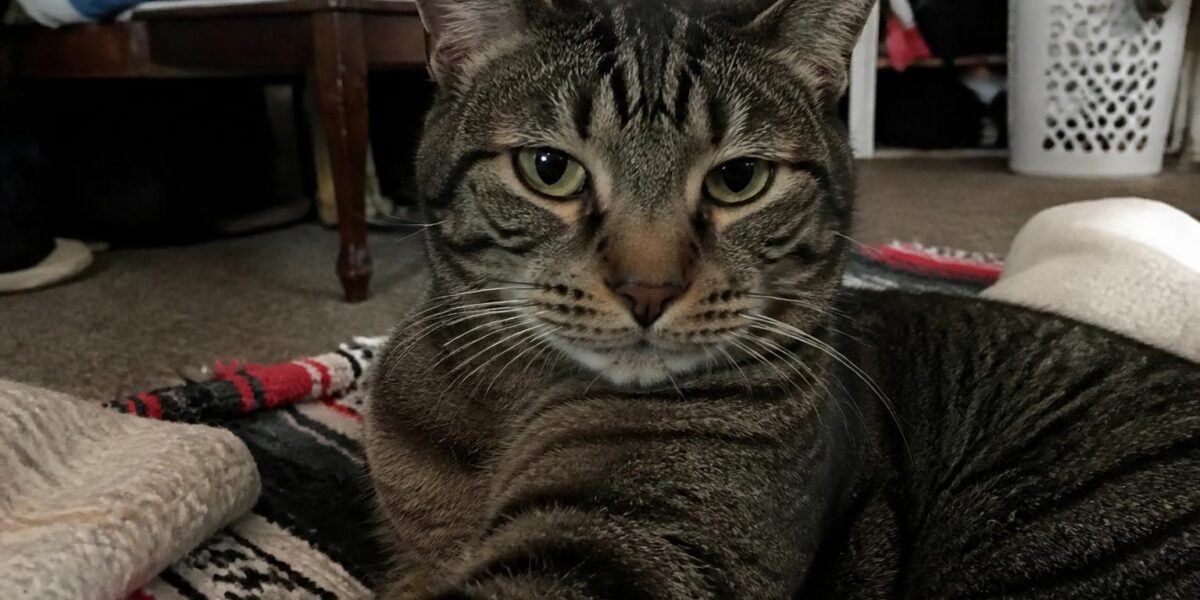
Green is one of the most admired cat eye colors and results from a relatively low level of melanin combined with the Tyndall effect. The small amount of yellow-toned melanin present in the stroma interacts with the blue light refraction to produce various shades of green — from pale jade to vivid emerald. Green eyes are especially common in breeds like the Russian Blue, Egyptian Mau, and Norwegian Forest Cat. Many mixed-breed cats with tabby or solid coats also display beautiful green eyes. The intensity of the green can vary significantly, with some cats showing a yellow-green hazel and others an almost jewel-toned deep green.
Yellow and Amber Eyes
Yellow, golden, and amber eyes are among the most common cat eye colors worldwide. These warm tones result from a moderate concentration of melanin in the iris. The spectrum ranges from pale lemon yellow through rich gold to deep amber that borders on orange. Breeds frequently seen with yellow or amber eyes include the Burmese, Abyssinian, Bengal, and many domestic shorthairs. Golden eyes are particularly striking in cats with dark coats — a black cat with vivid golden eyes is an iconic and unforgettable sight.
Copper and Orange Eyes
Copper and orange represent the deepest, most richly pigmented end of the cat eye color spectrum. These eyes contain the highest concentration of melanin and appear as a warm, reddish-brown or intense orange. Copper eyes are a hallmark of certain breeds, most notably the British Shorthair, Persian, and Chartreux. Breed standards for British Shorthairs, in particular, call for deep copper or orange eyes as ideal. These intensely pigmented eyes create a stunning contrast against blue, lilac, or silver coats and are highly prized in the show ring.
Blue Eyes
Blue eyes in adult cats occur when there is little to no melanin in the iris. As noted above, the blue color is not produced by pigment but by the way light scatters through the unpigmented iris tissue. Blue eyes are most commonly associated with pointed coat patterns (as seen in Siamese, Birman, Ragdoll, and Himalayan cats), white cats, and breeds that carry the dominant white gene. The shade of blue can range from a pale, almost icy blue to a deep, vivid sapphire. Siamese cats, in particular, are renowned for their intense, deep blue eyes, which are a breed-defining characteristic.
Rare Cat Eye Colors: Odd-Eyed Cats and Heterochromia
Among the most striking and unusual feline traits is heterochromia — a condition in which a cat has two different-colored eyes. The most common form is complete heterochromia, where one eye is blue and the other is green, yellow, or copper. This is sometimes called being “odd-eyed,” and it creates an appearance that is both dramatic and beautiful.
Heterochromia in cats is almost always linked to the white spotting gene or the dominant white gene. These genes suppress melanocyte migration during embryonic development. If melanocytes fail to reach one iris but successfully populate the other, the result is one blue eye (lacking melanin) and one pigmented eye. The condition is most frequently seen in white cats, Turkish Vans, Turkish Angoras, Japanese Bobtails, and Persian cats with significant white in their coats.
Sectoral heterochromia is a rarer variation in which a single iris contains two distinct colors — for example, half green and half gold, or a wedge of blue within an otherwise copper eye. This occurs when melanocyte distribution is uneven within the same iris. Cats with sectoral heterochromia are uncommon and are considered especially unique by breeders and cat enthusiasts.
True dichromatic eyes — where the iris shows a gradual gradient from one color to another, sometimes described as “central heterochromia” — can also occur in cats. In these cases, the area immediately around the pupil may be a different color from the outer edge of the iris, creating a subtle ring effect. While less dramatic than complete heterochromia, this variation adds a fascinating depth to a cat’s gaze.
The Genetics of Cat Eye Color
Cat eye color is a polygenic trait, meaning it is influenced by multiple genes working together rather than a single gene with a simple dominant-recessive pattern. This polygenic nature is why eye color in cats exists on a continuous spectrum rather than falling into a handful of discrete categories. The primary genetic factors that influence eye color include the genes controlling melanocyte number, melanocyte activity, and the type and distribution of melanin within the iris.
Several key genetic mechanisms play a role in determining eye color:
The pointed gene (cs): This temperature-sensitive allele restricts melanin production to the cooler extremities of the body (ears, face, paws, and tail). Because the eyes are warm, melanin production in the iris is suppressed, resulting in the blue eyes that are universal among pointed cats such as the Siamese and Himalayan.
The dominant white gene (W): This gene suppresses melanocyte development across the entire body, producing an all-white coat. It can also suppress melanin in one or both eyes, leading to blue eyes or heterochromia. Importantly, the dominant white gene is also associated with an increased risk of congenital deafness.
The white spotting gene (S): This gene creates white patches by preventing melanocyte migration to certain areas during embryonic development. When its influence extends to the eyes, it can produce blue eyes or odd eyes. Cats with higher grades of white spotting (more white on the body) are statistically more likely to have blue or odd eyes.
Beyond these major genes, the overall intensity and exact shade of eye color are determined by a collection of modifier genes that are not yet fully mapped. This is why even within a single litter, kittens can develop noticeably different eye colors despite sharing the same parents. The interplay of these genetic factors makes predicting exact eye color in cats a challenge — and part of what makes each cat’s eyes uniquely their own.
Breed-Specific Eye Colors
Many cat breeds have eye color requirements written into their breed standards. Breeders selectively breed for specific eye colors that complement coat color and enhance the overall appearance of the breed. Here is a look at some notable breed-eye color associations. You can explore more breeds in our cat breeds directory.
Siamese: Deep vivid blue is the only accepted eye color. The intensity of blue is a significant factor in show judging, with deeper sapphire tones preferred over pale or washed-out blue.
Russian Blue: Vivid green eyes are the breed standard. Russian Blues are born with yellow eyes that gradually transition to green as they mature, typically reaching their full emerald intensity by adulthood.
British Shorthair: Deep copper or orange eyes are preferred for most coat colors. The breed is famous for the striking combination of a dense blue (gray) coat paired with brilliant copper eyes.
Burmese: Golden-yellow eyes are the breed standard. The rich gold color is considered essential to the breed’s appearance and should be as deep and vivid as possible.
Turkish Van: This breed is notable for a high frequency of heterochromia — one blue eye and one amber eye. Odd-eyed Turkish Vans are considered especially desirable and are culturally significant in their homeland of Turkey.
Tonkinese: This breed uniquely exhibits aqua (blue-green) eyes in mink-patterned cats, a color rarely seen in other breeds. Pointed Tonkinese have blue eyes, while solid-patterned Tonkinese have green or gold eyes.
Ragdoll and Birman: Both breeds require blue eyes, which complement their pointed coat patterns. Deep blue is preferred in both breeds.
Bengal: Green or gold eyes are most common and preferred. Some Bengals with snow (pointed) coats have striking blue eyes.
How Kitten Eye Color Changes Over Time
If you have ever brought home a blue-eyed kitten only to watch its eyes transform over the following weeks, you have witnessed one of the most fascinating aspects of feline development. Understanding the timeline of this change can help new cat owners know what to expect.
Kittens are born with their eyes closed, and they typically open between 7 and 14 days of age. When the eyes first open, they appear a cloudy, grayish-blue. Over the next several weeks, as the eyes clear and the visual system matures, the irises appear a brighter, clearer blue.
The first signs of permanent eye color typically emerge between 3 and 8 weeks of age. You may notice flecks of green, gold, or amber beginning to appear within the blue. The transition is gradual and can involve intermediate shades that look murky, greenish-gray, or muddy brown as the melanin slowly deposits in the iris.
Most kittens reach their final eye color by 12 to 16 weeks of age (roughly 3 to 4 months), though some breeds and individual cats may continue to develop deeper or more intense eye color until they are 6 to 12 months old. Russian Blues, for example, may not achieve their signature vivid green until well past their first birthday.
If a cat is genetically destined to have blue eyes (such as a Siamese or a white cat with the dominant white gene), no color change will occur — the eyes will remain blue from birth through adulthood.
The Link Between Eye Color and Deafness
One of the most medically significant aspects of cat eye color is its established connection to congenital deafness, particularly in white cats. Research has shown that white cats with blue eyes have a significantly higher risk of being born deaf compared to white cats with other eye colors.
The underlying mechanism involves the same genes responsible for white coat color and blue eyes. The dominant white gene (W) and the white spotting gene (S) can suppress melanocyte development not only in the skin and iris but also in the stria vascularis of the inner ear. The stria vascularis is a structure within the cochlea that is essential for normal hearing. When melanocytes fail to develop in this area, the stria vascularis degenerates shortly after birth, resulting in permanent sensorineural deafness.
Studies estimate that approximately 60 to 80 percent of white cats with two blue eyes are deaf in one or both ears. White cats with one blue eye (heterochromia) tend to be deaf on the side of the blue eye — a remarkable demonstration of how melanocyte distribution can vary independently between the two sides of the body. White cats with non-blue eyes (green, yellow, or copper) have a much lower incidence of deafness, though some risk remains due to the underlying white gene.
It is important to note that deafness linked to eye color is congenital (present from birth) and is not progressive. A deaf cat can live a full, healthy, and happy life with appropriate care. If you are adopting a white cat with blue eyes, your veterinarian can perform a BAER (Brainstem Auditory Evoked Response) test to definitively determine whether the cat has hearing loss.
When Eye Color Changes in Adults Signal Illness
While eye color changes in kittens are a normal part of development, a change in eye color in an adult cat should always be taken seriously. Once a cat’s eyes have reached their mature color (typically by 6 to 12 months of age), the color should remain stable for the rest of the cat’s life. Any noticeable shift in eye color in an adult cat can be a sign of an underlying medical condition that requires veterinary attention.
Uveitis: Inflammation of the uveal tract (the iris, ciliary body, and choroid) can cause the iris to change color — often becoming darker, redder, or muddier in appearance. Uveitis can result from infections (such as FIP, FeLV, FIV, or toxoplasmosis), trauma, or autoimmune conditions. It is painful and can lead to secondary complications including glaucoma if left untreated.
Melanosis and melanoma: The development of dark brown or black spots on the iris — known as iris melanosis — can be benign, but it can also progress to iris melanoma, a malignant cancer. If you notice new dark freckles appearing on your cat’s iris, particularly if they are growing, changing shape, or causing the iris surface to become raised or irregular, a veterinary ophthalmology examination is essential. Early detection is critical for successful treatment.
Glaucoma: Increased intraocular pressure can cause the eye to appear hazy, swollen, or slightly different in color. The affected eye may take on a greenish or bluish tint due to corneal edema. Glaucoma is a medical emergency that can rapidly lead to permanent vision loss.
Cataracts: While cataracts affect the lens rather than the iris, they can cause the eye to appear cloudy, milky, or whitish-blue, which owners sometimes perceive as a color change. Cataracts are more common in older cats and in cats with diabetes.
Corneal sequestrum: This condition, which is unique to cats, causes a dark brown or black plaque to form on the cornea. While it affects the corneal surface rather than the iris, it can alter the overall appearance of the eye’s color.
If you notice any change in your adult cat’s eye color — whether it is a darkening, lightening, cloudiness, new spots, redness, or a difference between the two eyes that was not previously present — schedule a veterinary appointment promptly. Many of these conditions are treatable when caught early, and your veterinarian may refer you to a veterinary ophthalmologist for specialized evaluation.
Frequently Asked Questions
What is the rarest cat eye color?
True dichromatic or odd-eyed (heterochromia) coloring is considered the rarest cat eye color. Among solid eye colors, aqua (blue-green) as seen in mink-patterned Tonkinese cats is exceptionally uncommon. Deep orange and true violet (which does not naturally occur in cats despite popular myths) are also extremely rare or nonexistent.
Do all kittens have blue eyes?
Yes, virtually all kittens are born with blue eyes. This is because melanin has not yet been deposited in the iris at birth. The true eye color begins to emerge between 3 and 8 weeks of age and is usually fully developed by 3 to 4 months, though some cats continue developing deeper color until around 12 months of age.
Can a cat’s eye color change as it gets older?
A healthy adult cat’s eye color should remain stable after it reaches maturity. If you notice a color change in an adult cat’s eyes — such as darkening, new spots, cloudiness, or redness — it could indicate a health issue like uveitis, melanosis, glaucoma, or cataracts. Consult your veterinarian promptly if you observe any changes.
Why do some cats have two different colored eyes?
Cats with two different colored eyes have a condition called heterochromia, which results from uneven melanocyte distribution in the irises. It is most commonly caused by the white spotting gene or the dominant white gene, which can suppress melanin development in one eye but not the other. It is especially common in white cats, Turkish Vans, and Turkish Angoras.
Are white cats with blue eyes always deaf?
Not always, but they are at significantly higher risk. Research suggests that 60 to 80 percent of white cats with two blue eyes have some degree of hearing loss. A BAER test performed by a veterinarian can determine whether a white blue-eyed cat has hearing impairment. Many deaf cats live perfectly happy lives with attentive owners. If you are considering adopting a white cat, ask about hearing testing.
What determines a cat’s eye color?
Cat eye color is determined by the amount and distribution of melanin in the iris, which is controlled by multiple genes (making it a polygenic trait). Key genes include the pointed gene (which produces blue eyes in Siamese-type cats), the dominant white gene, and the white spotting gene. Modifier genes further influence the exact shade and intensity of color.


