
Last updated: May 16, 2026
In this article
- Honest Answer on Cardinal Climber and Pets
- What Cardinal Climber Actually Is
- The LSA Alkaloid Story
- Symptoms After Ingestion
- First Aid Steps
- Treatment at the Clinic
- Why Seeds Are the Bigger Risk
- Other Ipomoea and Convolvulaceae Plants
- Living With Cardinal Climber Safely
- Safer Climbing Vine Alternatives
- Cats vs. Dogs — Different Risk Profiles
- When to Skip Home Care and Go Straight to the Vet
- Frequently Asked Questions
Honest Answer on Cardinal Climber and Pets
Cardinal climber sits in an awkward middle ground — the plant is not on the ASPCA’s specifically-flagged toxic list, but it belongs to the genus Ipomoea, the same morning glory genus that contains LSA alkaloids in the seeds and is widely treated as a toxic ingestion concern. The honest answer for pet owners searching “is cardinal climber safe for pets” is: it is not as safe as something like coral vine or black-eyed Susan vine, and ingestion of a meaningful quantity of seeds, leaves, or stems can cause GI upset and, with larger doses, neurologic signs. The focus keyword for this page is cardinal climber plants safe for pets — and we are using that phrasing because it matches search intent, not because it is a green light.
If your pet has chewed cardinal climber, this guide explains why the answer isn’t a clean “safe” or “toxic,” what symptoms to watch for, the first aid steps that actually help, and the safer climbing alternatives if you want to redesign the trellis. Severity tier: mild-to-moderate for foliage, moderate for seed ingestion in any meaningful quantity.
This is the same honest framing we used in our creeping thyme guide — the slug ends “-safe-for-pets” because that’s how owners search, but the body explains the real toxicity story rather than offering false reassurance.
What Cardinal Climber Actually Is
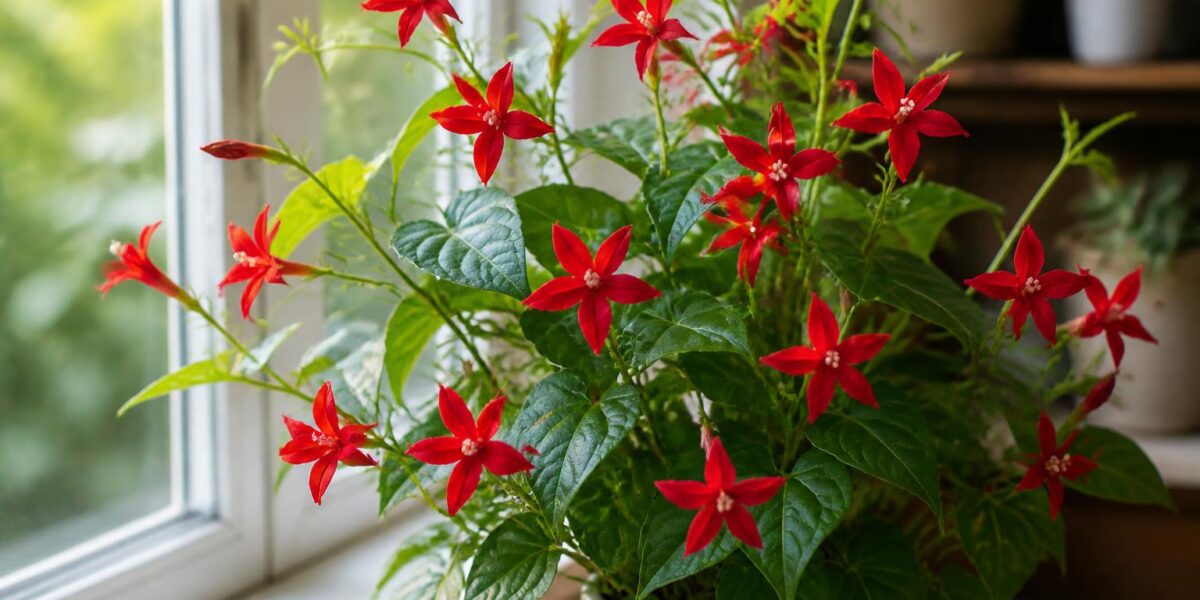
Cardinal climber is Ipomoea × multifida, a hybrid between cypress vine (Ipomoea quamoclit) and red morning glory (Ipomoea coccinea). The vine has fern-like deeply-divided foliage and bright red trumpet-shaped flowers about an inch across. Hummingbirds love it, which is why it shows up in pollinator garden plans and hummingbird-themed seed mixes.
The plant is in Convolvulaceae — the morning glory family. That family-level placement is the source of the toxicity story. Convolvulaceae plants accumulate ergoline alkaloids, primarily lysergic acid amide (LSA) and related compounds, especially in the seeds. The same chemistry shows up in the more famous Ipomoea cultivars like morning glory for cats and morning glory for dogs, and in the closely related cypress vine.
The LSA Alkaloid Story
Lysergic acid amide is structurally related to LSD and produces a similar mechanism of action — affecting serotonin receptors in the central nervous system. In humans the effect is psychoactive at high doses; in pets, especially dogs, the same compounds cause GI upset, ataxia (wobbliness), disorientation, and in larger doses tremors, seizures, and severe agitation.
The concentration of LSA in cardinal climber seeds is variable — generally lower than the dedicated psychoactive species like Hawaiian baby woodrose, but high enough that pet poison hotlines treat any meaningful seed ingestion as a real concern. Leaves and stems contain lower concentrations than seeds but are not free of the chemistry.
For dogs particularly, the practical risk profile is “mild GI signs from foliage chewing” at the low end and “neurologic emergency from seed ingestion” at the high end. The middle ground — a dog that ate a few seeds versus a dog that ate a packet of seeds — depends entirely on dose and body size.
Symptoms After Ingestion
Symptoms vary by dose and what part of the plant was eaten. Watch for the following onset within 30 minutes to 6 hours of ingestion:
- Drooling, lip-licking, or pawing at the mouth
- Vomiting, sometimes with seed or leaf fragments visible
- Diarrhea
- Refusal of food and water
- Restlessness, pacing, or unusual vocalizing
- Wobbly gait, head bobbing, or difficulty rising
- Disorientation — bumping into furniture, staring at walls
- Tremors, especially in extremities
- In larger ingestions: seizures, severe agitation, or collapse
The neurologic signs are the marker that escalates the case to emergency clinic now. Mild GI upset alone may resolve at home with veterinary phone guidance, but any wobbliness, tremor, or altered mental state means in-person evaluation.
First Aid Steps
If you catch your pet chewing cardinal climber, gently remove plant material from the mouth and wipe the gums with a damp cloth if your pet allows it. Do not induce vomiting unless your veterinarian specifically directs you to — neurologic toxins like LSA can complicate emesis decisions, and home-induced vomiting risks aspiration if the animal becomes ataxic.
Rinse the mouth with cool water using a syringe or turkey baster aimed at the cheek. Offer fresh water but do not force-feed. If you can collect the leftover plant material in a sealed bag — particularly any seed packet or seed pods — bring that with you for identification.
Then call. Your owner’s veterinarian first; if they are closed, the ASPCA Animal Poison Control Center at 888-426-4435 (per-call fee) or the Pet Poison Helpline at 855-764-7661. With Ipomoea ingestions, the call is worth making even for apparently mild cases — neurologic signs can appear hours after the initial GI signs settle.
Be ready to share: species, weight, age, time of ingestion, what part of the plant (foliage, flower, seed, seed packet), rough quantity, and any pre-existing conditions.
Treatment at the Clinic
Treatment for cardinal climber ingestion is supportive and depends on what symptoms develop. The veterinarian may induce vomiting if the ingestion was recent and the animal is still alert; activated charcoal binds some Ipomoea alkaloids and may be given. IV fluids correct dehydration and support the kidneys.
If neurologic signs appear, treatment may include sedatives or anxiolytics to control agitation and tremors, anticonvulsants for seizures, and intensive monitoring. Most pets with mild-to-moderate ingestion are home within 24 hours; pets with significant seed ingestion may require longer hospitalization.
The prognosis with prompt veterinary care is generally good for healthy adult animals. Pre-existing seizure disorders, very small body size, kidney or liver disease, and concurrent ingestion of other plants or chemicals all worsen the outlook.
Why Seeds Are the Bigger Risk
The leaves and stems of cardinal climber contain LSA alkaloids at relatively low concentrations. The seeds — small, hard, dark, and produced in pointed pods — concentrate the alkaloids significantly. A pet that nibbles a leaf is in different territory than a pet that gulps a seed packet off a garden bench or unearths last year’s seeds from a flower bed.
Practical implications:
- Store seed packets in closed containers out of pet reach
- Deadhead flowers before they form mature seed pods if you grow the plant in a pet area
- Clean up dropped seed pods at the end of the season
- Be especially careful if you save seeds for next year — labeled jars on garage shelves are common dog-discovery scenes
If your pet got into a seed stash, mention the approximate quantity to the veterinary triage call — the dose math matters more for seeds than for leaves.
Other Ipomoea and Convolvulaceae Plants
Knowing the family helps you recognize related risks. Convolvulaceae plants in the typical American garden include:
- Cypress vine — Ipomoea quamoclit, one of cardinal climber’s parents
- Morning glory for cats and morning glory for dogs — the genus poster child
- Sweet potato vine — Ipomoea batatas, ornamental cultivars; the tuber itself is edible but the foliage and especially the flowers are not, and the chemistry overlaps
- Moonflower — Ipomoea alba, similar concerns
If you grow several Ipomoea relatives in the same garden, the cumulative risk during seed-set season (late summer to early fall) is higher than at any other point. Consider walking the garden every few days during that window to remove dropped seed pods.
Living With Cardinal Climber Safely
If you love cardinal climber for the hummingbirds and want to keep it without removing it, several practical steps reduce risk.
- Plant it on a trellis in a fenced area your pets do not enter without supervision
- Use vertical growing — train the vine on tall structures so foliage and seed pods are above pet level
- Deadhead flowers regularly to prevent seed pod formation
- Clean up any dropped seed pods or seeds at the end of the season — and be especially thorough if your dog likes to dig in flower beds
- Store seed packets in closed containers with other gardening supplies, not on a kitchen counter or garage workbench
- Train a reliable “leave it” cue with positive reinforcement before relying on it outdoors
- Replace cardinal climber in unsupervised pet zones with one of the safer alternatives below
Avoid relying on bitter sprays alone to deter chewing. They are not consistently effective, and a false sense of security is worse than no precaution at all.
Safer Climbing Vine Alternatives
If you want a vine that delivers similar visual interest without the LSA-alkaloid concern, several climbers are not on the standard ASPCA toxic plant list and have not historically been associated with neurologic signs.
- Black-eyed Susan vine — Thunbergia alata, an annual climber with similar growth habit and bright color
- Coral vine — Mexican creeper, full sun, prolific bloomer in southern zones
- Passionflower — read the cultivar caveats; some species safer than others
- Climbing roses — not on toxic list; mechanical thorn hazard only
Avoid the toxic vines: mandevilla, dipladenia, wisteria for cats, wisteria for dogs, trumpet vine, clematis for cats, clematis for dogs, the SEVERE-tier Carolina jessamine, and the calcium-oxalate-bearing Boston ivy and Virginia creeper.
Cats vs. Dogs — Different Risk Profiles
Dogs are more likely to be the patient when cardinal climber comes through the emergency clinic. They get into seed packets, dig in beds where last year’s seeds have settled, and gulp foliage with the same enthusiasm they bring to anything else. The neurologic signs from larger ingestions are dramatic enough that owners notice and act quickly.
Cats are at lower practical risk because their interaction with vines tends to be batting and grooming rather than gulping, and they are less likely to find a stash of seeds attractive. That said, cats are sensitive to many alkaloids on a per-kilogram basis, so a small ingestion that would be inconsequential in a dog can produce more obvious signs in a cat.
For both species, the risk math is highest with seeds. If a pet has chewed only foliage, the symptoms may be limited to mild GI upset. If a pet has eaten seeds, escalate the response.
When to Skip Home Care and Go Straight to the Vet
Take your pet to a veterinarian without delay if you see:
- Any wobbliness, ataxia, head bobbing, or difficulty walking
- Disorientation — bumping into furniture, staring at walls, unusual vocalizing
- Tremors, especially in extremities
- Seizures or loss of consciousness
- Severe agitation, restlessness, or pacing that does not settle
- Repeated vomiting, especially with weakness
- Bloody vomit or bloody stool
- Known seed ingestion in any meaningful quantity
- Pre-existing seizure disorders, kidney or liver disease
- Very young, very small, or geriatric pets
If you are unsure, call. The ASPCA APCC at 888-426-4435 and the Pet Poison Helpline at 855-764-7661 can triage your specific situation by phone. With Ipomoea ingestions, the precautionary call is worth the per-call fee.
Frequently Asked Questions
Is cardinal climber the same as cypress vine or morning glory?
Cardinal climber is a hybrid (Ipomoea × multifida) of cypress vine (Ipomoea quamoclit) and red morning glory (Ipomoea coccinea). All three are in the same genus and family and share the LSA alkaloid chemistry to varying degrees. From a pet toxicity standpoint, treat them as one category. See the cypress vine guide and the morning glory pillar for the related species.
Are the bright red flowers of cardinal climber more or less toxic than the leaves?
The flowers contain less LSA than the seeds and roughly the same amount as the leaves — sometimes slightly less. Flowers are unlikely to cause serious symptoms unless eaten in large quantities. The bigger risk is that flowers eventually mature into seed pods, and seeds are where the chemistry concentrates.
What if my dog ate just one seed?
A single seed in a medium or large dog is unlikely to cause more than mild GI upset, but the practical advice is still to call your veterinarian or the ASPCA APCC for triage based on your specific dog’s size and any pre-existing conditions. Watch for any wobbliness or altered behavior over the next 6 to 12 hours.
How long do symptoms last?
Mild GI signs from foliage ingestion usually resolve within 12 to 24 hours with supportive care. Neurologic signs from seed ingestion may last longer — typically 12 to 48 hours with appropriate treatment. Pets with seizures or severe agitation may need extended hospitalization.
Should I remove cardinal climber from my garden if I have pets?
If your pets are unsupervised in the garden, especially during seed-set season, removal or replacement with a safer climber is the more cautious choice. If your pets are always supervised and you can manage seed cleanup carefully, the risk can be reduced to a manageable level. The decision depends on your specific pets, your supervision capacity, and your willingness to maintain the plant carefully.


