
Last updated: May 16, 2026
In this article
- Yes, Mandevilla Is Toxic to Dogs and Cats
- What Mandevilla Actually Is
- The Apocynaceae Family Chemistry
- Symptoms After a Pet Eats Mandevilla
- What to Do Right Away
- What Happens at the Clinic
- Mandevilla and Other Apocynaceae Plants
- Cats and Mandevilla — Special Notes
- Living Safely With Mandevilla in the Garden
- Pet-Safer Climbing Vine Alternatives
- When to Skip Home Care and Go Straight to the Vet
- Frequently Asked Questions
Yes, Mandevilla Is Toxic to Dogs and Cats
Mandevilla plants are toxic to pets. The genus belongs to Apocynaceae — the same plant family as oleander, dogbane, and milkweed — and contains cardiac glycosides and a milky white sap that irritates the mouth and gut. Pets that chew the leaves, stems, or flowers typically experience oral irritation, drooling, vomiting, and diarrhea. Larger ingestions can produce changes in heart rhythm, lethargy, and weakness, although severe cases are uncommon and the toxicity is generally framed as moderate-tier — meaningfully less catastrophic than oleander itself but real enough to take seriously.
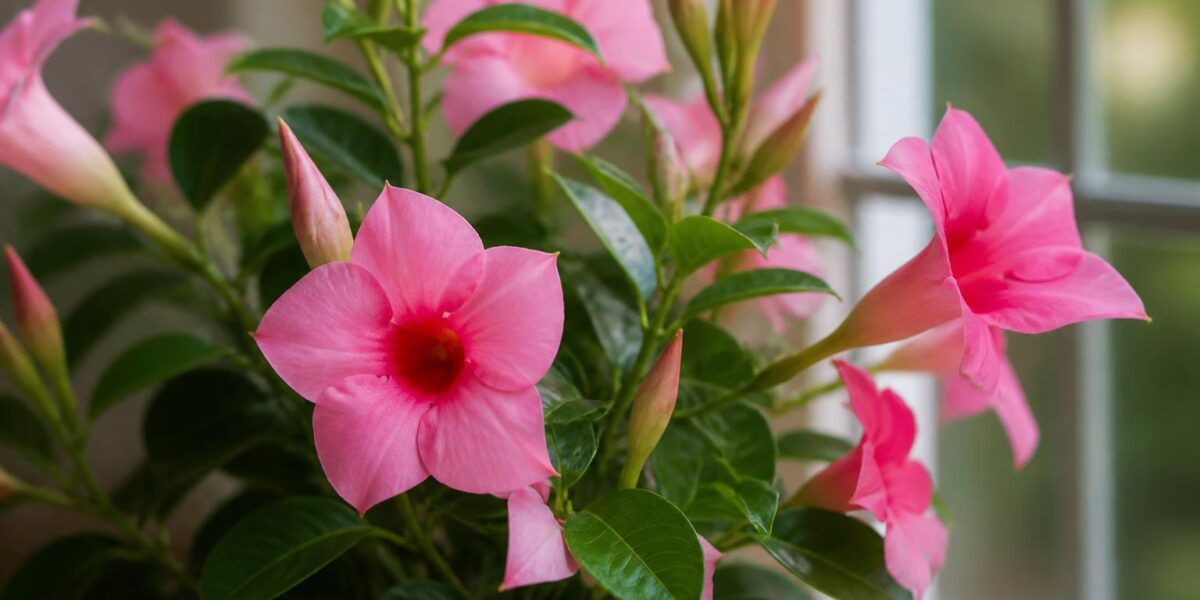
Mandevilla is grown across the United States as a flowering vine for trellises, hanging baskets, patio containers, and pool-deck arches. The trumpet-shaped pink, white, or red blooms make it one of the most popular tropical vines for summer color. That popularity also means it ends up within reach of curious puppies and porch cats, and emergency hotlines hear about it every summer. The focus keyword for this page is mandevilla plants toxic to pets.
This guide explains the family chemistry, the practical symptom set, the first aid steps that actually help, and the safer climbing alternatives if you need to redesign the patio.
What Mandevilla Actually Is
Mandevilla is a genus of tropical climbing vines native to Central and South America. The most common landscape forms are Mandevilla × amabilis hybrids and Mandevilla sanderi cultivars. Many garden centers also sell something labeled “dipladenia,” which historically was a separate genus but is now mostly classified within Mandevilla. The toxicity profile is identical, which is why we cover dipladenia in a companion article.
The plants share characteristic Apocynaceae features: opposite leaves with smooth or glossy surfaces, twining woody stems, and — most importantly for veterinary purposes — a milky white sap that bleeds from broken stems and leaves. That sap is the carrier for the toxic compounds. If you have ever pruned mandevilla and seen white latex drip from the cut, that is the sap your pet would encounter chewing the plant.
The Apocynaceae Family Chemistry
Apocynaceae plants are famous for two classes of toxins. The first is cardiac glycosides — compounds chemically related to digitalis and the foxglove drugs. The second is a broader collection of irritant alkaloids and saponin-like compounds in the latex that cause direct mucous-membrane irritation.
Cardiac glycosides act on the sodium-potassium pump in heart muscle cells. At toxic doses they can produce arrhythmias — irregular heartbeats — alongside vomiting, diarrhea, weakness, and electrolyte disturbance. The dose at which a pet sees cardiac effects depends on the species, the body weight, and how much sap they actually ingested versus simply licked. In practice, most mandevilla exposures cause GI signs without measurable cardiac changes; serious cardiac toxicity is reserved for large ingestions and for the more potent family members like foxglove for cats, foxglove for dogs, and lily of the valley for cats.
Mandevilla is generally classified as moderate-tier within Apocynaceae — more concerning than mild GI plants but well below the severe-tier triad of oleander, foxglove, and lily of the valley. That said, “moderate” still means a sick pet for hours to days and warrants vet contact.
Symptoms After a Pet Eats Mandevilla
The classic mandevilla exposure produces a mix of oral and GI signs starting within 30 minutes to a few hours of ingestion. Watch for:
- Drooling, lip-licking, or pawing at the mouth from sap irritation
- Vomiting, sometimes with leaf or flower fragments visible
- Diarrhea, occasionally with mucus
- Refusal of food and water
- Lethargy, dull demeanor, or hiding
- Mild abdominal discomfort — restlessness, repeated stretching, or a hunched posture
Less commonly, larger ingestions can produce:
- Weakness, wobbliness, or collapse
- Slow or irregular heart rate detected by your veterinarian
- Pale or bluish gums
- Severe or bloody vomiting and diarrhea
Cardiac signs are the marker that escalates a case from “monitor and call” to “emergency clinic now.” If your pet is weak, collapsed, or you notice any abnormal heart-rate or breathing pattern, do not wait.
What to Do Right Away
If you catch your pet chewing mandevilla, gently remove plant material from their mouth and wipe the gums with a soft damp cloth to clear off as much sap as possible. Do not pry open the jaws of a stressed animal. Do not induce vomiting unless your veterinarian specifically tells you to — emesis with cardiac glycoside plants is not always recommended because it can re-expose the throat to irritant sap and stress an already irritated GI tract.
Rinse the mouth with cool water using a syringe or turkey baster aimed at the cheek. Offer fresh water but do not force-feed.
Then call. Your owner’s veterinarian first; if they are closed, the ASPCA Animal Poison Control Center at 888-426-4435 (per-call fee) or the Pet Poison Helpline at 855-764-7661. Be ready to share the species, weight, age, time of ingestion, rough quantity ingested, and any pre-existing heart, kidney, or GI conditions.
If you can take a clear photo of the plant or bring a sprig to the clinic in a sealed bag, do that. Identifying the exact cultivar isn’t always possible by sight, but confirming “Apocynaceae sap-bleeding vine” rules in or out a long list of differentials.
What Happens at the Clinic
For most mandevilla exposures, treatment is supportive: anti-nausea medication, IV or subcutaneous fluids to correct dehydration and protect the kidneys, and a thorough oral exam. The veterinarian may recommend an electrocardiogram if there is any reason to suspect cardiac involvement — for example, weakness, collapse, or known ingestion of a large quantity of leaves.
Pets with severe vomiting may receive injectable anti-emetics (maropitant or ondansetron). Animals showing arrhythmias are managed with cardiac monitoring and, if indicated, specific antiarrhythmic medications. Most mandevilla patients are home within 24 hours; only the largest ingestions or animals with pre-existing heart disease are hospitalized longer.
Recovery is typically complete. The cardiac glycoside dose in a single mandevilla chew is rarely high enough to cause permanent damage in a healthy adult dog or cat. Pre-existing cardiac disease, renal disease, or very small body size are the factors that escalate risk.
Mandevilla and Other Apocynaceae Plants
Knowing the family helps you recognize related risks elsewhere in the garden. The Apocynaceae family includes:
- Oleander — the SEVERE-tier benchmark; a single leaf can kill a small animal
- Foxglove — see foxglove for cats and foxglove for dogs (technically Plantaginaceae now, same chemistry)
- Lily of the valley — see lily of the valley for cats and lily of the valley for dogs
- Vinca minor and Vinca major — see vinca minor and vinca major (different chemistry within the same family)
- Milkweed — sap-bleeding native, monarch host
- Dipladenia — same plant class as mandevilla, see dipladenia guide
If your yard contains any combination of these, the risk math is cumulative. A pet that grazes one Apocynaceae plant has likely encountered the others on the same property.
Cats and Mandevilla — Special Notes
Cats interact with mandevilla differently than dogs. They tend to nibble leaves rather than gulp them, but they also groom plant sap off their fur, which extends contact with the irritant chemistry. Cats are also more sensitive to many cardiac toxins than dogs on a per-kilogram basis, partly because of their smaller size and partly because of differences in liver enzyme activity that affects metabolism of glycosides.
If you have a porch cat or an indoor cat with access to a sunroom containing mandevilla, treat the plant as you would treat a toxic houseplant in the same room. Hanging baskets within reach of a leaping cat are not safe just because they are off the floor. Our cat-safe houseplants guide covers safer options for indoor and porch settings.
Outdoor cats roaming a neighborhood may encounter mandevilla on patios that are not yours. If your cat returns home and shows the symptom set above, the plant could be a neighbor’s. Call your veterinarian regardless of where the exposure happened.
Living Safely With Mandevilla in the Garden
If you love your mandevilla but want to keep your pets safe, several practical strategies reduce risk without forcing you to remove the plant.
- Hang baskets above any height a dog or cat can reach by jumping — usually six feet or more
- Use trellises in fenced areas your pets do not enter without supervision
- Sweep up fallen flowers and leaves promptly — dried plant material still contains glycosides
- Wear gloves when pruning; the sap can irritate human skin too, and sap on your hands transfers easily to a pet later
- Train a reliable “leave it” cue with positive reinforcement before relying on it outdoors
- Replace mandevilla in unsupervised pet zones with one of the safer alternatives below
Avoid relying on bitter sprays to deter chewing. Some pets ignore them, and you do not want to be in a situation where the bitter spray gave you false confidence.
Pet-Safer Climbing Vine Alternatives
Several climbing vines are not on the standard ASPCA toxic plant list and can fill the same trellis or container role mandevilla currently fills.
- Black-eyed Susan vine — Thunbergia alata, an annual climber with similar bright color
- Coral vine — Mexican creeper, full sun, prolific bloomer
- Annual moonflower may be a partial substitute, but verify your specific cultivar — some morning glory relatives are toxic; see morning glory and cats and morning glory and dogs
- Climbing roses — not on the toxic list; mechanical thorn hazard only
- Passionflower — review for cultivar caveats
Avoid any plant in the Apocynaceae family in unsupervised pet zones, including mandevilla itself, dipladenia, oleander, and the periwinkles. Avoid the SEVERE-tier vines: Carolina jessamine and wisteria for cats / wisteria for dogs.
When to Skip Home Care and Go Straight to the Vet
For mandevilla, the bar for in-person evaluation is lower than for many oral-irritant-only plants because of the cardiac glycoside component. Take your pet to a veterinarian without delay if you see:
- Any weakness, collapse, wobbliness, or dragging gait
- Slow, fast, or visibly irregular heartbeat
- Pale, bluish, or muddy gums
- Difficulty breathing or persistent panting at rest
- Vomiting or diarrhea that doesn’t settle within a few hours
- Bloody vomit or bloody stool
- Known ingestion of a large quantity of leaves, flowers, or sap
- Pre-existing heart disease, kidney disease, or GI disease
- Very young, very small, or geriatric pets — risk floor is lower for them
If you are unsure, call. The ASPCA APCC at 888-426-4435 and the Pet Poison Helpline at 855-764-7661 can triage your specific situation by phone. With Apocynaceae plants, a precautionary call is worth the per-call fee.
Frequently Asked Questions
Are mandevilla flowers as toxic as the leaves?
The flowers contain the same family chemistry as the leaves and stems, though typically in lower concentration. Pets that eat flowers usually show mild GI signs. Treat any ingestion of flowers, leaves, stems, or sap as a single category and call your veterinarian for guidance.
Is the white sap of mandevilla dangerous on its own, even without ingestion?
The sap is irritating to mucous membranes and to broken skin. Pets that get sap on their fur and groom it off ingest it that way. Sap on your own skin may cause a mild rash; rinse with soap and water. Eye contact with the sap warrants flushing with saline and a call to your physician.
My dog ate one leaf and is acting normal an hour later. Should I still call the vet?
Yes. Even with mild symptoms, a quick triage call to your veterinarian or the ASPCA APCC is worthwhile because cardiac glycoside effects can be delayed. They will assess your dog’s size, the quantity ingested, and any pre-existing conditions and tell you whether home monitoring or a visit is appropriate.
Will activated charcoal help if my pet ate mandevilla?
Activated charcoal can help bind some plant alkaloids if given soon after ingestion, but it should be administered under veterinary direction — not from a home first aid kit. Owners who guess at the dose can cause aspiration pneumonia or worsen dehydration. Call your vet first.
Is dipladenia safer than mandevilla for pets?
No. Dipladenia is now classified within Mandevilla and shares the same Apocynaceae family chemistry. The two plants are interchangeable from a toxicity standpoint. See our companion dipladenia guide for details.


