
Last updated: May 16, 2026
In this article
- Dipladenia Toxicity at a Glance
- Dipladenia vs. Mandevilla — What Garden Centers Actually Sell
- The Chemistry — Why Dipladenia Is on the Toxic List
- Symptoms After a Pet Eats Dipladenia
- First Aid at Home
- Treatment at the Clinic
- Why the Sap Matters
- Cats and Dipladenia — Special Notes
- Other Apocynaceae Plants in the Garden
- Living Safely With Dipladenia
- Pet-Safer Climbing Vine Alternatives
- When to Skip Home Care and Call the Vet
- Frequently Asked Questions
Dipladenia Toxicity at a Glance
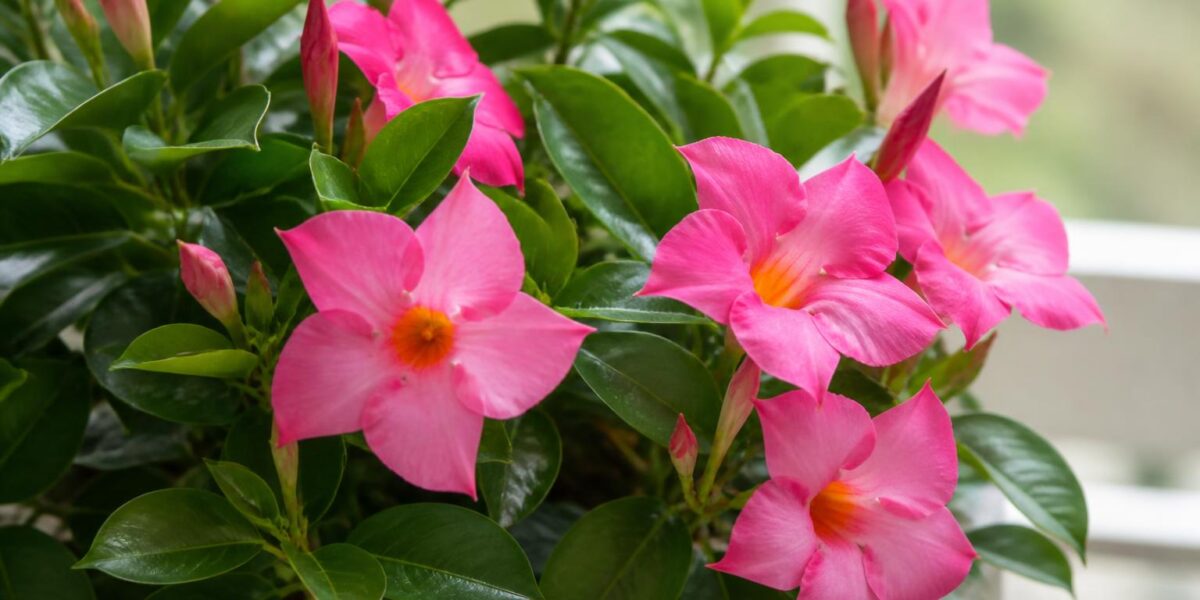
Dipladenia plants are toxic to pets. Although garden centers still sell “dipladenia” and “mandevilla” as separate products, modern botanical classification places dipladenia within the genus Mandevilla, in the family Apocynaceae. The chemistry is identical: cardiac glycosides and an irritant milky white sap that produce oral irritation, drooling, vomiting, diarrhea, and — in larger ingestions — possible cardiac effects and weakness. Severe poisoning is uncommon, but the symptoms can be intense, and the moderate-tier classification means you should treat any ingestion as a real veterinary concern.
If you bought a “dipladenia” hanging basket from a big-box garden center this summer, you essentially bought a more compact, bushier mandevilla cultivar. The plant was historically split into a separate genus on minor floral characteristics, but the toxic compounds are the same and so is the practical advice. The focus keyword for this page is dipladenia plants toxic to pets.
This guide covers the chemistry, the practical symptom set, the first aid steps that actually help, and the safer climbing alternatives if you want to redesign the patio. Most of the guidance overlaps with our mandevilla guide, which is the canonical sibling article — read that one for the deeper family-chemistry context.
Dipladenia vs. Mandevilla — What Garden Centers Actually Sell
The names are used interchangeably in the trade. In general:
- “Dipladenia” tends to refer to bushier, more compact cultivars with smaller, glossier leaves and a more shrub-like habit; common in 6-inch hanging baskets or patio containers
- “Mandevilla” tends to refer to taller, more vigorous climbing cultivars sold for trellises, arches, and pillars
Botanically, both are now in the genus Mandevilla. The species and hybrid backgrounds vary — many of the common bushier dipladenias trace to Mandevilla sanderi selections, while traditional climbers come from Mandevilla × amabilis and related hybrids. The takeaway: the label “dipladenia” is a marketing convenience, not a separate toxicity story. Your pet does not care which name is on the tag.
The Chemistry — Why Dipladenia Is on the Toxic List
Apocynaceae plants contain two relevant classes of toxin. The first is cardiac glycosides — molecules chemically related to the digitalis drugs derived from foxglove. The second is a broader collection of irritant alkaloids and saponin-like compounds in the latex sap.
Cardiac glycosides act on the sodium-potassium ATPase pump in heart muscle. At toxic doses they cause arrhythmias, weakness, vomiting, diarrhea, and electrolyte changes. The dose required for cardiac signs depends on the species, body weight, and how much the animal actually swallowed versus tasted. In practice, most dipladenia exposures produce GI signs without measurable cardiac involvement; full-blown cardiotoxicity is reserved for large ingestions or for the more potent family members like oleander, foxglove, and lily of the valley.
Dipladenia is generally classified as moderate-tier within Apocynaceae — more concerning than mild-GI plants, well below the SEVERE-tier triad. That said, “moderate” still means a sick pet for hours to days and warrants a vet call.
Symptoms After a Pet Eats Dipladenia
The classic exposure pattern starts within 30 minutes to a few hours of ingestion. The earliest signs are oral and GI:
- Drooling, lip-licking, and pawing at the mouth from sap irritation
- Vomiting, sometimes with leaf or flower fragments visible
- Diarrhea, occasionally with mucus or blood
- Refusal of food and water
- Lethargy, dullness, or hiding
- Mild abdominal discomfort — restlessness, repeated stretching, or hunched posture
The signs that escalate the case to a veterinary emergency include:
- Weakness, wobbliness, or collapse
- Slow, fast, or irregular heartbeat detected by a stethoscope or at the femoral pulse
- Pale, bluish, or muddy gums
- Severe or bloody vomiting and diarrhea
- Difficulty breathing or persistent panting at rest
If any of those signs appear, do not wait. Cardiac involvement is the marker that turns moderate-tier ingestions into life-threatening ones, and it can develop hours after the initial GI symptoms have settled.
First Aid at Home
If you catch your pet chewing dipladenia, gently remove plant material from their mouth and wipe the gums with a soft damp cloth to clear off as much sap as possible. Do not pry open a stressed animal’s jaws — you risk a defensive bite, and the mechanical trauma is worse than the few extra seconds of sap exposure.
Rinse the mouth with cool water using a syringe or turkey baster aimed at the cheek. Offer fresh water but do not force-feed. Do not induce vomiting unless your veterinarian specifically directs you to — emesis with cardiac-glycoside plants is not always recommended because it can re-expose the throat to irritant sap and stress an already irritated GI tract. Activated charcoal should also only be given under veterinary direction; the wrong dose causes aspiration pneumonia.
Then call. Your owner’s veterinarian first; if they are closed, the ASPCA Animal Poison Control Center at 888-426-4435 (per-call fee) or the Pet Poison Helpline at 855-764-7661. Have the species, weight, age, time of ingestion, rough quantity ingested, and any pre-existing heart, kidney, or GI conditions ready to share.
Bring a sprig or a clear photo of the plant to the clinic if you can. Confirming Apocynaceae sap-bleeding chemistry helps the vet rule in or out a long list of differentials.
Treatment at the Clinic
For most dipladenia exposures, treatment is supportive: anti-nausea medication, IV or subcutaneous fluids to correct dehydration and protect the kidneys, and a thorough oral exam. Pets with significant ingestion or cardiac risk factors get an electrocardiogram (ECG) to look for arrhythmias.
If the ECG shows abnormalities, the veterinarian may use specific antiarrhythmic medications and continue cardiac monitoring until the trace is stable. Most dipladenia patients are discharged within 24 hours; only the largest ingestions or animals with pre-existing heart disease are hospitalized longer.
Long-term recovery is typically complete. The cardiac glycoside dose in a single dipladenia chew is rarely high enough to cause permanent damage in a healthy adult dog or cat. Pre-existing cardiac disease, renal disease, advanced age, or very small body size are the factors that escalate risk.
Why the Sap Matters
Apocynaceae plants are sometimes called “dogbane” in older literature for a reason — the milky white latex that bleeds from broken stems carries the toxic compounds and is the most direct exposure route. Pets that paw at a hanging basket and break a stem can get sap on their feet, then groom it off and ingest it later. Pets that mouth a flower without swallowing the petals can still pick up sap on their tongue.
For owners pruning dipladenia, this means wearing gloves matters for two reasons: protecting your own skin (the sap can cause a local rash) and keeping sap off your hands so you do not transfer it to a pet during evening cuddles. Wash hands and gardening tools after working with the plant.
If you see a sap blob on the floor under a hanging basket, wipe it up with a damp paper towel before your pet investigates it.
Cats and Dipladenia — Special Notes
Cats are generally more sensitive to many cardiac toxins than dogs on a per-kilogram basis, partly because of their smaller body mass and partly because of differences in liver enzyme activity. They also groom plant residue off their fur, which extends contact with the chemistry beyond the original chew.
If you have an indoor cat with access to a sunroom or screened porch where dipladenia is displayed, treat the plant the same way you would treat a toxic houseplant in the same room. Hanging baskets are not safe just because they are off the floor — most cats can leap five or six feet vertically without effort.
Our cat-safe houseplants guide covers safer indoor and porch options. If you have an outdoor cat that roams the neighborhood, your dipladenia is not the only patio plant they can encounter; mandevilla and dipladenia are common across summer porches and balconies, so be aware of the symptom set even if your own plants are safe.
Other Apocynaceae Plants in the Garden
Knowing the family helps you recognize related risks elsewhere in your yard. The Apocynaceae family includes:
- Mandevilla — the sibling article and same chemistry
- Oleander — the SEVERE-tier benchmark
- Foxglove for cats and foxglove for dogs — same glycoside chemistry, different family now
- Lily of the valley for cats and lily of the valley for dogs
- Vinca minor and vinca major — different alkaloid chemistry within the same family
- Milkweed — sap-bleeding native, monarch host
If your yard has multiple Apocynaceae plants, the cumulative risk is higher and the case for fenced borders or supervised pet access is stronger.
Living Safely With Dipladenia
If you love your dipladenia and want to keep it, several practical strategies reduce risk without forcing removal.
- Hang baskets above any height a dog or cat can reach by jumping — usually six feet or more, and well clear of nearby furniture or railings
- Use trellises in fenced areas your pets do not enter without supervision
- Sweep up fallen flowers and leaves promptly — dried plant material still contains glycosides
- Wear gloves when pruning; wash hands and tools afterward
- Train a reliable “leave it” cue with positive reinforcement before relying on it outdoors
- Replace dipladenia in unsupervised pet zones with one of the safer alternatives below
Avoid relying on bitter sprays alone to deter chewing. Some pets ignore them, and a false sense of security is worse than no precaution at all.
Pet-Safer Climbing Vine Alternatives
Several climbing vines are not on the standard ASPCA toxic plant list and can fill the same trellis or container role dipladenia currently fills.
- Black-eyed Susan vine — Thunbergia alata, an annual climber with similar bright color
- Coral vine — Mexican creeper, full sun, prolific bloomer
- Passionflower — read the page for cultivar caveats
- Climbing roses — not on the toxic list; mechanical thorn hazard only
Avoid any plant in the Apocynaceae family in unsupervised pet zones, including dipladenia, mandevilla, oleander, and the periwinkles. Avoid the SEVERE-tier vines: Carolina jessamine, wisteria for cats, and wisteria for dogs. Steer clear of trumpet vine, which causes contact and oral irritation.
When to Skip Home Care and Call the Vet
For dipladenia, the threshold for in-person evaluation is lower than for purely oral-irritant plants because of the cardiac glycoside component. Take your pet to a veterinarian without delay if you see:
- Weakness, collapse, wobbliness, or dragging gait
- Slow, fast, or visibly irregular heartbeat
- Pale, bluish, or muddy gums
- Difficulty breathing or persistent panting at rest
- Vomiting or diarrhea that does not settle within a few hours
- Bloody vomit or bloody stool
- Known ingestion of a large quantity of leaves, flowers, or sap
- Pre-existing heart, kidney, or GI disease
- Very young, very small, or geriatric pets
If you are unsure, call. The ASPCA APCC at 888-426-4435 and the Pet Poison Helpline at 855-764-7661 can triage your specific situation by phone. With Apocynaceae plants, a precautionary call is worth the per-call fee.
Frequently Asked Questions
Are dipladenia and mandevilla the same plant?
For practical purposes, yes. Dipladenia was historically a separate genus but is now classified within Mandevilla. Garden centers still use both names — “dipladenia” tends to mean bushier, more compact cultivars and “mandevilla” tends to mean taller climbers — but the toxicity profile is identical.
Are dipladenia flowers toxic, or is it just the leaves?
Both flowers and leaves contain the same family chemistry, with leaves typically holding higher concentrations. Pets that eat flowers usually show milder GI signs than those who eat leaves or stems. Treat any ingestion as a single category and call your veterinarian for triage.
Will activated charcoal help if my pet ate dipladenia?
Activated charcoal can bind some plant alkaloids if given soon after ingestion, but it should be administered under veterinary direction — not from a home first aid kit. Owners who guess at the dose can cause aspiration pneumonia or worsen dehydration. Call your vet first.
My dipladenia hangs from the porch ceiling. Is that high enough to be safe?
If the basket is well above any furniture or railing your dog or cat could jump from, hanging height alone reduces risk. Cats in particular can leap several feet vertically, so consider whether a leaping cat could clip a leaf on the way past. Sweeping fallen flowers and leaves below the basket is also part of the safety equation.
My dog ate one leaf and is acting normal an hour later. Should I still call the vet?
Yes. Even with mild symptoms, a quick triage call to your veterinarian or the ASPCA APCC is worthwhile because cardiac glycoside effects can be delayed. They will assess your dog’s size, the quantity ingested, and any pre-existing conditions and tell you whether home monitoring or a visit is appropriate.


