
Last updated: May 16, 2026
In this article
- Yes, Climbing Hydrangea Is Toxic to Dogs and Cats
- The Cyanogenic Glycoside Story
- Symptoms After Ingestion
- First Aid at Home
- Treatment at the Clinic
- Climbing Hydrangea vs. Other Hydrangeas
- Why Climbing Hydrangea Is Common in Landscapes
- Living Safely With Climbing Hydrangea
- Pet-Safer Climbing Vine Alternatives
- Cats and Climbing Hydrangea
- When to Skip Home Care and Go Straight to the Vet
- Frequently Asked Questions
Yes, Climbing Hydrangea Is Toxic to Dogs and Cats
Climbing hydrangea plants are toxic to pets. The species, Hydrangea petiolaris (sometimes Hydrangea anomala subsp. petiolaris), shares the toxicity profile of the entire Hydrangea genus, which is on the ASPCA toxic plant list. Every part of the plant — leaves, stems, flower buds, and flowers — contains cyanogenic glycosides that, when chewed and digested, can release small amounts of hydrogen cyanide. Pets that ingest meaningful quantities typically show GI upset, lethargy, and occasionally more concerning systemic signs. The clinical reality across pet poison reports is mild-to-moderate severity for most exposures, although larger ingestions can produce more significant illness.
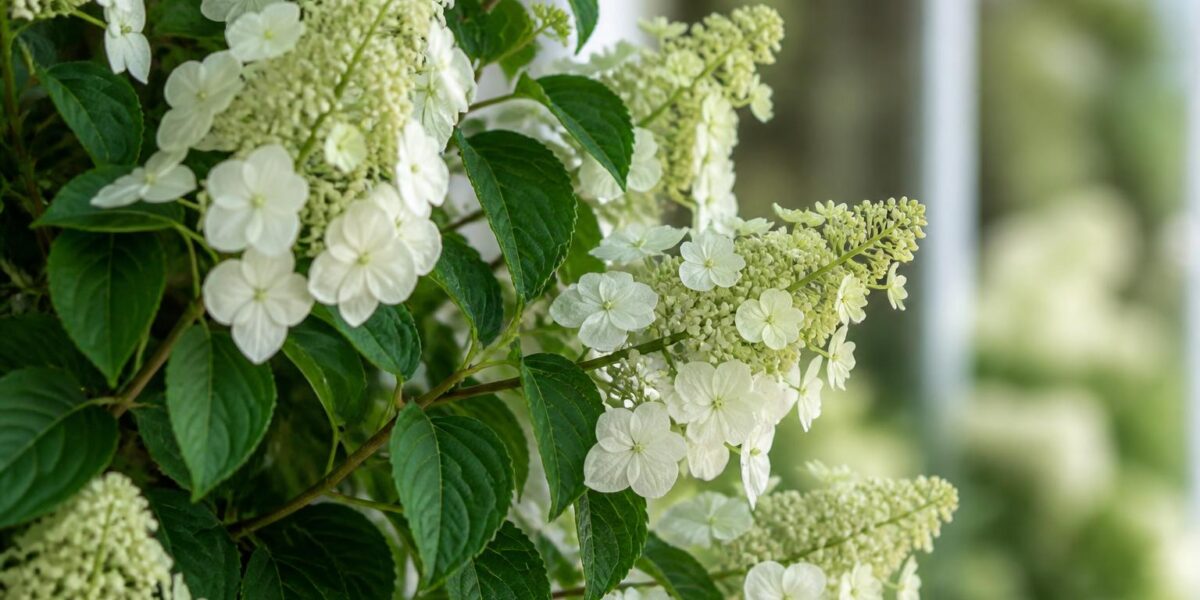
Climbing hydrangea is widely planted across temperate gardens for its ability to climb mortared brick, stone, and large tree trunks via aerial rootlets — a relatively rare growth habit in pet-friendly climbers. The white lacecap flowers in early summer are showy and persistent. The plant looks deceptively benign, and the umbrella ASPCA classification means many homeowners are surprised to learn it is on the toxic list. The focus keyword for this page is climbing hydrangea plants toxic to pets.
This guide covers the chemistry, the practical symptom set, the first aid steps that actually help, and the safer climbing alternatives if you want to redesign the wall. The toxicity story overlaps with our pillar guides on hydrangeas and cats, hydrangeas and dogs, and the panicle hydrangea page from B126.
The Cyanogenic Glycoside Story
Hydrangea species contain cyanogenic glycosides, primarily hydrangin and related compounds. When the plant is chewed, the cells rupture and the glycosides come into contact with enzymes that release hydrogen cyanide as a breakdown product. The same chemistry — different specific compound — is responsible for the cyanide story in cherry pits, apricot kernels, and apple seeds.
The actual cyanide release per gram of plant tissue is modest. For most hydrangea ingestions in dogs and cats, the cyanide load is well below acute lethal levels. The clinical picture in real-world cases is dominated by direct GI irritation from the glycosides themselves, plus the body’s metabolic response to processing the breakdown products. Severe cyanide poisoning from hydrangea is rare but theoretically possible with very large ingestions, especially of buds and flowers, which contain higher glycoside concentrations than leaves.
The framing across pet poison hotlines is “mild-to-moderate” rather than “severe-tier.” That said, “moderate” still means a sick pet for hours to a few days and warrants veterinary contact. Pets with pre-existing GI disease, kidney disease, or significant body-size disparity (very small dogs, kittens) are at higher relative risk.
Symptoms After Ingestion
Symptoms typically appear within a few hours of ingestion, occasionally sooner with large doses. Watch for:
- Vomiting, sometimes with leaf or flower fragments visible
- Diarrhea, occasionally with mucus
- Drooling or lip-licking
- Refusal of food and water
- Lethargy, dullness, or hiding
- Mild abdominal discomfort — restlessness, repeated stretching, or a hunched posture
Less commonly, larger ingestions can produce:
- Persistent vomiting with weakness
- Bloody vomit or bloody stool
- Wobbliness, ataxia, or collapse
- Rapid breathing or gasping
- Pale or muddy gums
- Increased heart rate or other cardiac changes
The shift from GI signs to neurologic or cardiovascular signs is the marker that escalates the case from “monitor and call” to “veterinary emergency.” Cyanide effects, when they appear, can be rapid — do not wait to see if mild ataxia gets worse.
First Aid at Home
If you catch your pet chewing climbing hydrangea, gently remove plant material from their mouth and wipe the gums with a soft damp cloth. Do not pry open the jaws of a panicked animal — you risk a defensive bite. Do not induce vomiting unless your veterinarian specifically directs you to.
Rinse the mouth with cool water using a syringe or turkey baster aimed at the cheek. Offer fresh water but do not force-feed. If you can collect a sprig or photograph of the plant for identification, do that — confirming “climbing hydrangea” rules in or out a long list of differentials.
Then call. Your owner’s veterinarian first; if they are closed, the ASPCA Animal Poison Control Center at 888-426-4435 (per-call fee) or the Pet Poison Helpline at 855-764-7661. Be ready to share: species, weight, age, time of ingestion, what part of the plant (leaves, flowers, buds, stems), rough quantity, and any pre-existing conditions.
The phone triage is especially valuable for hydrangea cases because the dose math depends heavily on body size and plant part. A Yorkie that ate a flower cluster is in different territory from a Lab that nibbled a single leaf.
Treatment at the Clinic
Treatment for climbing hydrangea ingestion is supportive and depends on what symptoms develop. The veterinarian may induce vomiting if the ingestion was recent and the animal is still alert; activated charcoal binds some plant compounds and may be given. IV fluids correct dehydration and support the kidneys.
For pets with significant ingestion or symptoms beyond mild GI upset, additional monitoring includes:
- Bloodwork to check kidney function, liver enzymes, and electrolytes
- Cardiac monitoring if any cardiovascular signs are noted
- Anti-emetic medication for persistent vomiting
- Pain management for abdominal discomfort
- Supportive care for any neurologic or respiratory signs
Most climbing hydrangea patients are home within 24 to 48 hours. The prognosis with prompt veterinary care is generally good for mild-to-moderate ingestions. Severe poisoning is uncommon but possible with very large ingestions, very small pets, or pets with significant pre-existing disease.
Climbing Hydrangea vs. Other Hydrangeas
Climbing hydrangea shares the genus chemistry with other hydrangeas you may grow in your garden. The toxicity profile is broadly similar across the genus, with the same cyanogenic glycoside concern.
- Hydrangeas and cats — the broad pillar covering bigleaf hydrangea (H. macrophylla) and related species
- Hydrangeas and dogs — same scope, dog-specific framing
- Panicle hydrangea — H. paniculata, the cone-flowered shrub form, B126 sibling article
If you have multiple hydrangea species in your garden, the cumulative risk is additive. A pet that grazes multiple shrubs gets a higher overall dose than from a single species. Walk the property and consider whether your pet has unsupervised access to any hydrangea — climbing or otherwise.
Why Climbing Hydrangea Is Common in Landscapes
Climbing hydrangea fills a unique niche in temperate landscape design. Few woody vines climb truly massive surfaces — large old trees, full house walls, masonry — by aerial rootlets the way Boston ivy and English ivy do, and climbing hydrangea is one of the showier options. Its white lacecap flowers in early summer brighten shaded north and east walls where most flowering vines refuse to bloom.
The plant tolerates urban pollution, harsh winters in zones 5 and 6, and partial shade. Once established, it forms a dense cover that provides nesting habitat for birds and insulates walls. Many old houses across the eastern US have decade-old climbing hydrangea cloaking foundations and chimneys.
The toxicity is real but the severity is moderate enough that most pet owners can keep climbing hydrangea on their property with reasonable supervision. The risk math changes if your pet is unsupervised in the same yard, or if you have a particularly enthusiastic chewer.
Living Safely With Climbing Hydrangea
If you love your climbing hydrangea and want to keep it without removing it, several practical strategies reduce risk.
- Prune the lower 18 to 24 inches of the vine so a curious pet cannot reach foliage at face level
- Rake fallen leaves and spent flower clusters promptly — dried plant material still contains glycosides
- Use temporary fencing during the puppy or kitten phase, when chewing is most likely
- Train a reliable “leave it” cue with positive reinforcement before relying on it outdoors
- Supervise pets in the garden, especially in early summer when flower buds and fresh foliage are at their most attractive
- Avoid using cocoa-shell mulch around the base of the vine — theobromine is a separate dog-toxic concern
For households with very young pets, very small dogs, or pets with pre-existing conditions, the conservative choice is to physically separate the pet from the climbing hydrangea — either by fencing the area or by removing the vine. The convenience of a beautiful wall covering is not worth a preventable veterinary emergency for a high-risk pet.
Pet-Safer Climbing Vine Alternatives
If you want to replace climbing hydrangea on a wall or large tree trunk, the alternatives are limited because few vines climb massive surfaces by aerial rootlets without toxicity concerns. Several options work in different niches:
- Coral vine — Mexican creeper, tendril-climber, full sun, prolific bloomer in southern zones
- Black-eyed Susan vine — Thunbergia alata, an annual climber for trellises and fences
- Passionflower — read the cultivar caveats; some species safer than others
- Climbing roses — not on toxic list; mechanical thorn hazard only; trained on a wall with wires
Vines to avoid as replacements include other hydrangeas (same chemistry), mandevilla, dipladenia, wisteria for cats, wisteria for dogs, the alternate-form wisteria page, trumpet vine, the SEVERE-tier Carolina jessamine, clematis for cats, clematis for dogs, and the calcium-oxalate-bearing Boston ivy and Virginia creeper.
Cats and Climbing Hydrangea
Cats are at lower practical risk than dogs because their interaction with vines tends to be batting and grooming rather than gulping. Cats are also generally less inclined to chew large quantities of foliage. That said, cats are sensitive to many plant alkaloids and glycosides on a per-kilogram basis, partly because of their smaller size and partly because of differences in liver enzyme activity.
For indoor or porch cats with access to a screened area where climbing hydrangea grows, treat the vine the same as a toxic houseplant in the room. Hanging or trellised foliage that dangles within batting range will be batted and chewed; do not assume that a cat won’t bother with a vine just because the cat usually ignores plants. Our cat-safe houseplants guide covers safer indoor options.
If your outdoor cat returns home with classic GI symptoms — drooling, vomiting, lethargy — and you have climbing hydrangea on the property, it is reasonable to mention that to your veterinarian. The plant is widespread enough that emergency clinics in temperate zones see hydrangea ingestions regularly during the growing season.
When to Skip Home Care and Go Straight to the Vet
Take your pet to a veterinarian without delay if you see:
- Repeated vomiting or vomiting with blood
- Diarrhea with blood or persistent lethargy
- Wobbliness, ataxia, or any neurologic signs
- Difficulty breathing, gasping, or rapid breathing at rest
- Pale, muddy, or bluish gums
- Collapse or unresponsiveness
- Known ingestion of a large quantity of leaves, flowers, or buds
- Pre-existing GI, kidney, or liver disease
- Very young, very small, or geriatric pets
- Identification uncertainty — if you are not sure whether the plant was hydrangea or something more dangerous
If you are unsure, call. The ASPCA APCC at 888-426-4435 and the Pet Poison Helpline at 855-764-7661 can triage your specific situation by phone. With cyanogenic-glycoside plants, the precautionary call is worth the per-call fee.
Frequently Asked Questions
Are climbing hydrangea flowers more or less toxic than the leaves?
Flower buds and flowers tend to contain higher concentrations of cyanogenic glycosides than leaves. Pets that eat flower clusters may show more pronounced GI signs than pets that eat the same volume of leaf tissue. That said, both are toxic — there is no safe part of the plant.
Is climbing hydrangea the same as the shrub hydrangeas in my front yard?
The same genus, different species. Climbing hydrangea is Hydrangea petiolaris (or H. anomala subsp. petiolaris) and grows as a vine. Shrub hydrangeas include bigleaf hydrangea (H. macrophylla), panicle hydrangea (H. paniculata), and oakleaf hydrangea (H. quercifolia). All share the genus chemistry and are on the ASPCA toxic list. See the hydrangea pillar page for the broader story.
How much does my dog have to eat to get sick?
The dose required varies enormously by body size, plant part, and individual sensitivity. A small piece of leaf may produce no symptoms in a large dog; the same amount in a Yorkie or kitten may produce mild GI signs. Several mouthfuls of flowers in any size pet warrant a vet call. Rather than guessing the dose math, call the ASPCA APCC or your veterinarian for triage based on your specific situation.
Will activated charcoal help if my pet ate climbing hydrangea?
Activated charcoal can bind some plant alkaloids and glycosides if given soon after ingestion, but it should be administered under veterinary direction — not from a home first aid kit. Owners who guess at the dose can cause aspiration pneumonia or worsen dehydration. Call your vet first.
Can I keep climbing hydrangea if my dog is well-trained and supervised?
For many households, yes. The plant is moderate-tier rather than severe-tier, and reasonable supervision plus sensible pruning of low-reach foliage can keep the practical risk low. The exception is households with puppies, very small dogs, or pets with pre-existing conditions — in those cases, the conservative choice is to physically separate the pet from the plant or remove the vine.


