
Last updated: April 10, 2026
In this article
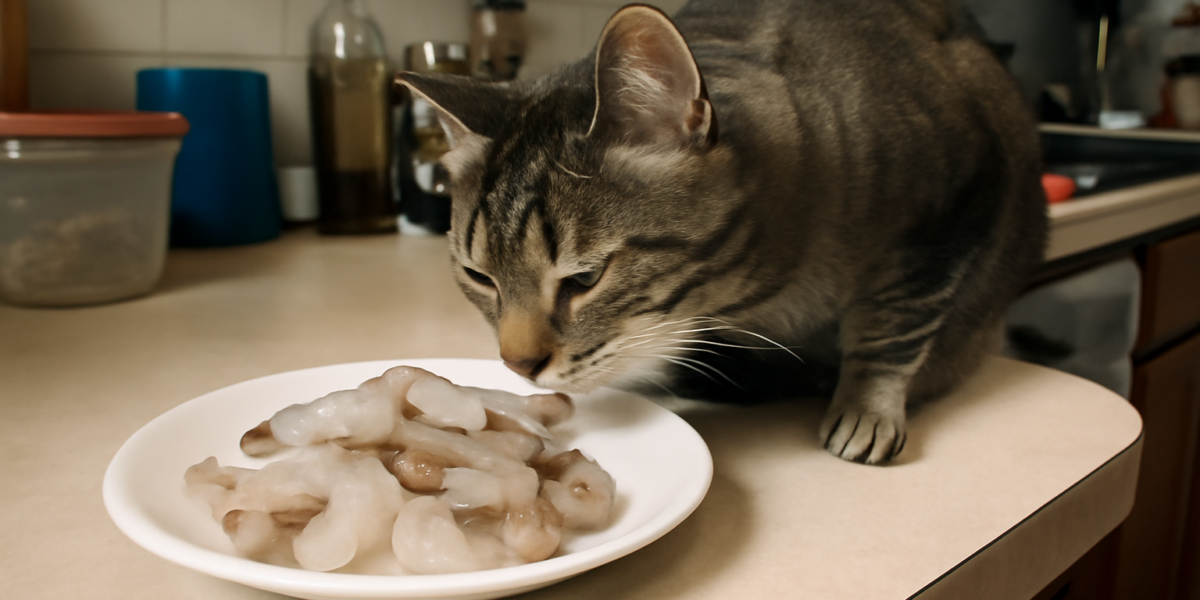
Can Cats Eat Raw Shrimp?
Cats should not eat raw shrimp. While shrimp itself is not toxic to cats and cooked shrimp can be a healthy occasional treat, raw shrimp carries significant bacteria risks including Salmonella, Listeria, Vibrio, and E. coli. These pathogens can cause serious foodborne illness in cats. Additionally, raw shrimp contains an enzyme called thiaminase that destroys thiamine (vitamin B1), an essential nutrient for cats. Always cook shrimp before offering it to your cat.
As obligate carnivores, cats are naturally drawn to seafood, and shrimp is no exception. The smell of shrimp can send even the most aloof cat running to the kitchen. While the instinct to share is understandable, raw shrimp is one food where proper preparation makes the difference between a healthy treat and a potential veterinary emergency.
Why Raw Shrimp Is Dangerous for Cats
Bacterial Contamination
Raw shrimp is a known carrier of harmful bacteria. Studies have found Salmonella, Vibrio species, Listeria monocytogenes, and E. coli in raw shrimp samples from grocery stores and fish markets. While some people argue that cats in the wild eat raw prey and can handle bacteria, domesticated cats have different immune profiles, and foodborne illness is a real and documented risk.
Salmonella in particular can cause salmonellosis in cats, with symptoms including vomiting, diarrhea (sometimes bloody), fever, lethargy, and loss of appetite. Cats can also become asymptomatic carriers, shedding Salmonella in their feces and potentially infecting humans and other pets in the household.
Thiaminase Enzyme
Raw shrimp contains thiaminase, an enzyme that breaks down thiamine (vitamin B1). Cats require thiamine for proper nervous system function, and a deficiency can cause serious neurological problems including loss of appetite, vision changes, seizures, and in severe cases, death. Cooking destroys thiaminase, making cooked shrimp safe from this perspective.
A single serving of raw shrimp will not cause thiamine deficiency, but regular feeding of raw shrimp or a diet heavy in raw seafood could contribute to dangerously low thiamine levels over time.
Parasites
Raw shrimp can harbor parasites that may cause gastrointestinal distress in cats. While parasitic contamination in commercially farmed shrimp is less common than in wild-caught varieties, the risk is not zero. Cooking eliminates parasites completely.
How to Safely Prepare Shrimp for Your Cat
Cooked shrimp is a safe, protein-rich treat that most cats enjoy. Here is how to prepare it properly:
- Start with fresh or frozen shrimp. Choose plain, unprocessed shrimp without added sodium solutions or preservatives. Many frozen shrimp are treated with sodium tripolyphosphate, which adds sodium. Look for “untreated” or “chemical-free” on the package.
- Remove the shell, tail, and vein. The shell can be a choking hazard, and the digestive vein (the dark line running along the back) should be removed for hygiene reasons.
- Cook thoroughly. Boil, steam, or poach the shrimp until it turns pink and opaque throughout. Do not grill, fry, or saute in oil or butter.
- Do not add any seasoning. No salt, garlic, butter, lemon, Old Bay, or any other seasoning. Plain is the only safe option.
- Cut into small pieces. Chop the cooked shrimp into bite-sized pieces appropriate for your cat’s size to prevent choking.
- Cool to room temperature. Do not serve hot shrimp to your cat.
Portions and Frequency
Shrimp should be treated as an occasional snack, not a dietary staple. Here are portion guidelines:
- Small cats (under 8 pounds): Half a medium shrimp, one to two times per week.
- Average cats (8-12 pounds): One medium shrimp, one to two times per week.
- Large cats (over 12 pounds): One to two medium shrimp, one to two times per week.
Treats should make up no more than 10 percent of your cat’s daily caloric intake. One medium cooked shrimp contains about 7 calories, making it a relatively low-calorie treat option compared to many commercial treats.
Shrimp is also relatively high in cholesterol. While cholesterol from food is less of a concern for cats than for humans, cats with certain health conditions may need to limit cholesterol intake. Consult your veterinarian if your cat has liver disease or other conditions that affect cholesterol metabolism.
Signs of Foodborne Illness in Cats
If your cat has eaten raw shrimp, watch for signs of foodborne illness over the next 12 to 72 hours:
- Vomiting: Especially if repeated or containing bile.
- Diarrhea: May be watery or bloody in severe cases.
- Fever: Warm ears, dry nose, and lethargy can indicate a fever.
- Loss of appetite: Refusing food for more than 24 hours.
- Lethargy: Unusual tiredness or reluctance to move.
- Dehydration: Sunken eyes, dry gums, skin that does not spring back when gently tented.
Mild symptoms may resolve on their own within 24 hours. However, persistent vomiting, bloody diarrhea, fever, or signs of dehydration require veterinary attention. Kittens, senior cats, and cats with compromised immune systems are at higher risk for serious complications from foodborne bacteria.
Shrimp Allergies in Cats
Some cats are allergic to shellfish, including shrimp. Shellfish allergies in cats can manifest as:
- Itchy skin, especially around the head and neck
- Hives or skin rash
- Vomiting or diarrhea after eating shrimp
- Swelling of the face or ears
- Chronic ear infections
If your cat has never eaten shrimp before, offer a very small amount (a single small piece) and watch for any reaction over 24 hours before offering more. If you notice any signs of an allergic reaction, discontinue shrimp and consult your veterinarian.
Other Seafood Options for Cats
If your cat enjoys seafood, there are several safe options beyond shrimp when prepared properly:
- Cooked salmon: Rich in omega-3 fatty acids. See our complete guide to cooked salmon for cats.
- Anchovies in water: Low mercury, high in omega-3s. Read about anchovy safety for cats.
- Cooked white fish: Cod, tilapia, and haddock are lean protein sources when cooked plain.
- Canned tuna in water: Okay as a rare treat but carries mercury concerns with regular feeding.
Rotate between different protein sources to provide variety and reduce the risk of developing sensitivities to any single food. For more ideas on safe cat treats, explore our guide to nutritional yeast for cats.
If you are planning to adopt a cat, discussing treat options and dietary planning with your vet during the first wellness visit helps establish healthy habits from the start.
Frequently Asked Questions
Can cats eat shrimp tails?
It is best to remove shrimp tails before offering shrimp to your cat. The tail shell is hard and sharp and can cause choking or irritate the digestive tract. While some cats may crunch through a tail without problems, the risk of injury is not worth it.
Can cats eat cooked shrimp from a restaurant?
Restaurant shrimp is almost always prepared with butter, garlic, salt, lemon, or other seasonings that are not safe for cats. Garlic is toxic to cats, and the sodium and fat content of restaurant-prepared shrimp is too high. Only offer your cat plain, home-cooked shrimp with no seasonings.
My cat ate a raw shrimp I dropped on the floor. What should I do?
A single raw shrimp is unlikely to cause serious illness in a healthy adult cat, but monitor for signs of gastrointestinal upset over the next 24 to 72 hours. Watch for vomiting, diarrhea, lethargy, or loss of appetite. If symptoms develop, contact your veterinarian. Keep your cat hydrated by ensuring fresh water is available.
Is frozen raw shrimp safer than fresh raw shrimp for cats?
Freezing can kill some parasites but does not reliably eliminate bacteria like Salmonella or Vibrio. Frozen raw shrimp should still be cooked before feeding to your cat. The safest approach is always thorough cooking regardless of whether the shrimp was previously frozen.
Can cats eat dried shrimp?
Plain, unseasoned dried shrimp without added salt can be an acceptable occasional treat. The drying process does reduce bacterial risk. However, many commercially available dried shrimp products contain added salt or preservatives. Check the ingredient list and choose products with shrimp as the only ingredient. Offer no more than one or two small dried shrimp at a time.


