
Last updated: May 16, 2026
In this article
- Quick Answer: Is Alocasia Frydek Toxic to Pets?
- Meet Alocasia ‘Frydek’: The Green Velvet
- Why Frydek Is Toxic: Calcium Oxalate Raphides
- Symptoms in Cats and Dogs
- Immediate First Aid
- Frydek Versus Variegated Frydek
- Aroid Family Cousins: Same Toxicity, Different Look
- Frydek and Polly: The Look-Alike Question
- Living Safely With Frydek and Pets
- Sibling Velvet and Veined Alocasias
- What Treatment Looks Like at the Vet
- Frequently Asked Questions
Quick Answer: Is Alocasia Frydek Toxic to Pets?
Yes. Alocasia ‘Frydek’ — the “Green Velvet Alocasia” or Alocasia micholitziana ‘Frydek’ — is toxic to cats and dogs. Like every Alocasia, it contains insoluble calcium oxalate raphides plus proteolytic enzymes that injure the soft tissues of the mouth, tongue, and upper digestive tract on contact. Toxicity is mild to moderate in most exposures, with severe escalation only when airway swelling occurs. If you arrived here researching alocasia frydek toxic to pets, treat this beautiful velvet-leafed plant as a confirmed household hazard.
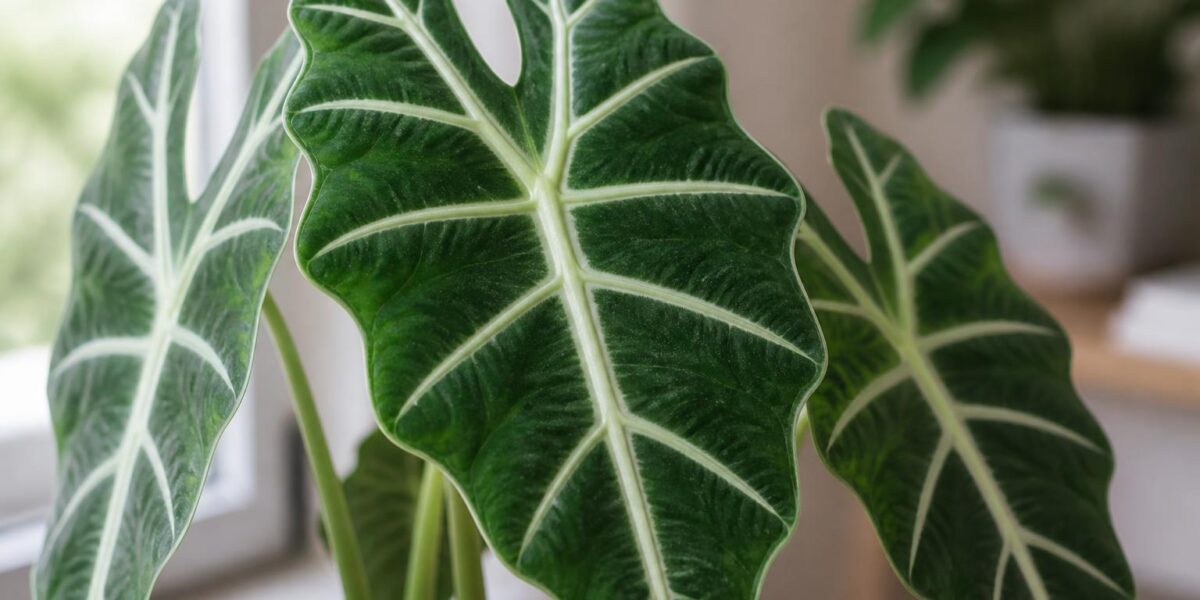
Frydek is one of the most popular “velvet” Alocasias because it combines the dark-and-veined drama of cultivars like Black Velvet with a more accessible price point and slightly faster growth rate. The arrow-shaped leaves are emerald green with a soft matte texture and bright white veins, often described as looking like artisanal silk. Read our Alocasia elephant ear toxic to pets umbrella for genus-wide context.
Meet Alocasia ‘Frydek’: The Green Velvet
The species Alocasia micholitziana is native to the Philippines and was named after the Polish botanist Wladyslaw Frydek, hence the cultivar designation. Frydek leaves are narrow arrow-shapes, 8–12 inches long, with a velvety matte emerald-green upper surface and prominent ivory-white veins running along the midrib and lateral ribs. Mature indoor specimens reach 24–36 inches tall.
Frydek has a reputation among hobbyists as more forgiving than the rarer jewel Alocasias but more demanding than the big-box Polly and amazonica. It wants bright indirect light, consistent moisture, humidity above 50%, and good airflow. Owners who succeed with Frydek tend to handle the plant frequently — checking soil moisture, wiping leaves, repositioning during weather shifts — which means more sap-on-skin opportunities than with a hands-off plant.
Why Frydek Is Toxic: Calcium Oxalate Raphides
Every part of Alocasia ‘Frydek’ — the velvet leaves, petioles, sap, rhizome, and any flowers it produces — contains microscopic needle-shaped calcium oxalate crystals called raphides. These crystals are stored in specialized idioblast cells under tension. When a pet bites the plant, mechanical pressure ruptures the idioblasts and forcibly ejects the raphides into the soft tissues of the mouth, tongue, and pharynx. The injury is mechanical (the needles physically tear tissue) and chemical (proteolytic enzymes co-released from the same cells exacerbate inflammation and recruit histamine release).
The result is immediate, painful oral irritation that usually deters further chewing — which is why most Alocasia exposures stay in the mild range. The danger zone opens when a determined chewer ingests a substantial amount, when sap contacts the eyes, or when small cats and short-faced dogs develop airway swelling that compromises breathing.
Symptoms in Cats and Dogs
Signs typically appear within minutes of a chew:
- Sudden, profuse drooling, foamy saliva, or hypersalivation
- Pawing at the mouth, head shaking, face rubbing
- Visibly red, swollen, or blistered tongue, gums, or lips
- Difficulty swallowing, repeated gulping
- Vomiting, sometimes with shredded plant material
- Loss of appetite, refusal to drink water
- Hoarse meow, changed bark, or quiet wheeze suggesting airway irritation
- Eye redness or tearing if sap contacted the cornea
Severe-tier red flags requiring emergency care: visible lip or tongue swelling that obstructs breathing, audible stridor, pale or blue gums, collapse, or any sign your pet cannot move air freely.
Immediate First Aid
If your pet has chewed Alocasia ‘Frydek’:
- Gently remove visible plant material from the mouth. Wear gloves — the same crystals will sting your skin.
- Rinse the mouth with cool water using a syringe, washcloth, or slow tap stream.
- Offer cold milk, plain yogurt, or a chilled small meal. The calcium binds free oxalate; the cold soothes inflamed tissue. Skip dairy if your pet is lactose-intolerant.
- Photograph the plant and any chewed leaves; note timing and approximate quantity.
- Call your veterinarian, the ASPCA Animal Poison Control Center at 888-426-4435, or the Pet Poison Helpline at 855-764-7661. Both lines are staffed 24/7 by veterinary toxicologists.
Do not induce vomiting at home. Forced emesis can drag sharp crystal-laden material back through already-injured tissue. Veterinary teams have safer tools (anti-emetics, oral rinses, IV fluids) for cases that need them.
Frydek Versus Variegated Frydek
Variegated Frydek (sometimes labeled “Frydek Variegata” or “Frydek Albo”) is a cream-and-green sport of the standard cultivar, prized by collectors and priced accordingly. From a pet safety standpoint, the variegation is irrelevant — variegated tissue still contains calcium oxalate raphides, sometimes at higher concentration in the white sectors because those areas have less chlorophyll buffer. If your variegated Frydek loses leaves to chewing, the loss feels worse financially but the medical picture for your pet is the same as for the standard form.
The same applies to any “Frydek Aurea,” “Frydek Mint,” or other named sport you may encounter at boutique nurseries. All carry identical chemistry.
Aroid Family Cousins: Same Toxicity, Different Look
Alocasia ‘Frydek’ belongs to the Araceae family, which contains many of the most popular houseplants worldwide. The calcium oxalate raphide mechanism is shared by:
- Other Alocasia cultivars (Polly, zebrina, cuprea, Black Velvet)
- Anthurium (Anthurium toxic to cats, Anthuriums toxic to dogs)
- Aglaonema (Aglaonema toxic to cats, Aglaonema toxic to dogs)
- Caladium (Caladium toxic to cats, Caladium toxic to dogs)
- Spathiphyllum (peace lily), Philodendron, Pothos, Dieffenbachia, Monstera
If your pet reacts to one Araceae plant, expect a similar reaction to all — and treat them as a single household hazard category rather than individual plants.
Frydek and Polly: The Look-Alike Question
Frydek and Alocasia Polly are often confused at a quick glance because both have arrow-shaped dark-green leaves with bright white veins. Up close the differences are clear: Frydek is matte and velvety; Polly is glossy and waxy. Frydek leaves are typically narrower and more elongated; Polly leaves are wider and more triangular. The two are also distinct lineages — Frydek is A. micholitziana; Polly is a hybrid believed to involve A. amazonica and A. longiloba.
Pet safety implications are identical. The two plants share the same raphide profile and require the same prevention and first-aid strategy.
Living Safely With Frydek and Pets
Many households co-exist with Alocasia ‘Frydek’ because the painful first bite naturally deters repeat offenders. Still, prevention beats treatment:
- Place the plant on a high shelf, plant stand, or in a hanging planter out of jumping range
- Pick up dropped leaves and trimmed material immediately
- Wash hands after pruning so sap doesn’t transfer to pet bowls, food, or fur — Frydek’s velvet surface hides sap residue
- Offer pet grass or other cat-safe houseplants as alternative chewing outlets
- If your pet has shown repeat interest, rehome the plant to a pet-free room or a friend’s home
For households with several Alocasias and a curious cat, consolidating all Alocasias and other aroids into a single dedicated room — or a sealed humidity cabinet — is often the cleanest long-term solution.
Sibling Velvet and Veined Alocasias
Frydek shares texture and aesthetics with other matte-leaved Alocasias on the toxic list. Sibling articles include Alocasia Black Velvet (smaller, near-black version of the same matte aesthetic), Alocasia Dragon Scale (embossed silver-green), and Alocasia cuprea (metallic copper-purple). Larger relatives include Alocasia Stingray, Alocasia odora, and Alocasia macrorrhizos.
The chemistry is uniform across the genus; only the appearance varies. Once you’ve installed pet-safe management for one Alocasia, you’ve installed it for the rest.
What Treatment Looks Like at the Vet
Most Alocasia ‘Frydek’ exposures resolve with supportive care: oral rinses, anti-inflammatories, anti-emetics, IV fluids, and pain control. In rare cases of significant airway swelling, oxygen support and corticosteroids may be added. Most pets are discharged within 24 hours and resume normal eating within 48. Bring your photograph of the plant, your timing notes, and a list of any medications your pet takes — this saves the team minutes that may matter.
If your household is rebalancing around pet safety, our adoptable cats and adoptable dogs pages list animals waiting for homes; sometimes a household reset is a natural moment to bring in a new family member.
Frequently Asked Questions
Is Alocasia Frydek more or less toxic than Alocasia Polly?
The toxicity is the same — calcium oxalate raphides plus proteolytic enzymes — across the entire Alocasia genus. Frydek and Polly produce identical clinical pictures.
Is variegated Frydek safer than standard Frydek?
No. Variegated tissue still contains raphides, and the white sectors may even concentrate them slightly more in some plants. Treat any variegated Alocasia as equally toxic.
How quickly do symptoms appear after my cat chews Frydek?
Within minutes. The crystals cause immediate oral pain on contact, so drooling, pawing at the mouth, and rapid retreat from the plant are the first visible signs.
Will my dog die from eating Frydek?
Very unlikely from typical exposures. Most cases resolve with supportive care. Severe outcomes — airway swelling, esophageal injury, or aspiration — are rare but possible. Call your vet or a poison hotline if symptoms are severe or progressing.
What pet-safe foliage plants resemble Alocasia Frydek?
Calathea cultivars (especially Calathea ornata “Pinstripe” and Calathea makoyana) and certain Maranta species offer similar dark-and-veined foliage without the aroid toxicity. Browse our cat-safe houseplants guide and consider visiting adoptable cats if you’re shaping a feline household.


