
Last updated: May 16, 2026
In this article
Are Caladiums Toxic to Cats? Protecting Your Feline from This Colorful Houseplant
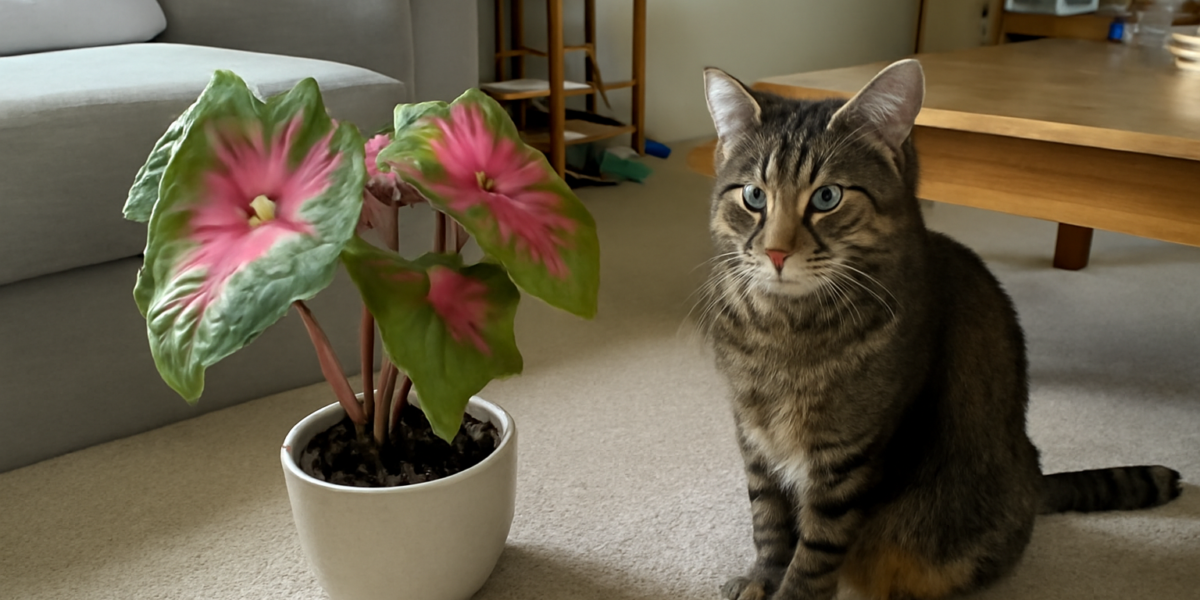
Caladiums are among the most visually striking plants you can grow, with their large, heart-shaped leaves splashed in dramatic combinations of red, pink, white, and green. Often called angel wings, heart of Jesus, or elephant ears (not to be confused with their larger Alocasia relatives), caladiums have become increasingly popular as both garden bedding plants and indoor houseplants for their ability to bring color to shady spaces where few other plants can compete.
But if you share your home with a cat, these beautiful plants come with a significant caveat: caladiums are toxic to cats. They contain insoluble calcium oxalate crystals that can cause immediate and painful oral irritation, and while the toxicity is rarely life-threatening, it can cause considerable distress to your cat and, in some cases, require veterinary attention.
How Caladiums Cause Harm: The Calcium Oxalate Crystal Mechanism
Like many members of the Araceae family, caladiums produce and store insoluble calcium oxalate crystals called raphides within their tissues. These crystals are found in specialized cells called idioblasts that are distributed throughout the leaves, stems, and tubers of the plant. The crystals serve as a natural defense mechanism against herbivory — they are essentially the plant’s way of saying “do not eat me.”
When a cat bites into a caladium leaf, the mechanical pressure of chewing ruptures the idioblast cells and launches the needle-shaped raphides into the soft tissues of the mouth, tongue, and throat. The effect is immediate and intensely painful — imagine biting into something that fires thousands of microscopic glass needles into your gums and tongue simultaneously.
But the damage is not purely mechanical. The raphides also carry irritant enzymes, including proteolytic enzymes that break down proteins in the tissue, amplifying the inflammatory response. Some researchers have also identified other irritant compounds in the sap of Araceae plants that contribute to the tissue damage and swelling that follows crystal penetration.
The result is rapid onset of pain, inflammation, and swelling in the mouth and, potentially, the throat and upper airway. The intensity of the reaction depends on how much the cat chewed before the pain caused it to stop — and most cats stop very quickly, because the pain is immediate and unmistakable.
This same mechanism is at work in several related plants that cat owners should be aware of, including dieffenbachia (dumb cane) and elephant ears (Alocasia and Colocasia). If you have any of these Araceae family members in your home, the same precautions apply to all of them.
Symptoms of Caladium Exposure in Cats
The symptoms of caladium exposure in cats are typically immediate and dramatic — and they can be quite alarming for an unprepared owner. Understanding what to expect can help you respond calmly and effectively.
The most prominent and immediate symptom is intense oral pain. Your cat may cry out, drop the leaf, and begin pawing frantically at its face and mouth. Head shaking, rubbing the face against the floor or furniture, and attempts to “spit out” the irritant are all common. The cat may appear panicked, and the suddenness and intensity of the reaction can be frightening for owners.
Excessive drooling is almost universal with caladium exposure. The drool may be thick, ropy, and more profuse than you have ever seen from your cat. This is the body’s natural response to oral irritation — the saliva is trying to dilute and flush the irritant from the mouth. In some cases, the drool may be tinged with blood if the crystal penetration was severe enough to cause tissue damage.
Swelling of the mouth, tongue, and lips develops within minutes to hours. The tongue may appear red, puffy, and swollen. In some cases, tongue swelling is so pronounced that the tongue protrudes from the mouth. The lips may become visibly enlarged, and the mucous membranes of the mouth may appear red and inflamed. Your cat’s voice may change — the meow may sound hoarse, muffled, or absent if there is swelling in the throat area.
Difficulty swallowing (dysphagia) is common, particularly if the cat managed to swallow some of the chewed plant material or if swelling extends to the throat. You may observe gagging, retching, or repeated swallowing motions. Vomiting can occur, especially if plant material was swallowed, and may provide some relief by expelling the irritant from the stomach.
Loss of appetite and refusal to drink are expected consequences of the oral pain. Cats with significant mouth inflammation will avoid eating and drinking because the act of swallowing aggravates the pain. This is usually self-limiting — as the pain subsides over 24 to 48 hours, appetite typically returns — but prolonged refusal to eat or drink can lead to dehydration, which is a concern especially in older cats or those with underlying health conditions.
The most concerning potential complication is upper airway swelling. If the swelling extends to the pharynx (the back of the throat) or the larynx (the voice box), breathing can become compromised. Signs of airway involvement include audible wheezing, stridor (a high-pitched breathing sound), open-mouth breathing, increased respiratory effort, and in severe cases, a bluish tint to the gums (cyanosis). Airway compromise is uncommon with caladium exposure but is a genuine emergency when it occurs.
First Aid for Caladium Exposure
When you discover your cat has been chewing on a caladium, here is a practical first aid approach:
Gently remove any remaining plant material from your cat’s mouth if you can do so safely. A painful, panicked cat may bite defensively, so use extreme caution. If your cat will not allow you to access its mouth, do not force it — the plant material will likely be expelled through drooling and gagging on its own.
Offer cool, fresh water to drink. Drinking water can help rinse some of the crystals from the oral tissues and provide comfort. Some veterinarians suggest offering a small amount of milk, yogurt, or ice cream — the calcium and proteins in dairy products may help bind the oxalate crystals and soothe irritated tissues. This is a home comfort measure, not a medical treatment, but many cat owners report that their cats accept a small amount of milk or cream even when they refuse water.
You can attempt to gently rinse your cat’s mouth with cool water using a needleless syringe directed at the cheeks, not straight back into the throat. However, most cats will not tolerate this well, and forcing a mouth rinse on a stressed, painful cat can do more harm than good. If your cat fights the rinse, stop and focus on keeping them calm instead.
Wipe away any plant sap on the face, paws, or fur with a damp cloth. This prevents the cat from spreading the irritant to other areas, particularly the eyes, during grooming.
Monitor your cat’s breathing. If there is any sign of labored or noisy breathing, open-mouth breathing, or any suggestion that the throat is swelling, transport your cat to the nearest emergency veterinary hospital immediately. Airway compromise is the one scenario where caladium exposure can become a true emergency.
For mild cases — a small bite, some drooling, pawing at the mouth, but normal breathing and gradual improvement — home monitoring may be sufficient. However, call your veterinarian for guidance. They can help you assess whether an in-person visit is warranted based on the specific symptoms you describe.
Veterinary Treatment for Caladium Ingestion
Most cases of caladium exposure in cats are managed with supportive care, and the prognosis is excellent. There is no specific antidote for calcium oxalate crystal exposure, but the body will clear the irritation on its own over time, and veterinary care can significantly reduce your cat’s discomfort during the recovery period.
Your veterinarian will examine your cat’s mouth, throat, and airway to assess the extent of tissue damage and swelling. Sedation may be necessary to allow a thorough oral exam if your cat is too painful to cooperate. The vet will also assess hydration status and overall condition.
Pain management is the primary focus of treatment. Buprenorphine is commonly used in cats for oral pain — it can be administered transmucosally (absorbed through the gums), which means it can provide pain relief even in cats who are not swallowing well. Other pain medications may be used depending on the severity of symptoms and the veterinarian’s preference.
Anti-inflammatory medications may be prescribed to reduce swelling. Corticosteroids such as dexamethasone are sometimes used, particularly if there is significant swelling that could compromise the airway. Antihistamines may also help manage the inflammatory response.
If your cat is dehydrated or refusing to drink, subcutaneous or intravenous fluid therapy will be administered. This is especially important for cats who have been refusing water for more than 12 hours or who have been vomiting or drooling excessively, as the fluid losses can add up quickly.
Anti-nausea medications may be given if vomiting is persistent. GI protectants can help soothe any stomach irritation caused by swallowed plant material or crystals.
In the rare event that airway swelling is severe, more aggressive intervention may be needed. This could include injectable corticosteroids, nebulized medications to reduce airway swelling, oxygen supplementation, or in extreme cases, emergency airway management. These severe scenarios are uncommon with caladium but the veterinary team will be prepared for them.
Most cats recover fully within 24 to 72 hours, with the worst of the symptoms typically resolving within the first day. Appetite usually returns once the oral pain becomes manageable, and full recovery of normal eating and drinking is expected within a few days. Long-term complications from caladium exposure are essentially unheard of.
Cat-Proofing Your Home Against Caladiums
If you are a plant enthusiast with cats, managing the caladium risk requires honest assessment of your home environment and your cat’s behavior patterns.
The safest option, as always, is to not keep caladiums in areas accessible to your cat. If you grow caladiums outdoors in garden beds and your cat is indoor-only, the risk is effectively eliminated. But if you keep caladiums as houseplants or if your cat has outdoor access to garden areas where caladiums grow, you need a management strategy.
For indoor caladiums, placement in a closed room that your cat cannot enter is the most reliable approach. Bathrooms, home offices with doors, or sunrooms that can be sealed off are good options. Hanging planters can work for smaller caladium varieties, but be aware that fallen leaves can still land within reach.
Deterrent strategies — citrus scents, bitter sprays, textured mats around the plant — can reduce a cat’s interest but should not be relied upon as the sole line of defense. Some cats are simply not deterred by these measures, and it only takes one curious moment for an exposure to occur.
If you are growing caladiums outdoors, be aware that the tubers are toxic as well. If your cat digs in the garden, exposed or partially uncovered tubers are a risk. Covering the planting area with mulch or decorative stones can help, but supervision is the most reliable safeguard for outdoor cats.
For cat owners who love the look of caladiums but want to eliminate the risk, several non-toxic plants can provide similar colorful, tropical foliage. Polka dot plants (Hypoestes phyllostachya) offer splashy pink, white, and red patterned leaves and are non-toxic to cats. Rex begonias provide dramatically patterned foliage in a range of colors (note: while begonias can cause mild mouth irritation, they are significantly less toxic than caladiums). Prayer plants (Maranta leuconeura) have beautifully patterned leaves and are completely cat-safe. For a complete list, visit our cat-safe houseplants guide.
Understanding the Araceae Family: A Pattern of Toxicity
Caladiums are part of the Araceae family, which is one of the most important plant families for cat owners to understand because it includes so many popular houseplants that share the same calcium oxalate crystal toxicity. Recognizing this family pattern can help you quickly identify plants that might be problematic.
Common Araceae family houseplants that contain calcium oxalate crystals include philodendrons (all species — split leaf, heartleaf, and others), monsteras (Swiss cheese plant), dieffenbachia (dumb cane), pothos (devil’s ivy), peace lilies (Spathiphyllum), Chinese evergreens (Aglaonema), elephant ears (Alocasia and Colocasia), and ZZ plants (Zamioculcas zamiifolia). All of these produce the same type of raphide crystals found in caladiums, though concentrations vary.
Among the Araceae, dieffenbachia is generally considered to produce the most intense calcium oxalate reaction, followed by philodendrons and elephant ears. Caladiums fall in the moderate range — less intense than dieffenbachia but capable of causing significant discomfort.
If you identify one Araceae plant in your home, it is worth checking whether you have others. Many plant collections end up heavy on Araceae species because they are widely available, easy to grow, and beautiful. Doing an inventory of your houseplants and cross-referencing against a pet-safe plant list is a worthwhile exercise for any cat owner.
Not all Araceae are equally dangerous, and the risk from most of them is limited to local oral irritation rather than systemic poisoning. But if you have a cat who is a determined plant chewer, having multiple calcium oxalate-containing plants in the home increases the odds of an uncomfortable encounter. At minimum, knowing which of your plants belong to this family allows you to make informed decisions about placement and cat access.
Frequently Asked Questions
Can a cat die from eating caladium?
Death from caladium ingestion is extremely rare in cats. The primary toxic mechanism — calcium oxalate crystal irritation — causes local pain and inflammation rather than systemic poisoning. The immediate pain also causes most cats to stop eating after a single bite, limiting the exposure. The most serious potential complication is severe airway swelling, which could theoretically become life-threatening if untreated, but this is very uncommon. With appropriate veterinary care when needed, the vast majority of cats make a full and complete recovery.
How long will my cat be in pain after chewing on caladium?
The acute, intense pain typically begins to subside within a few hours, though your cat may continue to show discomfort for 12 to 24 hours. Oral swelling usually peaks within the first 24 hours and then gradually resolves over three to seven days. Most cats are eating and drinking normally again within one to three days, though some tenderness may persist for up to two weeks in cases with more significant tissue damage. If pain seems severe or is not improving after 24 hours, veterinary evaluation is recommended.
My indoor cat has never shown interest in plants. Is it safe to keep caladium?
While some cats genuinely have no interest in plants, cat behavior can be unpredictable. A cat who has ignored plants for years might suddenly develop an interest due to boredom, a change in environment, or the introduction of a particularly enticing new plant. Caladium leaves, with their large size and sometimes drooping habit, can attract attention simply by moving in a breeze. If you do keep caladiums with an apparently disinterested cat, monitor closely, keep the plant in a less accessible location, and have a plan in case curiosity strikes unexpectedly.
Are caladium tubers (bulbs) toxic to cats?
Yes, caladium tubers contain calcium oxalate crystals just like the leaves and stems. If your cat digs up or chews on a caladium tuber, the same type of oral irritation can occur. This is a particular risk during planting season when tubers are being handled, or in gardens where they may be partially exposed at the soil surface. Keep stored tubers in closed containers away from pets, and plant them at sufficient depth to prevent cats from digging them up.
Should I take my cat to the vet every time it bites a caladium?
Not necessarily, but you should always call your vet to discuss the situation. Mild cases — a small nibble followed by drooling and pawing at the mouth, with normal breathing and symptoms that begin improving within a few hours — can often be monitored at home with phone guidance from your vet. However, you should bring your cat in for an exam if you observe any signs of breathing difficulty, if swelling is significant or worsening, if your cat refuses to eat or drink for more than 12 hours, if vomiting is persistent, or if symptoms are not improving within six to eight hours.


