
Last updated: May 16, 2026
In this article
- Are Epidendrum Orchids Safe for Pets? The Quick Answer
- What Epidendrum Orchids Look Like
- Why Epidendrum Is Considered Non-Toxic
- What Could Still Go Wrong
- What to Do If Your Pet Eats Epidendrum
- Cats and Epidendrum Orchids
- Dogs and Epidendrum Orchids
- Growing Epidendrum in a Pet Home
- Pairing Epidendrum With Other Pet-Safe Plants
- When Epidendrum Isn’t the Right Fit
- Frequently Asked Questions
Are Epidendrum Orchids Safe for Pets? The Quick Answer
Yes. Epidendrum orchids — also called reed orchids, crucifix orchids, or simply “epis” — are considered non-toxic to cats and dogs. The orchid family (Orchidaceae) sits on the ASPCA non-toxic plants list, and Epidendrum inherits that safety profile. If you have a row of reed orchids in a Florida or California front bed, an indoor specimen on a sunny shelf, or a tabletop arrangement in bloom, epidendrum orchids safe for pets is the answer pet owners are looking for.
Non-toxic does not mean meal-grade. A pet that destroys a whole plant may experience mild, short-lived stomach upset from the volume of plant material rather than from any chemical compound. Reactions are typically a single bout of vomiting, brief drooling, and a missed meal. That is a different universe from the calcium oxalate burn of a philodendron leaf or the systemic damage of a lily petal. This guide covers Epidendrum’s identification, why it earns the safe label, how to react if your pet samples a flower, and how to grow reed orchids comfortably alongside curious cats and dogs.
What Epidendrum Orchids Look Like
Epidendrum is one of the largest orchid genera, with more than 1,500 accepted species native to subtropical and tropical Americas — from Florida and Mexico down through the Andes. Garden centers and big-box stores sell a handful of Epidendrum radicans hybrids and Epidendrum ibaguense crosses (collectively “reed-stem epis”) that have become popular landscape plants in mild-winter regions.
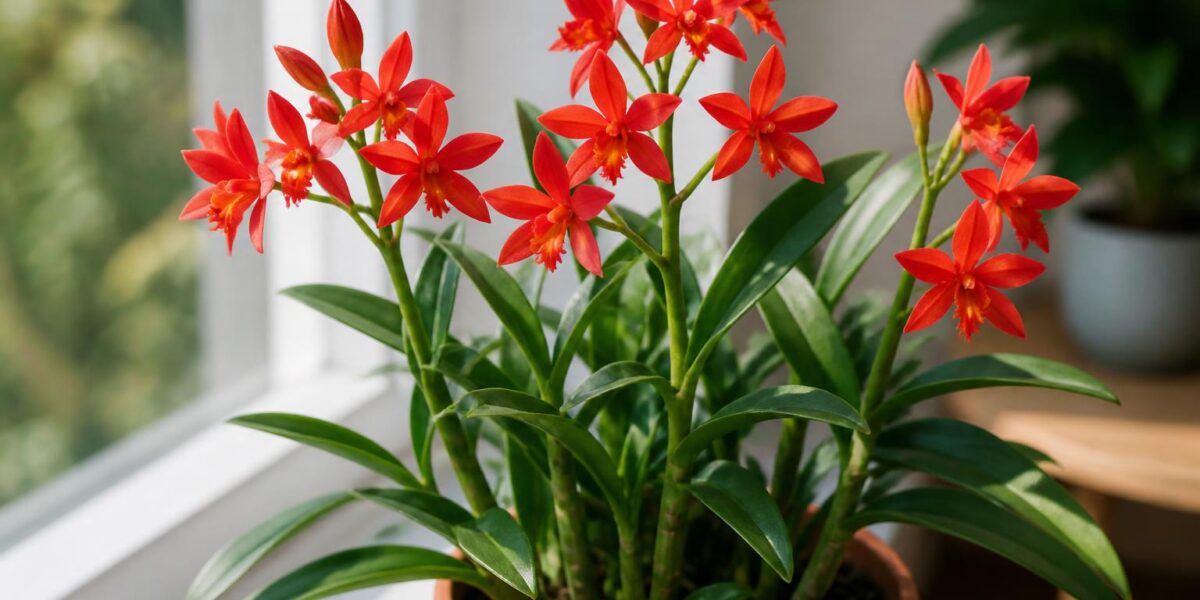
The plants grow as upright cane-like stems three to four feet tall, lined with thin leathery leaves. The blooms cluster at the tip of each cane in tight balls of small (one inch or smaller) flowers. Colors run hot — red, orange, yellow, magenta, lavender, and white. Some species look like miniature cattleyas with cane-like pseudobulbs and large showy flowers; the genus is enormously variable.
Common landscape and houseplant Epidendrum species and hybrids include Epidendrum ibaguense, Epidendrum radicans, Epidendrum secundum, and Epidendrum cinnabarinum. Sister genera in the same alliance (some now reclassified) include Cattleya and Dendrobium — all part of the same broadly safe orchid umbrella.
Why Epidendrum Is Considered Non-Toxic
The ASPCA’s plant database lists Orchidaceae as a family non-toxic to cats and dogs. Epidendrum, like Phalaenopsis, Oncidium, Cymbidium, Vanda, Miltonia, lady slipper, Brassia, and the rest of the cultivated genera, falls under that umbrella.
That means Epidendrum tissue does not contain calcium oxalate raphides, cardiac glycosides, organosulfur compounds, or saponins of veterinary concern. A pet that licks, bites, or chews a leaf, pseudobulb, root, or flower is not at risk of the systemic poisoning seen with truly toxic plants. We address the umbrella in our orchids safe for dogs and orchids and cats articles.
Reed orchids in particular tend to be planted in front-yard landscape beds where dogs walk by routinely. The reassurance matters: a curious dog mouthing a fallen Epidendrum bloom is not in danger.
What Could Still Go Wrong
Non-toxic does not mean digestible. A few edge cases keep Epidendrum in the “supervise, don’t panic” category:
- Volume eating. A pet that destroys multiple canes or eats a whole flower cluster may vomit once or have loose stool. The reaction is mechanical irritation, not poisoning.
- Choking and obstruction. Cane fragments are firm and fibrous. A small dog or cat that swallows a stem segment whole could lodge it in the throat or intestine.
- Growing media. Most cultivated orchids live in bark or sphagnum mixes. Eating large bark pieces is a foreign-body risk independent of the orchid.
- Landscape chemicals. Outdoor reed orchid plantings often coexist with lawn fertilizer, herbicide, and snail bait. The chemicals are far more dangerous than the orchid; rinse leaves and clean up runoff before letting pets graze.
Symptoms of mild plant ingestion in cats and dogs include drooling, single-episode vomiting, brief lip-smacking, and occasional loose stool. Most cases self-resolve within twelve to twenty-four hours.
What to Do If Your Pet Eats Epidendrum
Stay calm and remove any plant material remaining in your pet’s mouth. Tidy the chewed plant so a return visit is impossible. Note what was eaten (cane, leaf, flower, root), how much, and what time. That information helps a clinician triage by phone.
For a small chew in a healthy adult cat or dog, watch at home for twelve to twenty-four hours. Offer fresh water. Skip the next meal if your pet seems queasy and resume with a small bland portion (boiled chicken and rice for dogs, plain cooked chicken or pumpkin for cats) when appetite returns.
Call your veterinarian, the ASPCA Animal Poison Control Center at 888-426-4435, or the Pet Poison Helpline at 855-764-7661 if your pet is very young, very old, pregnant, has a known medical condition, ate a large amount, or shows persistent vomiting, repeated diarrhea, lethargy, blood in stool, or signs of choking. Do not induce vomiting at home — that decision belongs to a clinician.
Cats and Epidendrum Orchids
Cats meet Epidendrum mostly indoors. The cane-like stems wave appealingly when a cat bats at them, and the small flower clusters at the tips are easy targets for play. A cat that pulls down a stem may bite at it once or twice and lose interest. The non-toxic chemistry means the playful sampling is low-risk.
Where cats run into trouble is fixated chewing — the indoor-only cat who cannot find a yes-plant and decides the orchid will do. The chewing itself is harmless, but the plant suffers and the behavior often expands to other houseplants that may not be as safe. Redirect with cat grass, oat sprouts, or a dedicated chew plant. Our cat-safe houseplants roundup has alternatives.
For homes about to add a cat, the adopt cats hub includes pet-proofing checklists.
Dogs and Epidendrum Orchids
Dogs encounter Epidendrum two ways: indoors as a potted bloom and outdoors as a landscape planting in mild-winter regions. The outdoor encounters are more common because reed orchids are tall enough to be at nose level and frequently planted along walkways and front steps.
Puppies and adolescent dogs are the typical chewers. A bitten cane is mostly leaves and air, with a small pseudobulb inside; a determined chew might destroy the cane but rarely results in significant ingestion. Dogs with sensitive stomachs may vomit once after a chew session. Withhold food briefly, offer small water amounts, and reintroduce a bland meal when the queasiness passes.
The bigger risk in landscape plantings is the chemistry around the plant — fertilizer granules, snail bait (look for iron phosphate as a pet-safer alternative to metaldehyde), and herbicide overspray. If your dog grazes the front bed often, the bed needs a pet-safe management plan regardless of which plants are growing in it. Browse adopt dogs for more pet-and-yard logistics.
Growing Epidendrum in a Pet Home
Indoor Epidendrum prefers bright light (some species tolerate near-direct sun), warm to intermediate temperatures, and well-drained orchid mix. The cane-stem types are heavy feeders during active growth and benefit from regular dilute fertilization. Outdoor reed orchids in mild zones grow in raised beds or rockeries with morning sun and afternoon shade.
The pet-friendly setup tweaks are similar to other orchids. Use heavy pots so a swat or shoulder bump does not tip the plant. Stake taller canes so they do not arch into reach. Pick up dropped flowers and shed leaves promptly. Skip systemic insecticides while pets share the room — predatory mites, insecticidal soap, and neem applied during pet-out windows are gentler.
Slow-release fertilizer pellets should be hidden under the bark surface or in a top dressing pets cannot scratch up. The fertilizer is a bigger GI risk than the orchid. For outdoor beds, fence the planting if a dog grazes there, or use a hardscape path so foot traffic doesn’t include the bed.
Pairing Epidendrum With Other Pet-Safe Plants
Epidendrum is a natural anchor for a pet-safe orchid display. Pair it with Cattleya for fragrant statement blooms, Oncidium for sprays of yellow, Dendrobium for cane-stem variety, Coelogyne for cascading white sprays, and Zygopetalum for fragrant chocolate-violet blooms.
For non-orchid companions, layer in bromeliads, air plants, haworthia, fittonia, persian shield, or carnivorous plants like tropical pitcher plants. The variety is gorgeous, and the toxicology is calm.
What to avoid in shared shelf space: aroids (philodendron, monstera, pothos, dieffenbachia, anthurium, peace lily), Allium plants, true bulbs (lily, amaryllis, daffodil), and Schefflera. The shelf is only as safe as its most toxic resident.
When Epidendrum Isn’t the Right Fit
For most pet households, Epidendrum is a comfortable yes. A few situations call for caution. Pets with a history of obstructive foreign-body episodes shouldn’t have access to any plant material regardless of toxicity. Households with reptiles, rabbits, or parrots should ask an exotic vet about Epidendrum specifically — the ASPCA list is calibrated to dogs and cats.
Outdoor reed orchid plantings in homes with chemical-treated lawns are a different conversation. The chemicals are the bigger risk; consider fencing, hardscape rerouting, or switching to pet-safer lawn care during application windows.
If Epidendrum turns out to be a recurring chew target despite redirection, relocate the plant to a pet-free room rather than fighting the behavior weekly. The flowers are dramatic enough to be worth the move.
Frequently Asked Questions
Are reed orchids and crucifix orchids the same as Epidendrum?
Yes. “Reed orchid” and “crucifix orchid” are common names for several Epidendrum species and hybrids, especially Epidendrum radicans and Epidendrum ibaguense crosses. All are non-toxic to cats and dogs.
Is Epidendrum safe to plant in a yard where my dog walks?
The plant itself is non-toxic. The bigger risks in landscape plantings are the chemicals around the plant — lawn fertilizer, herbicide, and slug bait. Use pet-safer alternatives, fence the planting, or rinse the area before letting your dog graze.
What if my cat ate a flower cluster?
Mild GI upset is possible — single-episode vomiting, brief drooling, occasional loose stool. Watch for twelve to twenty-four hours. Call your vet, the ASPCA APCC (888-426-4435), or the Pet Poison Helpline (855-764-7661) if symptoms persist or worsen.
Are Epidendrum hybrids like Epicattleya or Epidendrum × Cattleya crosses also safe?
Yes. Intergeneric crosses within Orchidaceae inherit the non-toxic profile. Epicattleya, Epilaelia, and other Epidendrum-cross hybrids are considered safe for cats and dogs.
What pet-safe alternatives look similar to reed orchids?
For tall, cane-stem outdoor color in mild zones, look at Cattleya hybrids, Cymbidium in cooler regions, and Dendrobium for upright cane displays. All are non-toxic per the orchid umbrella.


