
Last updated: April 9, 2026
In this article
Can Cats Eat Capers? Safety Guide and Tips
Capers are the tiny, pungent flower buds that add a burst of briny flavor to Mediterranean cuisine, from chicken piccata to smoked salmon dishes and pasta puttanesca. These small green morsels pack an outsized flavor punch, and their strong aroma might catch the attention of a curious cat investigating your dinner plate.
While capers are not classified as toxic to cats in the way that garlic or onion are, they present a significant problem that makes them unsuitable for feline consumption: their extraordinarily high sodium content. Capers are almost always preserved in salt or brine, and even rinsed capers retain enough sodium to be potentially harmful to cats. As obligate carnivores with very specific dietary needs and low sodium tolerance, cats are better off without this particular condiment.
Quick Answer: Can Cats Eat Capers?
No, capers are not recommended for cats. While the caper bud itself is not inherently toxic, the sodium levels in commercially available capers are dangerously high for felines. A single tablespoon of capers can contain 200-400 milligrams of sodium — this alone exceeds the total daily sodium intake recommended for an average cat, which is approximately 42 milligrams per day.
Capers are almost exclusively available in either salt-packed or brine-packed (vinegar and salt water) forms. Even after thorough rinsing, they retain significant sodium. Salt-packed capers are even more concentrated, requiring extensive soaking to reduce sodium to any reasonable level — and even then, the result may still be too salty for a cat.
If your cat accidentally ate a single caper that fell on the floor, it is unlikely to cause a medical crisis, but you should offer fresh water and monitor for signs of excessive thirst or digestive upset. Intentionally feeding capers to your cat, however, is not advisable under any circumstances. Cats with kidney disease, heart conditions, or hypertension are at particular risk from high-sodium foods.
Nutritional Profile of Capers
Capers are low in calories but notable for their extreme sodium content and some beneficial plant compounds. A tablespoon of drained capers contains approximately:
- Calories: Only about 2-3 calories per tablespoon.
- Sodium: Approximately 200-400 milligrams — the primary concern for cats. This can be 5-10 times a cat’s recommended daily sodium intake in a single tablespoon.
- Protein: Negligible, less than 0.5 grams.
- Carbohydrates: Minimal, about 0.5 grams.
- Fiber: Trace amounts.
- Vitamin K: Small amounts supporting blood clotting.
- Quercetin: A flavonoid antioxidant present in capers, studied for anti-inflammatory properties in humans.
- Rutin: Another flavonoid with potential cardiovascular benefits in human nutrition.
- Iron: Trace amounts.
The extreme sodium concentration is the defining characteristic of capers from a feline health perspective. Cats have much lower sodium requirements and tolerance than humans. Their kidneys, while efficient at concentrating urine, can be overwhelmed by sudden high sodium intake. The trace vitamins and antioxidants in capers, while interesting in human nutrition, provide no meaningful benefit to cats and certainly do not justify the sodium risk.
Benefits and Risks of Capers for Cats
Benefits
- Not acutely toxic: The caper bud itself does not contain compounds that are directly poisonous to cats in the way that garlic or lilies are. Accidental consumption of a single caper is not an emergency.
- Extremely low calorie: With only 2-3 calories per tablespoon, capers at least do not pose a significant caloric concern — though this is irrelevant given the sodium issue.
- Antioxidant content: Capers contain quercetin and rutin, flavonoids with potential health benefits, though these have not been studied in cats and the sodium risk negates any theoretical advantage.
- Natural flavor: Capers are a whole food without artificial additives, though the salt preservation process is itself the primary concern.
Risks
- Extreme sodium content: This is the critical issue. Excessive sodium intake in cats can cause increased thirst and urination, dehydration, elevated blood pressure, and in severe cases, sodium ion poisoning — a potentially fatal condition characterized by vomiting, diarrhea, tremors, seizures, and coma.
- Kidney stress: High sodium intake places significant strain on the kidneys, which must work harder to excrete the excess. Cats with any degree of kidney disease — extremely common in older cats — are particularly vulnerable.
- Heart and blood pressure issues: Excess sodium can contribute to hypertension and exacerbate heart conditions. Cats with heart disease should strictly avoid high-sodium foods.
- Vinegar and acidity: Brine-packed capers contain vinegar, which can irritate a cat’s stomach lining and cause gastrointestinal discomfort.
- Choking hazard: While small, the firm, round shape of capers could pose a mild choking risk, particularly for cats that tend to gulp food without chewing.
- Digestive upset: The combination of high salt, acidity, and unfamiliar plant material can cause vomiting and diarrhea in cats.
How to Serve Capers Safely to Your Cat
The straightforward recommendation is to not serve capers to your cat at all. The sodium content makes them unsuitable regardless of preparation method. Even extensively rinsed or soaked capers retain more sodium than is appropriate for feline consumption.
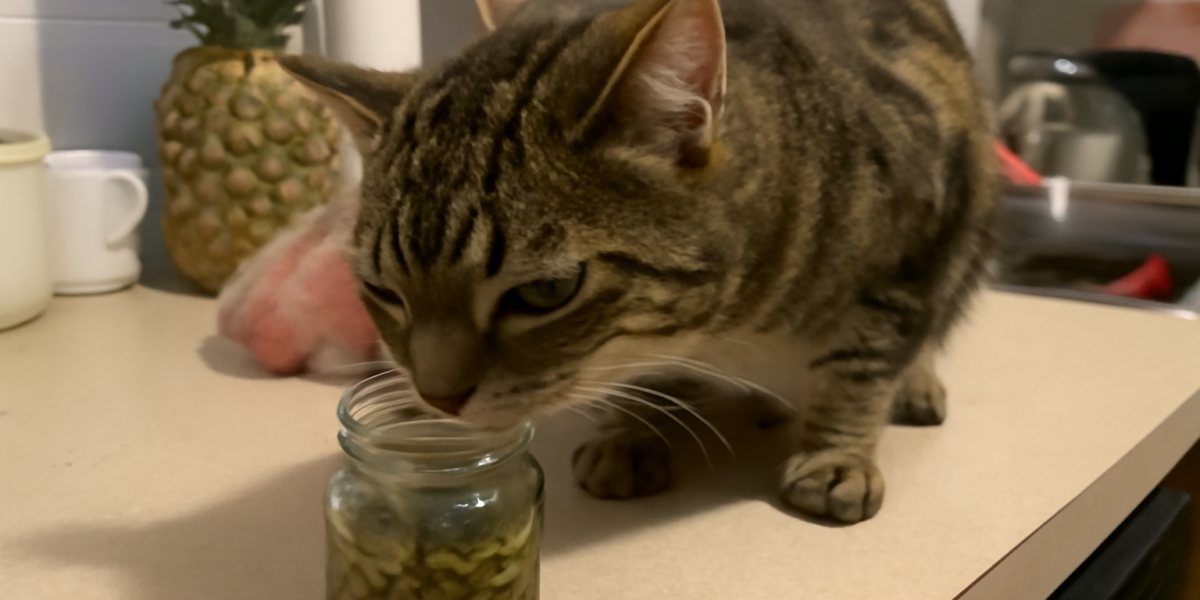
If your cat has a known tendency to steal food from plates or countertops, keep dishes containing capers out of reach. Clean up any dropped capers promptly, as their small size and rolling tendency mean they can end up on the floor where cats might investigate them.
For cat owners who cook with capers regularly, be mindful of the brine as well. Caper brine is essentially a concentrated salt solution and should not be accessible to cats. Even a small amount of brine lapped from a spill could deliver a significant sodium dose to a small cat.
If you are looking for ways to add flavor interest to your cat’s food, consider a tiny amount of low-sodium bone broth, a flake of plain cooked fish, or a pinch of nutritional yeast (which many cats find appealing). These options provide flavor without the extreme sodium risk of capers.
Signs of Problems After Eating Capers
If your cat ate one or two capers, the most likely outcome is increased thirst. However, watch for these symptoms that could indicate sodium overload:
- Excessive thirst and drinking
- Increased urination
- Vomiting
- Diarrhea
- Loss of appetite
- Lethargy or depression
- Swelling or bloating (from water retention)
In cases of significant sodium ingestion, more severe symptoms can develop:
- Tremors or muscle twitching
- Disorientation or loss of coordination
- Seizures
- Collapse
If your cat consumed a large number of capers or shows any severe symptoms, contact your veterinarian or an emergency animal hospital immediately. Sodium ion poisoning requires professional treatment, typically involving careful intravenous fluid therapy to gradually correct electrolyte imbalances. Rapid correction can be as dangerous as the sodium excess itself, so professional management is essential.
For minor exposure (a single caper), ensure your cat has ample fresh water available and monitor for any changes over the next 12-24 hours. Most cats will simply drink more water and return to normal.
Healthy Alternatives to Capers
If you want to offer your cat a flavorful treat, choose options that are low in sodium and appropriate for obligate carnivores:
- Plain cooked chicken: Unseasoned chicken provides protein and natural flavor without excess sodium.
- Cooked fish: A small piece of plain baked fish offers flavor cats naturally love without added salt.
- Low-sodium bone broth: Homemade bone broth (no onion, garlic, or salt) can add savory flavor to your cat’s food while providing hydration.
- Freeze-dried meat treats: These provide intense meaty flavor in a convenient, low-sodium format.
- Nutritional yeast: A sprinkle of nutritional yeast on food provides a savory, umami flavor many cats enjoy, with B vitamins and minimal sodium.
- Plain cooked shrimp: Low in sodium and calories, shrimp is a natural, flavorful treat most cats find irresistible.
Looking for a cat to share your home with? Visit our adoption page at Walk Me Home Rescue to meet cats waiting for loving families.
Frequently Asked Questions
My cat ate one caper — should I be worried?
A single caper is unlikely to cause a serious problem for a healthy adult cat. It will deliver a notable amount of sodium, but not enough to cause sodium poisoning on its own. Offer your cat fresh water and monitor for increased thirst, vomiting, or diarrhea. If your cat has kidney disease or heart problems, contact your vet to be safe.
Are caperberries safer than capers for cats?
Caperberries (the fruit of the caper plant, larger than the flower buds) are preserved in the same high-sodium brine as capers and have the same sodium concerns. They are not any safer for cats. Their larger size might seem like a bigger concern, and indeed the total sodium in a single caperberry is higher than in a single caper bud.
Can I rinse the salt off capers to make them safe for cats?
Rinsing reduces the sodium content somewhat, but not nearly enough to make capers appropriate for cats. Studies show that rinsing capers for 1-2 minutes removes only a fraction of the total sodium, and significant amounts remain absorbed in the bud itself. Even extensively soaked capers would still contain more sodium per unit weight than is suitable for felines.
Are fresh, unbrined capers safe for cats?
Fresh caper buds that have never been brined or salted would not have the sodium issue. However, fresh capers are extremely bitter and unpalatable — this is why they are always preserved in salt or brine before consumption. It is highly unlikely your cat would willingly eat a fresh caper. The bitter taste serves as a natural deterrent.
How much sodium is too much for a cat?
A healthy cat needs approximately 42 milligrams of sodium per day, which is typically provided by their regular cat food. Amounts significantly above this — particularly sudden large doses — can be harmful. Cats with kidney disease or heart conditions may need even less. A single tablespoon of brined capers can contain 5-10 times a cat’s daily sodium need.
What other high-sodium foods should I keep away from my cat?
In addition to capers, keep these high-sodium foods away from cats: olives, pickles, cured meats (salami, prosciutto, bacon), soy sauce, anchovies in oil, chips and pretzels, canned soups, and most processed human snack foods. When in doubt, check the sodium content and compare it to your cat’s daily requirement of approximately 42 milligrams.
Capers may be a culinary delight for humans, but their extreme sodium content makes them unsuitable for cats. Your feline companion deserves treats that support their health rather than stress their system. For more food safety guides, explore our articles on mustard and dill. If you are looking to adopt a cat, visit our adoption page at Walk Me Home Rescue.


