
Last updated: May 4, 2026
In this article
- The Short Answer on Kumquats for Cats
- Why Citrus Is Specifically a Cat Problem
- Kumquats Are the Edible-Peel Citrus, Which Makes Them Worse
- Symptoms to Watch After Kumquat Ingestion
- The Peel Is the Highest-Risk Part
- Why Cats Usually Refuse Citrus Anyway
- Citrus-Adjacent Products Worth Avoiding
- Cats With Specific Health Conditions
- Better Alternatives If You Want to Share a Bright Treat
- What to Do If Your Cat Eats a Kumquat
- How Cats Encounter Kumquats and Citrus Cocktails
- Frequently Asked Questions
The Short Answer on Kumquats for Cats
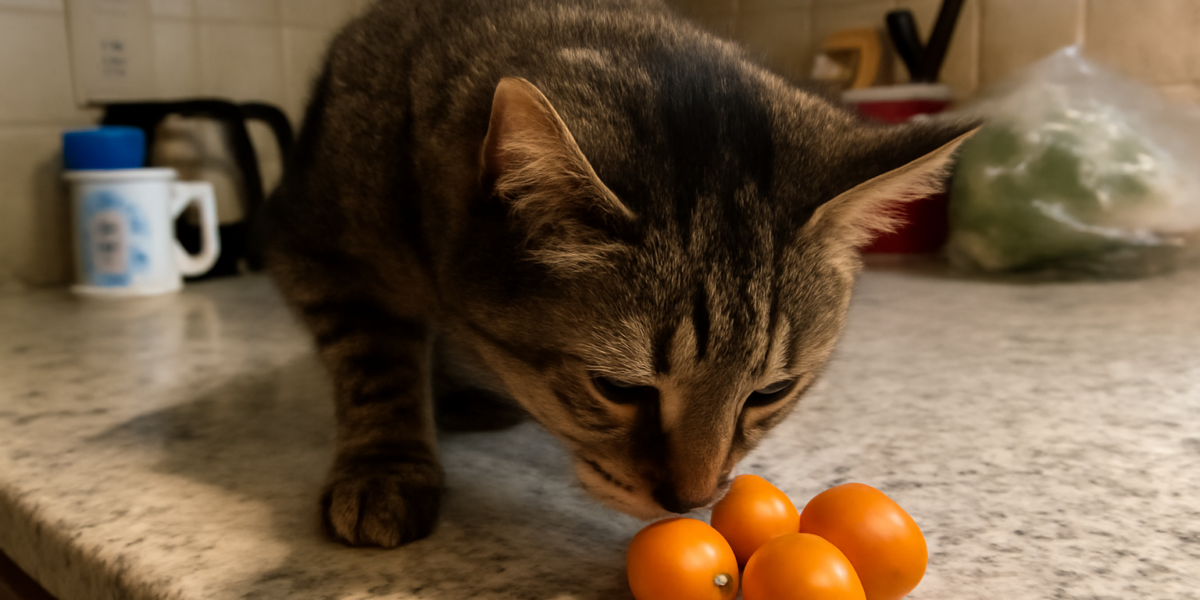
Can cats eat kumquats? No. Kumquats, like all citrus fruits, are not a recommended food for cats and should be considered off-limits. They contain psoralens (photosensitizing compounds), citric acid, and concentrated essential oils — particularly in the peel — that can cause vomiting, diarrhea, drooling, and skin irritation in cats. Kumquats are unique among citrus because the peel is the part humans eat, and that peel concentrates the most concerning compounds. A whole kumquat is the highest-risk presentation of an already cat-unfriendly fruit family.
If your cat licks or bats a kumquat off the counter, mild stomach upset is the most common outcome. If she actually chews and swallows one, watch closely and call your veterinarian. The good news is that most cats find citrus aroma intensely unpleasant and will avoid the fruit on their own. The bad news is that motivated kittens and food-curious adults sometimes test the rule.
Why Citrus Is Specifically a Cat Problem
The compounds that make citrus toxic to cats fall into three categories. Psoralens (also called furanocoumarins) are present throughout citrus fruits and especially in the peel. They cause photosensitivity and gastrointestinal upset, and they can interact with several medications. Citric acid irritates the stomach lining and can trigger vomiting in cats whose digestive systems are already more sensitive than humans’ to acidic plant compounds.
The third category is the volatile essential oils — limonene, linalool, and related terpenes — which give citrus its bright aroma. These oils sit in tiny pockets in the peel and the white pith. Cats lack key liver enzymes (specifically certain glucuronyl transferases) that mammals use to break down many of these compounds, so the molecules linger longer in the cat’s bloodstream and tissues. The result is a fruit family that humans tolerate easily and cats do not.
Kumquats Are the Edible-Peel Citrus, Which Makes Them Worse
Most citrus fruits — oranges, lemons, grapefruit — are eaten with the peel discarded, which removes the most concentrated source of psoralens and essential oils. Kumquats are different. They are small, bite-sized citrus that humans typically eat whole, peel and all, because the kumquat peel is sweeter than the flesh. That single feature makes kumquats more concerning than a peeled orange segment when it comes to a curious cat.
If your cat manages to bite into a whole kumquat, she is getting the highest-essential-oil portion of any citrus presentation. The dose involved in a single bite is unlikely to be life-threatening, but the gastrointestinal and skin reactions are more pronounced. Vomiting, drooling, and obvious oral discomfort (pawing at the mouth, head shaking) are common after a kumquat bite.
Symptoms to Watch After Kumquat Ingestion
If your cat eats or chews any part of a kumquat, watch for the following signs over the next twenty-four to forty-eight hours: vomiting (often within the first few hours), diarrhea, excessive drooling, lip-smacking or pawing at the mouth, decreased appetite, lethargy, weakness, and skin irritation if oils contacted her fur. Some cats develop sensitivity to sunlight in areas where citrus oil contacted their skin, particularly around the mouth and paws.
Severe reactions are less common but possible: depressed breathing, ataxia (wobbly walking), tremors, and severe vomiting that prevents fluid retention. These signs warrant an immediate veterinary visit. Even with mild symptoms, calling your veterinarian for guidance is the right move, especially if your cat is small, very young, very old, or managing a chronic condition.
The Peel Is the Highest-Risk Part
The kumquat peel is where the essential oils are most concentrated. If you peel a kumquat near your cat or zest it for cooking, fine droplets of citrus oil aerosolize and can land on her fur. Cats groom obsessively and will ingest those droplets in larger quantities than the peel-touching itself implied. This is a quiet way that cats end up with more citrus exposure than their owners realize.
If you cook with kumquats, work in a well-ventilated kitchen and keep your cat out of the prep area. Wash any cutting boards and utensils that touched the peel. Wash your hands before handling your cat. None of this is paranoia; it is just acknowledging that citrus oils stick to surfaces and skin.
Why Cats Usually Refuse Citrus Anyway
Cats have a strong aversion to citrus aromas, which is why some natural deterrent sprays for furniture and counters are citrus-based. The same volatile oils that smell pleasant to humans register as offensive and threatening to most cats. This is partly an instinctive response and partly a learned one — kittens raised in households where citrus is occasionally peeled often develop visible avoidance behaviors as adults.
This aversion is your built-in protection. Most cats will not try to eat a whole kumquat even if you place one in front of her. The cats who do test citrus tend to be food-motivated kittens, hungry strays, cats with reduced sense of smell from age or illness, or curious adults investigating something new on the counter. Knowing your cat’s baseline curiosity helps you decide how seriously to manage her access to citrus.
Citrus-Adjacent Products Worth Avoiding
Beyond fresh fruit, many products that contain citrus oils are also problematic for cats. Citrus-scented cleaning products, citrus essential oil diffusers, citrus-based flea sprays not specifically formulated for cats, and even some human skin lotions with orange or lemon oil can cause respiratory or skin reactions in sensitive cats. Diffuser exposure is particularly concerning because cats inhale the vaporized oils continuously.
Marmalade, candied citrus peel, citrus zest in baked goods, and citrus-flavored desserts are all unsuitable for cats. The peel content varies, but every one of these products presents the same essential-oil exposure issue with added sugar and sometimes alcohol or chocolate. Keep them off her plate. If your cat licks a small amount, monitor for vomiting and call your veterinarian if symptoms develop.
Cats With Specific Health Conditions
Cats with inflammatory bowel disease, sensitive stomachs, liver disease, or kidney disease are at greater risk from any citrus exposure because their bodies are less equipped to clear the compounds. The same is true for very young kittens, senior cats, pregnant queens, and any cat on multiple medications, since psoralens can interact with several drug classes.
If your cat has chronic kidney disease and gets into citrus, call your veterinarian sooner rather than later. The combination of dehydration risk from vomiting and diarrhea plus impaired clearance of unfamiliar compounds can put a fragile cat into trouble quickly.
Better Alternatives If You Want to Share a Bright Treat
The flavors humans love in citrus — bright, sweet, slightly tart — do not translate to anything cats actually want. If you are looking for a small, fresh, fruit-adjacent moment to share, the safer options are tiny pieces of blueberry, blackberry, or strawberry. Watery fruits like a small piece of watermelon (no rind, no seeds) or cantaloupe are also gentler choices.
For an actual treat your cat will enjoy, plain cooked chicken or a flake of tuna beats any fruit. Cats are wired for protein, not fruit. Skip the citrus entirely and lean into what her biology actually wants.
What to Do If Your Cat Eats a Kumquat
If your cat ate a kumquat or part of one, take three steps. First, remove any remaining fruit and clean the area where she ate it. Second, take note of how much she ate, when, and which parts (peel, flesh, seeds). Third, call your veterinarian or the ASPCA Animal Poison Control Center for guidance. Most cats who eat a small amount of kumquat will have a few hours of vomiting or drooling and recover at home with monitoring, but calling early lets your veterinary team decide whether a visit is warranted based on your cat’s specific size and health history.
Do not induce vomiting at home unless your veterinarian specifically tells you to. Some cats vomit on their own from citrus irritation, which is generally fine. If she vomits more than a few times, becomes lethargic, refuses water, or develops any neurological signs, an in-person veterinary visit is appropriate. Bring the fruit (or what is left of it) and the packaging if you bought it from a store, so the team can see exactly what she consumed.
How Cats Encounter Kumquats and Citrus Cocktails
Most cat-and-kumquat events fall into a few common scenarios. Holiday fruit bowls put kumquats at counter level for weeks during winter citrus season. Cocktail garnishes leave kumquats and citrus peels on coffee tables during parties. Asian and Mediterranean cooking uses kumquats in marmalades and meat glazes, leaving residue on cutting boards and pans. Children sometimes hand kumquats to cats as if they are treats.
Knowing where kumquats appear in your home helps you remove the risk. Cover fruit bowls or move them to a closet during citrus season. Clean counters thoroughly after cooking with kumquats. Brief children that citrus is not for cats. None of this is dramatic — it is just the normal household management that prevents avoidable problems.
Winter holidays bring an extra layer of citrus risk for cats. Cocktail garnishes often combine kumquats with rosemary sprigs, sugar, and alcohol — a triple problem if a cat licks the glass or steals a garnish. Mulled wine, hot toddies, and citrus-spiked punches leave residue on glasses and counter rings. Even after the party, dried-on residue can attract a curious cat days later.
The simple management is to wash glasses and surfaces promptly after a citrus-cocktail evening, and to keep all alcoholic drinks out of cat-accessible spaces during the gathering itself. Alcohol is independently toxic to cats, and the citrus oils make a bad situation worse. If you suspect your cat licked an alcoholic citrus drink, that is a definite veterinary call.
Frequently Asked Questions
What if my cat licked kumquat juice off the counter?
A small lick of kumquat juice may cause mild lip-smacking, drooling, or a single bout of vomiting. Most healthy adult cats recover within a few hours. Offer fresh water and watch for any escalation. Call your veterinarian if symptoms persist or worsen.
Can cats die from eating citrus?
Severe citrus toxicity is uncommon at the doses cats typically encounter, but it has been reported with large ingestions, ingestion of essential oils, or in cats with compromised health. The realistic risk from a single bite is significant gastrointestinal upset, not death. Treat it as a worth-calling-the-vet event, not a panic.
Are kumquat seeds dangerous?
Kumquat seeds are small and pose more of a choking or gastrointestinal-irritation risk than a toxicity risk. They contain trace amounts of cyanogenic compounds like other citrus seeds, but the practical danger from a few seeds is small. Still, the bigger issue is that the seeds come embedded in the high-essential-oil flesh, so the whole fruit is the concern.
Are citrus essential oil diffusers safe for cats?
No. Citrus essential oils diffused in poorly ventilated rooms can cause respiratory irritation, drooling, lethargy, and in some cases more serious reactions in cats. If you use diffusers, choose cat-safe options validated by your veterinarian and ensure your cat can leave the room.
What about kumquat marmalade or candied kumquat?
Both are unsuitable for cats. They concentrate the peel oils with added sugar and sometimes alcohol or pectin. A small lick is unlikely to cause major harm but can trigger vomiting. Skip these treats entirely.


