
Last updated: May 16, 2026
In this article
- Quick Answer: Cooked Plain Button Mushrooms Are Usually Safe in Tiny Amounts
- What Button Mushrooms Are and Why They’re the Safest Mushroom Choice
- Why Cats Aren’t Built for Mushrooms (But Aren’t Harmed by Tiny Amounts)
- Raw vs Cooked Button Mushrooms
- Wild Mushrooms: Never, Under Any Circumstances
- Commercial Cooked Button Mushrooms: How to Prepare Safely
- Mushrooms in Common Human Dishes: Skip Them
- Mushrooms and Specific Cat Health Conditions
- Why Some Cats Are Drawn to Mushrooms
- Mushroom Comparison: Button vs Other Cultivated Mushrooms
- Frequently Asked Questions
Quick Answer: Cooked Plain Button Mushrooms Are Usually Safe in Tiny Amounts
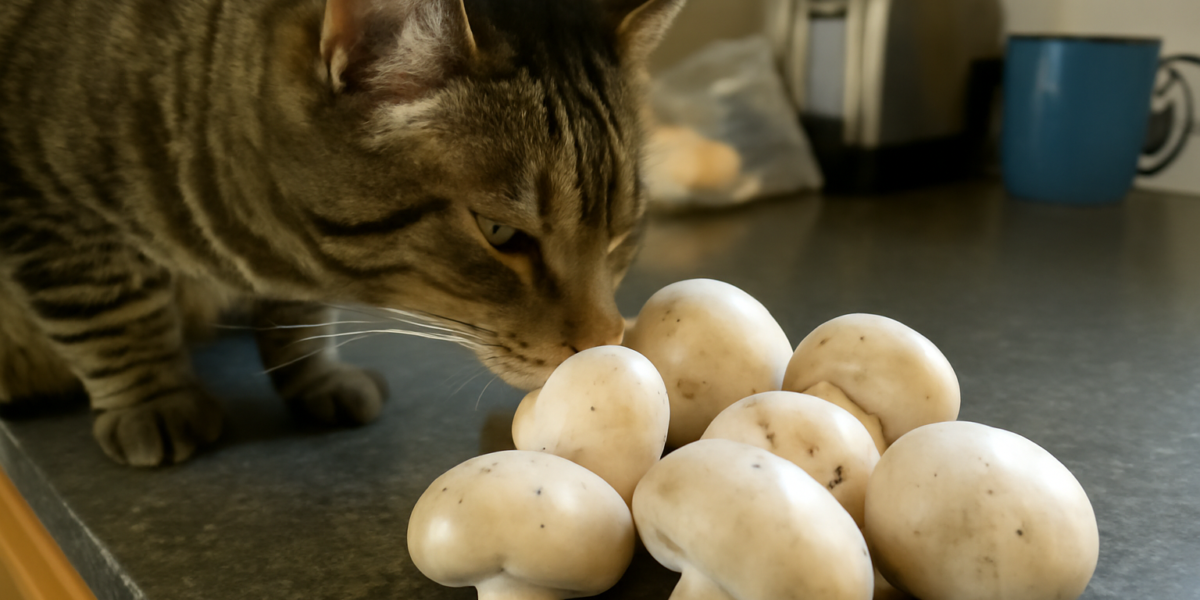
Cats can eat cooked plain button mushrooms (Agaricus bisporus) in tiny amounts on rare occasions. Button mushrooms, including their mature forms cremini and portobello, are non-toxic to cats when cooked plain and unseasoned. They are not nutritionally necessary for obligate carnivores, but they are not dangerous either when prepared correctly. Some cats show interest in the umami flavor of cooked mushrooms, which is similar in compound profile to the umami of meat. A small piece of plain cooked button mushroom on rare occasions is unlikely to cause issues for a healthy cat.
The serious cautions are around raw button mushrooms (which can cause GI upset and contain compounds that are partially destroyed by cooking) and especially wild mushrooms of any kind. Wild mushroom foraging is dangerous for both humans and pets because many toxic species closely resemble edible ones, and some toxic species cause acute liver failure that can be fatal. Never feed cats mushrooms from your yard or any wild source. Stick to commercial cooked button mushrooms, in tiny amounts, as an occasional curiosity.
What Button Mushrooms Are and Why They’re the Safest Mushroom Choice
Button mushrooms (Agaricus bisporus) are the most cultivated mushroom species worldwide. The young white form is sold as “button” or “white mushroom.” The same species, allowed to mature longer, is sold as cremini or baby bella (when slightly larger and brown) and portobello (fully mature, large brown caps). All three are the same species at different stages of growth, and they share the same safety profile.
Button mushrooms are produced commercially under controlled conditions. The growing medium, temperature, and harvesting practices are standardized, which eliminates the species-identification problem that makes wild mushrooms dangerous. When you buy button mushrooms at the supermarket, you can be confident you are getting Agaricus bisporus and nothing else. That reliability is the main reason button mushrooms are the safest mushroom option for cats, far more than any other variety.
Other commercially cultivated mushrooms (shiitake, oyster, enoki, maitake) are also reliably identified, but they have different compound profiles and are covered in our companion guides. The button mushroom guide focuses specifically on Agaricus bisporus.
Why Cats Aren’t Built for Mushrooms (But Aren’t Harmed by Tiny Amounts)
Cats are obligate carnivores. Their digestive systems evolved to process animal-source foods primarily, with limited capacity for plant matter. Mushrooms, while not strictly plants (they are fungi), share many digestive challenges with plant foods: cellulose, fiber, and complex carbohydrates that cats process inefficiently.
The good news is that small amounts of cooked mushroom do not overwhelm feline digestion. A teaspoon of cooked button mushroom passes through the cat’s GI tract with minimal effect, providing some moisture, a small amount of B vitamins, and trace minerals (selenium, copper, potassium). The amounts are too small to be nutritionally meaningful for a cat eating a complete diet, but they are also too small to cause problems.
The reason we recommend tiny amounts only, even for safe mushrooms, is that larger amounts can cause GI upset (loose stool, gas) and displace calories that should be coming from species-appropriate food. Cats meeting their full caloric needs from a balanced diet do not need mushrooms.
Raw vs Cooked Button Mushrooms
Raw button mushrooms contain small amounts of agaritine, a hydrazine compound that has been associated with increased cancer risk in some animal studies. The amounts in commercially grown button mushrooms are low, and the practical relevance for cats is unclear, but cooking destroys most agaritine and is the reason cooked mushrooms are preferred over raw.
Beyond agaritine, raw mushrooms contain chitin (a structural carbohydrate in fungal cell walls) that is harder for mammals to digest than cooked chitin. Cooking softens the cell walls and breaks down chitin into more digestible forms. For cats, the difference between raw and cooked button mushroom is the difference between a tougher, less digestible food and a softer, more digestible one.
The practical recommendation: do not feed raw button mushrooms to cats. If you want to share, cook them first. Sauteing in a dry pan or boiling briefly is enough; the goal is just to soften and cook through, not to deeply brown.
Wild Mushrooms: Never, Under Any Circumstances
This is the warning that matters most. Wild mushrooms are dangerous for cats because many toxic species look similar to edible ones, and some toxic species cause acute liver failure that is rapidly fatal. The Amanita genus alone contains some of the deadliest mushrooms in the world (Amanita phalloides, the death cap; Amanita virosa, the destroying angel), and these species can grow in residential yards, public parks, and forested areas. Many other genera (Galerina, Lepiota, Inocybe) contain dangerous toxins.
Symptoms of mushroom poisoning in cats include vomiting, diarrhea, drooling, weakness, lethargy, jaundice (yellow gums or eyes), seizures, and coma. Some toxic mushrooms cause symptoms within 30 minutes; others, including the most deadly Amanita species, cause delayed symptoms 6 to 24 hours after ingestion, by which point liver damage is already significant.
If you suspect your cat has eaten a wild mushroom, treat it as an emergency. Take a sample of the mushroom (in a paper bag, not plastic) and rush to your vet or an emergency animal hospital. Pet poison control hotlines are available 24/7 and can guide initial care. Do not wait to see if symptoms develop; by the time they do, it may be too late.
To prevent exposure, regularly inspect your yard for mushrooms growing in lawns, mulch beds, and shaded areas. Mushrooms tend to fruit after rain. Remove any mushrooms before letting cats outside, and supervise outdoor cats closely in mushroom-prone seasons.
Commercial Cooked Button Mushrooms: How to Prepare Safely
If you want to share a tiny piece of cooked button mushroom with your cat, the preparation matters. Buy fresh button, cremini, or portobello mushrooms from a reputable supermarket. Wipe clean with a damp paper towel rather than washing under running water (mushrooms absorb water and become soggy).
Slice or chop into small pieces. Cook in a dry pan over medium heat, no oil, no salt, no garlic, no onion, no butter. Garlic and onion are toxic to cats at low doses, and oil adds unnecessary fat. The mushrooms will release water and shrink as they cook. Continue cooking until they are softened and lightly browned, about 5 to 7 minutes.
Let the cooked mushroom cool to room temperature. Offer a piece roughly the size of a green pea, about an eighth of a teaspoon. Watch your cat’s response and any GI changes over the following 24 hours. If your cat shows interest and tolerates the small portion well, you can occasionally offer that same portion size, but not more frequently than once a week.
Mushrooms in Common Human Dishes: Skip Them
Cats often encounter mushrooms not as plain cooked pieces but as components of human dishes that include other ingredients unsafe for cats. Common examples to avoid sharing:
- Mushroom soup or cream of mushroom: Almost always contains onion, garlic, salt, and dairy. Skip.
- Sauteed mushrooms with garlic: Garlic is toxic to cats. Skip.
- Stuffed mushrooms: Often filled with cheese, sausage, breadcrumbs, garlic, and herbs. Skip.
- Mushroom risotto or pasta dishes: Cheese, butter, wine, garlic, and onion combinations. Skip.
- Pizza with mushroom topping: Cheese, salt, garlic, processed meats. Skip.
- Mushroom in stir-fry: Soy sauce (high sodium), garlic, ginger, sesame oil. Skip.
- Mushroom gravy: Salt, broth concentrates, often onion. Skip.
If the mushroom is on a plate with other ingredients, the safe answer is to skip sharing entirely. Plain cooked mushroom prepared separately is the only acceptable share.
Mushrooms and Specific Cat Health Conditions
Several feline conditions warrant skipping mushrooms entirely, even cooked plain button mushrooms.
IBD or chronic GI sensitivity: Cats with inflammatory bowel disease or chronic GI symptoms often react to any new food, and mushrooms are no exception. Skip and stick to the cat’s prescribed diet. Our IBD in cats guide covers why dietary discipline matters so much for these cats.
Chronic kidney disease: CKD cats are managed on phosphorus-controlled diets. Mushrooms contain some phosphorus and can disrupt the careful balance. Read our CKD overview for context.
Pancreatitis history: Plain cooked mushrooms are low in fat, so the direct fat concern is minor, but cats with pancreatitis often have broader food sensitivities. Talk to your vet before adding any new food. See our pancreatitis guide.
Diabetes: Mushrooms have some carbohydrate content but minimal sugar. The amounts in a tiny share are unlikely to disrupt glucose control, but consistency matters in diabetic management.
Kittens under six months: Stick to kitten food. Mushrooms are an unnecessary novelty.
Why Some Cats Are Drawn to Mushrooms
Cats often show interest in cooked mushrooms because of glutamate, an amino acid that produces the umami flavor cats are wired to seek. Glutamate is abundant in meat, especially aged and cooked meat, and mushrooms contain naturally high levels of free glutamate. The flavor receptor activation is similar, which is why a cat who normally ignores plant foods may pay attention to mushrooms.
This umami draw is one reason mushroom extracts (often labeled as “natural flavor” or “yeast extract”) show up in commercial cat food and cat treats. Used appropriately, glutamate can boost palatability without adding harmful ingredients. The mushroom itself, in tiny amounts, follows the same logic.
If your cat enjoys mushroom flavor, this can be useful information for finding palatable cat treats and foods. Look for mushroom or yeast extract in ingredient lists of cat treats your cat has enjoyed.
Mushroom Comparison: Button vs Other Cultivated Mushrooms
Button mushrooms (Agaricus bisporus) are the safest cultivated mushroom for cats because of their mild flavor and minimal compound complexity. Shiitake mushrooms contain lentinan and other immunomodulating compounds that are beneficial for some species but unstudied in cats; we recommend caution. Oyster mushrooms are mild and generally safe in tiny amounts. Enoki are similar. Maitake and reishi are medicinal mushrooms with complex compound profiles that should not be casually fed to cats.
For everyday cat sharing, plain cooked button or cremini is the simplest, safest choice. Save the more exotic mushrooms for human dishes. If you are looking for safe, species-appropriate vegetables to share, our broccoli guide and bok choy guide cover plant foods that are slightly better matched to feline tolerance than mushrooms, although none of these are nutritionally necessary either.
Frequently Asked Questions
How much button mushroom can my cat have?
A pea-sized piece of plain cooked button mushroom on rare occasions, no more than once a week. Smaller cats and kittens should skip entirely.
Are raw button mushrooms dangerous for cats?
Not acutely dangerous in small amounts, but raw mushrooms contain agaritine and are harder to digest. Cooked is safer; recommend cooked over raw.
What should I do if my cat ate a wild mushroom?
Treat it as an emergency. Take a sample of the mushroom and contact your vet or pet poison control immediately. Some toxic species cause delayed symptoms after liver damage is already significant.
Are cremini and portobello mushrooms also safe?
Yes. Cremini and portobello are mature forms of the same species (Agaricus bisporus). Same safety profile as button mushrooms.
Can mushrooms replace any nutrient in my cat’s diet?
No. Mushrooms provide trace nutrients but nothing that a balanced cat diet does not already supply. They are an occasional curiosity, not a nutritional addition.


