
Last updated: May 4, 2026
In this article
- Quick Answer: Tiny Occasional Pieces Only
- What Tuna Belly Is
- The Mercury Problem in Detail
- Fat Content and Pancreatitis
- Why “Tuna Addiction” Happens in Cats
- Cooked Versus Raw Tuna Belly
- Safe Serving Size If You Choose to Give It
- Better Fish Choices for Cats
- Signs of Mercury Concern Over Time
- Sushi Restaurant Realities
- Building a Safer Fish Rotation
- Storing Tuna Belly Safely
- Frequently Asked Questions
Quick Answer: Tiny Occasional Pieces Only
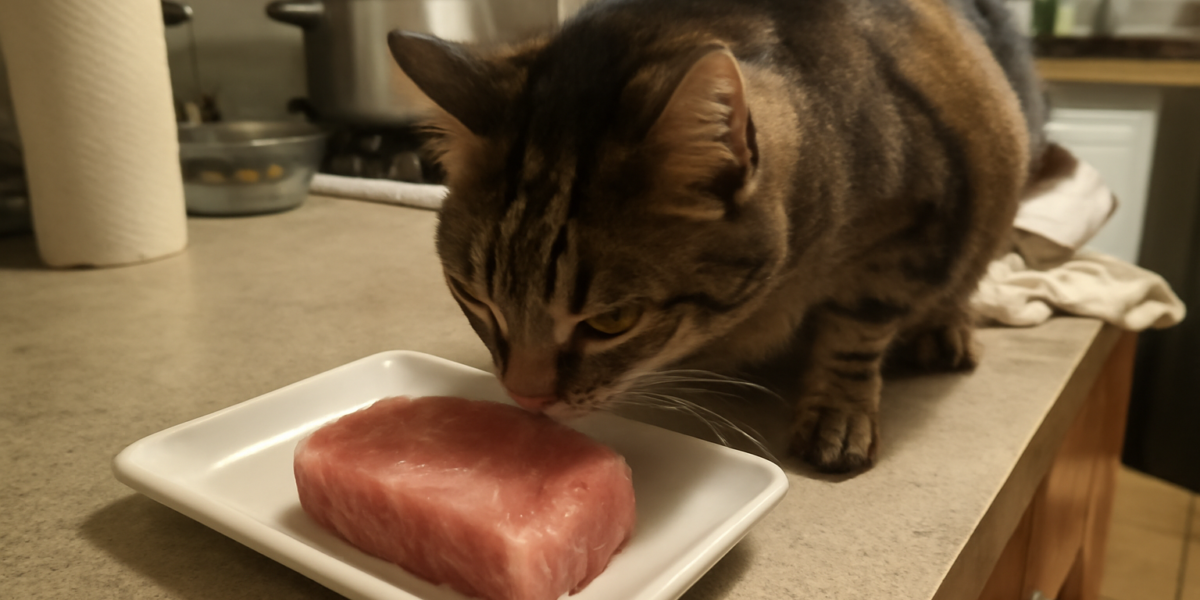
Yes, healthy adult cats can have a tiny piece of plain cooked tuna belly very occasionally, but tuna belly is not a routine food. Tuna sits at the top of the marine food chain, and like all top-trophic predators, it accumulates mercury and other contaminants over its lifetime. Tuna belly (“toro” in Japanese cuisine) carries the same mercury concern as standard tuna, plus higher fat content. For cats — small animals who eat the same food for years — repeated tuna belly exposure builds up methylmercury in tissues over time and has been linked to neurological symptoms in routine tuna feeders.
The simple rule: if your cat got a sliver from your sashimi plate, that’s not an emergency. If you’ve been feeding tuna belly weekly because your cat loves it, switch to lower-mercury fish like sardines or anchovies. This article walks through the mercury issue, the fat content of toro, and which fish make better staples for cats.
What Tuna Belly Is
“Tuna belly” refers to the fatty underside of the bluefin tuna (or sometimes yellowfin or bigeye), prized in Japanese cuisine and called toro. The cut is divided into:
- O-toro: the fattiest, marbled belly cut
- Chu-toro: the medium-fatty section
- Akami: the leaner red flesh from the same fish
Per ounce of fatty tuna belly you get roughly:
- 50-70 calories depending on cut
- 6-7 grams of protein
- 3-6 grams of fat (much higher than lean tuna’s 1 gram per oz)
- Omega-3 (DHA and EPA) at higher levels than lean tuna
- Selenium and B vitamins
- Mercury content typically higher than lean tuna because mercury concentrates in fattier tissues over the fish’s lifetime
The omega-3 content sounds appealing, but the mercury trade-off offsets it. Cats who need omega-3 are better served by smaller fish that haven’t had time to bioaccumulate methylmercury.
The Mercury Problem in Detail
Mercury enters the ocean from natural and industrial sources, gets converted by marine bacteria into methylmercury, and moves up the food chain. Small fish eat plankton, larger fish eat small fish, and tuna eat large fish. With each trophic level, mercury concentration multiplies in a process called biomagnification. Bluefin and bigeye tuna can contain mercury levels several times higher than salmon or sardines.
For humans, regulatory agencies (FDA, EPA) recommend pregnant women and young children limit tuna to specific weekly amounts. Cats are smaller, eat the same food repeatedly, and can’t easily eliminate methylmercury — once it binds to neural and muscle tissue, it stays. The classic sign of chronic methylmercury exposure in cats is “Minamata-style” neurological deficits including:
- Ataxia (wobbly gait)
- Tremors
- Loss of coordination, difficulty jumping
- Visual disturbances
- Behavioral changes
- In severe cases, seizures
Cases of mercury toxicosis in cats are documented in the veterinary literature, particularly in cats fed tuna-based commercial foods or table scraps as a primary protein. The risk is not from a single sashimi nibble; it’s from years of weekly tuna meals that don’t allow the body to clear what it’s accumulating.
Fat Content and Pancreatitis
O-toro can contain 20-25% fat by weight, which is dramatically higher than lean tuna at around 3-5% fat. For cats with sensitive pancreases — and feline pancreatitis is more common than once thought, often presenting alongside IBD as part of “triaditis” — a fatty meal can be enough to trigger a flare. See our pancreatitis in cats guide for context.
Symptoms of feline pancreatitis can be subtle and easy to miss:
- Decreased appetite or food refusal
- Lethargy, hiding more than usual
- Vomiting (less consistently present than in dogs)
- Mild dehydration
- Weight loss over days to weeks
- Sometimes fever or jaundice in severe cases
For overweight cats, diabetic cats, or cats with prior pancreatitis episodes, fatty tuna cuts are not a treat to keep in rotation. Lean fish or plain cooked chicken in tiny portions is far safer.
Why “Tuna Addiction” Happens in Cats
Cats often develop strong preferences for tuna because of its intense aroma and flavor, and some cats will refuse other foods after being given tuna regularly. This is not a healthy pattern. Vets sometimes call it “tuna junkie” syndrome — a cat who’s been habituated to tuna and refuses balanced foods. The fix is a slow transition back to a complete commercial diet, mixing decreasing amounts of tuna into the regular food over 2-3 weeks.
If your cat is already a tuna devotee, stop offering tuna belly specifically and shift to small portions of lower-mercury fish (sardines, anchovies, mackerel) only as occasional toppers. The ideal is for the cat to eat a complete commercial cat food as the foundation, with fish as a flavor variety rather than the main event.
Cooked Versus Raw Tuna Belly
Sushi-grade tuna belly served raw is the traditional Japanese preparation. For cats:
- Raw sushi-grade tuna (properly frozen for parasite control) is technically safe for healthy adult cats in tiny amounts.
- Lightly cooked is the safer default for kittens, seniors, and immunocompromised cats.
- Canned tuna (in water, no salt added) is shelf-stable but mercury-equivalent to fresh — see canned tuna for cats for guidance.
- Raw tuna contains thiaminase, an enzyme that destroys thiamine (vitamin B1). Long-term raw tuna feeding has caused thiamine deficiency in cats. Cooking deactivates thiaminase.
The thiaminase issue is one more reason to keep raw tuna belly to a tiny occasional taste, not a routine. Thiamine deficiency in cats causes neurological symptoms — head tilt, ataxia, seizures — that mimic mercury toxicity but resolve quickly with thiamine supplementation if caught early.
Safe Serving Size If You Choose to Give It
For a healthy adult cat with no pancreatic, kidney, or neurological concerns, tuna belly can be a rare treat:
- 1/4 to 1/2 teaspoon plain cooked tuna belly
- No more than once per month
- Skip on weeks the cat has had other fish
- No soy sauce, salt, wasabi, or other seasonings
- Remove all sashimi-style cures or rice
For most cats, these constraints make tuna belly impractical to source for the small amount actually offered. A more realistic plan is to skip tuna belly entirely and choose better fish.
Better Fish Choices for Cats
Smaller, shorter-lived fish accumulate far less mercury and are better staples or treats:
- Sardines in spring water (no salt) are the gold standard — high omega-3, very low mercury, complete with bones for calcium.
- Anchovies are even smaller and lower in mercury, but watch for salt-cured varieties.
- Plain cooked salmon sits in the middle range — moderate mercury, high omega-3, reliable choice.
- Mackerel (Atlantic, not king mackerel) is similar to sardines in profile.
- Whitefish like cod or pollock are lean, low-mercury, and gentle on sensitive stomachs.
Avoid king mackerel, swordfish, marlin, and shark — all higher in mercury than tuna. Standard tuna remains an occasional treat at best, and tuna belly specifically should be on the rarest end. For broader fish guidance, see our overview of fish for cats and the cat care library.
Signs of Mercury Concern Over Time
If you’ve been feeding tuna products (including belly) frequently and want to know whether your cat is showing early signs of accumulated mercury, watch for:
- Subtle wobble or stumbling, especially on jumps
- Loss of fine coordination — missing a counter landing they used to nail
- Tremors in the head or limbs
- Reduced grooming or unusual postures
- Visual changes (bumping into things)
- Behavioral shifts — withdrawal, irritability, vocalization changes
If you notice any of these in a cat with a fish-heavy history, see your vet. Bloodwork can sometimes detect mercury, and a diet change is the first intervention. Mercury accumulation is slow to clear, so the sooner you switch fish sources, the better.
Sushi Restaurant Realities
Most tuna-belly exposures happen at home with leftover sashimi or someone sharing a slice with the cat at the table. A few practical guardrails:
- Don’t share sushi with cats — even nigiri presentation puts the fish on rice (not great) and may include scallion garnish (allium toxic — see onion toxicity).
- Restaurant sashimi often arrives with soy sauce already poured or wasabi smudges; even small contact with these adds sodium and irritation.
- If you genuinely want to give your cat a taste, set aside a clean unsauced piece before adding any condiments to the plate.
- Skip the seaweed wrap, the rice, and any cucumber/avocado garnish.
Building a Safer Fish Rotation
Cats benefit from variety in protein sources rather than a fish-dominant diet. A practical rotation that minimizes mercury exposure while keeping cats happy:
- Daily base: complete commercial cat food (wet or dry) — this provides balanced nutrition with appropriate vitamin levels and controlled sodium
- 2-3 times per week: small fish topper such as sardines in spring water or anchovies
- Once a week: plain cooked salmon or whitefish
- Once a month at most: tuna or tuna belly tiny portion (and skip if any other source is being used heavily)
This pattern keeps total mercury low while giving cats the fish flavor they enjoy. For cats with strong tuna preferences, ramp tuna down gradually over 2-3 weeks rather than cold-turkey — abrupt diet changes can cause food refusal in cats and, in cats over 12-24 hours of fasting, hepatic lipidosis becomes a real concern.
For senior cats with possible kidney issues, see our senior cat care checklist for guidance on bloodwork and diet adjustments. Senior bloodwork often reveals subclinical kidney disease that changes the safe-fish-portion calculation entirely.
Storing Tuna Belly Safely
If you have leftover tuna belly from a meal and decide to give your cat a tiny taste:
- Use within 24 hours of preparation if raw, or 2-3 days if cooked
- Refrigerate immediately at 40°F or below in an airtight container
- Don’t refreeze previously frozen sashimi-grade tuna
- Smell test: fresh tuna has a clean ocean scent; off tuna smells sharp or sour
- Discard at any sign of color change, sliminess, or unusual smell
Cats are sensitive to spoiled fish, and a histamine reaction (scombroid poisoning) is possible with poorly stored tuna. Symptoms include vomiting, facial swelling, and red ears or skin. Don’t take chances with leftover sushi that’s been sitting at room temperature.
Frequently Asked Questions
How much tuna does it take to cause mercury problems in a cat?
There is no single threshold; mercury accumulates over months to years of regular feeding. Cats fed tuna as a primary protein for years are the documented at-risk group. Occasional small servings of tuna are not the problem — routine feeding is.
Is canned tuna belly different from sashimi-grade tuna belly?
Canned products labeled “tuna belly” or “ventresca” are usually packed in oil and may contain added salt. The mercury content is similar to fresh tuna belly. Treat canned belly the same way as fresh — tiny occasional amounts only, ideally rinsed if oil-packed.
Can my diabetic cat have tuna belly?
Cats with diabetes mellitus need controlled diets, and any high-fat treat can affect glucose stability. Skip tuna belly for diabetic cats. Stick to vet-approved treats.
Is tuna belly safer for kittens than for adults?
No — kittens are more vulnerable to mercury and to thiamine deficiency from raw tuna. Skip tuna belly in kittens entirely. Use a complete kitten formula and avoid table scraps. See our kitten feeding schedule for age-appropriate nutrition.
Does cooking tuna belly reduce mercury?
No. Mercury is bound to proteins and stays in the cooked tissue. Cooking only addresses the thiaminase and parasite concerns — not the heavy metal content.
Can I rinse tuna belly to reduce concerns?
Rinsing oil-packed canned tuna belly removes some surface oil and salt but doesn’t reduce mercury. The mercury is in the fish protein itself, not on the surface.


