
Last updated: May 16, 2026
In this article
- Are Fothergilla Plants Safe for Pets?
- What Fothergilla Is and Why Native-Plant Gardeners Love It
- Why Fothergilla Is Considered Pet-Safe
- Realistic Risks From Fothergilla Chewing
- What to Watch For After Fothergilla Exposure
- What To Do If Your Pet Eats Fothergilla
- Fothergilla in Native Pollinator and Pet-Friendly Landscaping
- Pet-Friendly Garden Companions for Fothergilla
- Shrubs to Avoid Near Pets
- When to Call the Vet
- Frequently Asked Questions
Are Fothergilla Plants Safe for Pets?
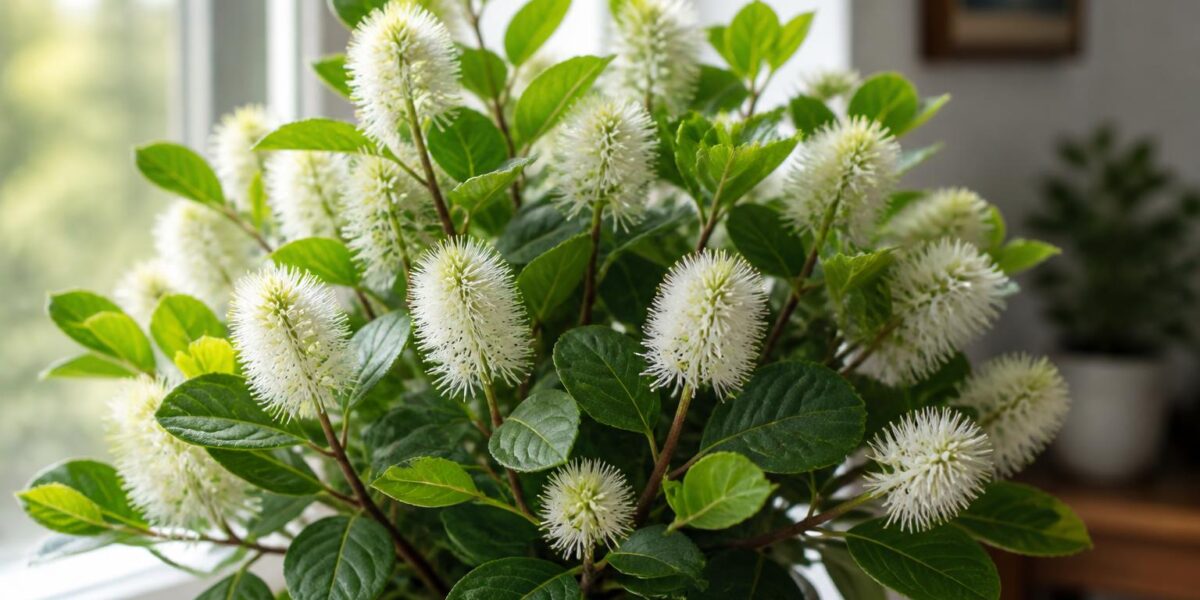
Yes. Fothergilla — the genus that includes the dwarf Fothergilla gardenii (mountain witch alder, native to the Carolinas and Georgia) and the larger Fothergilla major (large witch alder, native to the Appalachian Mountains), as well as the popular hybrid Fothergilla × intermedia ‘Mt. Airy’ — is not listed on the ASPCA’s toxic plant database for either dogs or cats. The plant is generally considered safe for backyard plantings, foundation beds, the woodland-edge naturalized garden, and the spring-and-fall double-interest border. There is no flagship toxin associated with the genus that puts a household pet at meaningful poisoning risk.
If your dog or cat has chewed the small textured leaves, the slender twigs, or the white bottlebrush spring flowers, the realistic outcome is nothing at all, or at most a brief episode of mild gastrointestinal upset from the unfamiliar plant fiber. Fothergilla is not a plant pets seek out — the leaves are a bit leathery, the flowers are short-lived, and there are no enticing berries. Most pet exposures are incidental.
That said, “not on the toxic list” is not the same as “absolutely zero risk.” Any pet that consumes a large quantity of any plant material can vomit or have soft stools, and woody twig fragments carry mild mechanical risks for enthusiastic chewers. If your pet is showing symptoms beyond mild GI upset, contact your veterinarian, the ASPCA Animal Poison Control Center at 888-426-4435, or the Pet Poison Helpline at 855-764-7661.
What Fothergilla Is and Why Native-Plant Gardeners Love It
Fothergilla is a small genus of two or three deciduous shrub species in the witch-hazel family (Hamamelidaceae) — the same family as Hamamelis. The plants are native to the southeastern United States, with Fothergilla gardenii naturally occurring in pocosins and acidic wetlands of the coastal plain, and Fothergilla major a higher-elevation Appalachian species. Both produce the distinctive features that have made fothergilla a four-season-interest shrub: white bottlebrush flowers in early to mid spring before or with leaf emergence, bluish-green to gray-green textured summer foliage, and reliably vivid red-orange-yellow fall color.
Mature size is the main difference between the species. F. gardenii forms a compact two-to-three-foot mound suitable for foundation beds and small mixed borders. F. major reaches six to ten feet and is more of a back-of-border or specimen shrub. The hybrid ‘Mt. Airy’ falls in between at four to six feet. All produce sweetly honey-scented flowers that are pollinator favorites — bees and early-flying butterflies visit the bottlebrushes when little else is blooming.
Fothergilla is hardy roughly through USDA zones 5 to 8, depending on species. It prefers acidic, organically rich, evenly moist soil and will sulk in dry alkaline conditions. The plant is naturally well-behaved — slow growth, no serious pest or disease issues, no invasive tendencies — and is one of the more reliable native woody choices for pet-friendly landscaping.
Why Fothergilla Is Considered Pet-Safe
Fothergilla is not on the ASPCA’s toxic plant database for cats, dogs, or horses, and it does not appear on the major regional veterinary poison-control most-common-call lists. The plant produces typical Hamamelidaceae secondary metabolites — small amounts of tannins, hamamelitannin-related compounds, and phenolic glycosides — but at concentrations that have not been associated with clinically significant pet poisoning at typical pet chewing-encounter doses.
The family relationship to witch hazel is worth noting. Both genera share the Hamamelidaceae family, both produce mildly tannin-rich tissue, and both are off the ASPCA toxic list. The chemistry that supports the safety classification is similar. Neither plant produces the cardiac glycosides, grayanotoxins, calcium oxalate raphides, or alkaloids that drive most landscape-shrub toxic-list entries.
What this means in practice: the ASPCA’s non-listing for fothergilla reflects veterinary clinical experience. Pets who chew fothergilla generally do not present with poisoning. The most common reaction is the same mild GI upset that any plant fiber can cause when consumed in unusual amounts.
Realistic Risks From Fothergilla Chewing
Even with a non-toxic shrub, a few realistic considerations apply.
Mild GI upset from large ingestions. A pet that strips leaves off a low branch and eats a substantial volume of plant material may vomit or pass soft stools. The cause is usually the bulk of indigestible plant fiber and mild tannin astringency, not chemical toxicity, and it tends to self-resolve in a day.
Mechanical risks from woody stems. Fothergilla branches are firm and can splinter when crushed. A puppy or small dog chewing on a stick from a pruned branch could rarely lodge a splinter in the gum or palate. A vet exam is appropriate if you suspect this.
Choking risk in small dogs. Long, thin twigs swallowed whole could rarely cause an obstruction. Uncommon but worth knowing.
Pesticide and herbicide residues. If your fothergilla has been treated with chemical sprays — typically not necessary for this naturally pest-free plant, but worth flagging — the residue is more concerning than the plant itself. Avoid letting pets graze the foliage immediately after spraying, and follow re-entry intervals on the label.
What to Watch For After Fothergilla Exposure
Most pets show no signs at all after sniffing or chewing fothergilla. If symptoms do appear, the realistic patterns are vomiting once or twice within a few hours of ingestion, soft stools or mild diarrhea inside 12 to 24 hours, transient drooling from the unfamiliar leaf texture or tannin astringency, and a single skipped meal.
The signs you would NOT expect from fothergilla ingestion are severe lethargy, persistent unproductive vomiting, blood in vomit or stool, abdominal pain that does not resolve, neurological signs (tremors, ataxia, seizures, weakness), pupil changes, or cardiac signs (slow or irregular heart rate). If any of these appear, the cause is probably something else — a different plant your pet got into, a non-plant ingestion, or an unrelated medical issue. Get a vet exam.
What To Do If Your Pet Eats Fothergilla
For mild fothergilla exposure with no symptoms, most pets need no intervention beyond casual monitoring. Watch for 12 to 24 hours, offer fresh water, and continue normal feeding. There is no toxic compound to flush, no decontamination to perform, and no antidote to give.
If mild GI signs appear, withhold food for four to six hours, offer small amounts of water to keep the pet hydrated, then reintroduce a bland diet (boiled chicken and rice for dogs, plain canned food for cats) once vomiting stops, if your vet approves. Most cases resolve uneventfully within 24 to 48 hours.
For larger ingestions, for any pet with persistent or escalating symptoms, or for any pet with pre-existing conditions that complicate GI upset, call your vet, the ASPCA APCC at 888-426-4435, or the Pet Poison Helpline at 855-764-7661. Both helplines are 24/7 resources, and the APCC line carries a per-call fee.
Do not induce vomiting at home for fothergilla ingestion. There is no toxic dose to remove, and inappropriate at-home emesis can cause aspiration. Save decontamination protocols for actual toxic exposures, on direct vet or poison-control instruction only.
Fothergilla in Native Pollinator and Pet-Friendly Landscaping
Fothergilla deserves a few extra words because it sits at the intersection of two design priorities that often pull in opposite directions: native pollinator support and pet safety. Many native shrubs that support pollinators are toxic to pets — milkweed (Asclepias) is a famous example, where butterfly conservation requires planting a shrub that is on the ASPCA toxic list. Fothergilla is one of the few native shrubs that supports early-season pollinators (the spring bottlebrushes are a critical nectar source for early bees) without putting your pet at meaningful risk.
The honey-scented flowers also bring incidental insect traffic — bees, early butterflies, and the occasional hummingbird — onto and around the shrub during the spring bloom window. As with any pollinator shrub, dogs that snap at flying insects can get stung in the mouth or throat. Supervise time near flowering fothergilla in the bloom window for any pet with a bee-chasing habit. The shrub itself is the safe ingredient; the buzzing visitors are the incidental concern.
Pet-Friendly Garden Companions for Fothergilla
If you are designing a pet-friendly border or foundation planting around fothergilla, several other safe shrubs and perennials pair well with the spring-bloom and brilliant-fall-color combination.
For the shrub layer, the non-toxic mock orange (Philadelphus) bridges to late-spring fragrant white flowers; forsythia opens the season earlier; weigela overlaps a pink trumpet bloom; spirea is another low-concern flowering choice; and witch hazel — fothergilla’s family cousin — extends the bloom calendar back into late winter.
For perennial underplantings, pollinator-friendly safe choices include bee balm and catmint, and the perennial perennial sunflower. For broader pet-safe garden planning, our pillar guides on cat-safe houseplants and dog-safe houseplants cover indoor analogs.
Shrubs to Avoid Near Pets
Some popular landscape shrubs are NOT safe and warrant a separate audit when you review your landscape.
Azaleas, rhododendrons, and pieris contain grayanotoxins (severe-tier).
Hydrangeas contain cyanogenic glycosides at mild-to-moderate clinical severity, including the related panicle hydrangea.
Daphne contains mezerein and daphnetoxin (moderate to severe), and nandina, pittosporum, skimmia, and honeysuckle warrant their own review.
Among the natives that pair safe-for-pets status with strong four-season interest, fothergilla is one of the more reliable choices.
When to Call the Vet
For routine fothergilla exposure in a healthy pet, vet contact is rarely needed. Call if you observe vomiting that does not stop after a few episodes, persistent diarrhea beyond 24 hours, abdominal pain (hunched posture, reluctance to move, guarding the belly), or any symptom that escalates rather than resolves. Also call if you are not certain whether your pet ate fothergilla or one of the more concerning shrubs in the same yard.
Cats who stop eating for 24 hours or more should be examined regardless of suspected cause — feline hepatic lipidosis is a real concern with sustained appetite loss. Threshold to call is lower for very young, very old, and chronically ill pets.
Frequently Asked Questions
Is fothergilla toxic to dogs?
No. Fothergilla is not on the ASPCA toxic plant list for dogs. The most likely outcome of chewing leaves, twigs, or the bottlebrush flowers is mild GI upset from indigestible plant fiber, not poisoning.
Is fothergilla toxic to cats?
No. Fothergilla is not listed by the ASPCA as toxic to cats either. Cats rarely chew the leaves of woody shrubs in any case.
My dog ate some fothergilla leaves and threw up once. What should I do?
One episode of vomiting after eating any unfamiliar plant is common and usually self-resolving. Withhold food for four to six hours, offer small water amounts, and reintroduce a bland diet if the vomiting stops. If vomiting persists or other symptoms appear, call your vet or poison control.
Are the bottlebrush spring flowers safe if my pet eats them?
Yes. The flowers, like the leaves and stems, are not on the ASPCA toxic list. The realistic risk is the same mild GI upset that volume ingestions of any plant tissue can cause, plus the incidental pollinator-sting concern that applies to any nectar-rich shrub flower.
Is fothergilla related to witch hazel, and does that change the answer?
Yes — both are in the witch-hazel family (Hamamelidaceae) — and the family relationship reinforces the answer rather than changing it. Both are off the ASPCA toxic list, both share a similar tannin-and-phenolic chemistry that produces only mild GI upset at large ingestion volumes.


