
Last updated: May 16, 2026
In this article
- Is Lambsquarter Toxic to Pets? The Quick Answer
- Meet Chenopodium Album, the Goosefoot Weed
- The Two-Track Toxicity: Oxalates Plus Nitrates
- Cats vs Dogs: Different Doses, Different Risks
- Symptoms to Watch For
- What to Do If Your Pet Ate Lambsquarter
- Lambsquarter Identification and Look-Alikes
- Why Lambsquarter Shows Up in Your Yard
- Pet-Safe Yard and Garden Practices
- Other Oxalate-Family Concerns
- Vet Routing and Final Notes
- Frequently Asked Questions
Is Lambsquarter Toxic to Pets? The Quick Answer
Yes, lambsquarter is toxic to pets. Chenopodium album, also called lamb’s quarter, fat-hen, white goosefoot, or wild spinach, contains soluble oxalates and can accumulate nitrates, especially when growing in fertilized soil or after drought stress. The toxicity sits in the mild-to-moderate range. A nibble usually amounts to little more than a brief stomach upset, but a sustained graze, particularly by a cat, a small dog, or any pet with kidney background, can cause kidney irritation and warrants a vet call. The ASPCA places Chenopodium album on its toxic plant list for dogs, cats, and horses.
Lambsquarter is sometimes harvested by humans as a wild green and cooked like spinach. People tolerate the oxalate content in moderate cooked portions, the way they tolerate spinach, beet greens, and Swiss chard. Pets are not chefs and do not cook their forage; a fresh raw graze concentrates the oxalates and any nitrates exactly the way the plant stored them. This guide walks through the biology, the chemistry, what symptoms to watch for, and how to manage the plant in a yard shared with pets.
Meet Chenopodium Album, the Goosefoot Weed
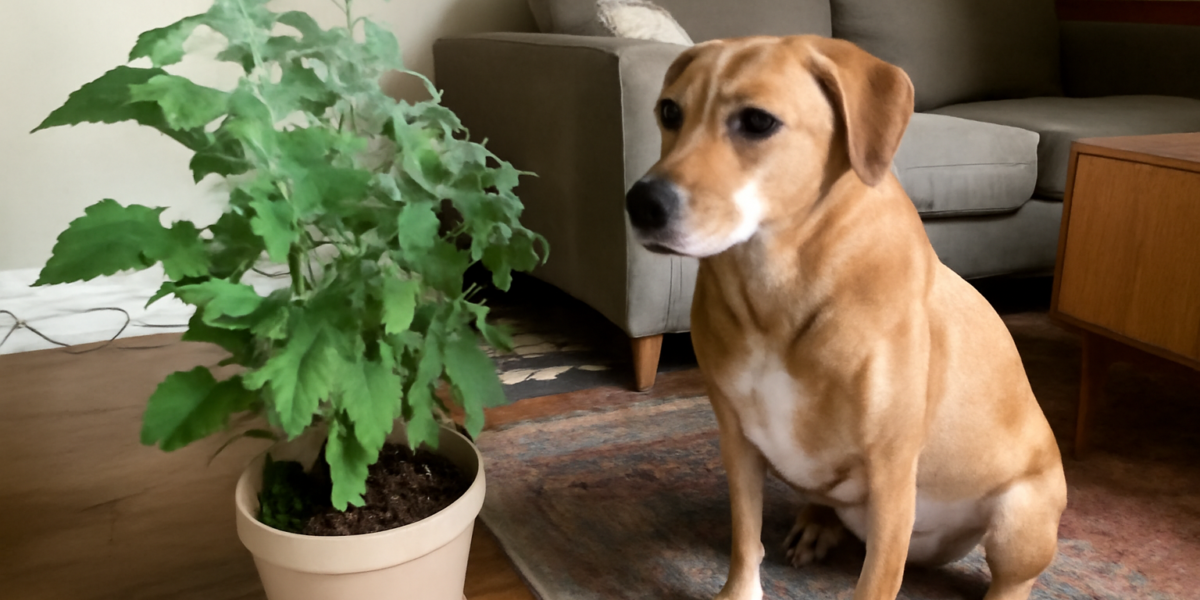
Lambsquarter is a fast-growing annual that reaches one to six feet tall in a single season, with diamond-shaped or triangular leaves that have a pale dusty-white coating on the undersides (the dust is a natural protective wax). The leaves are matte rather than glossy, and the plant takes its “goosefoot” common name from the leaf shape. Stems often turn striped pink or red as the plant matures, and tiny green flowers crowd into terminal spikes in late summer. The seeds are dark and round, produced in enormous quantities, and capable of remaining viable in soil for decades.
The plant is a member of the Amaranthaceae family, the same plant family that includes Swiss chard, beets, and quinoa. Family-resemblance matters here. The whole family runs on the soluble-oxalate playbook, and the foraging-pet concern transfers from the cultivated cousins to the weedy ones. Lambsquarter is the wild member of the same group that is grown as cultivated spinach-like greens; the chemistry is similar, the dose is uncontrolled, and the plant is much more abundant in unmanaged ground.
The Two-Track Toxicity: Oxalates Plus Nitrates
Soluble oxalates work the same way they do in purslane and rhubarb leaves. After ingestion the soluble fraction crosses the gut wall, binds free calcium in the bloodstream, drops circulating calcium levels, and forms calcium oxalate crystals that filter through the kidneys. Symptoms can include drooling, oral irritation, vomiting, lethargy, weakness, tremors, and reduced urine output. Cats clear oxalates less efficiently than dogs and are at higher risk of acute kidney injury; cats with any background of chronic kidney disease deserve special caution.
The second track is nitrate accumulation. Lambsquarter is a vigorous nitrogen-loving weed that pulls nitrate out of soil, especially fertilized or manure-enriched soil, and stores it in stems and leaves. Drought stress amplifies the storage because the plant cannot keep up with conversion to plant proteins. High nitrate forage is mostly a livestock-poisoning concern (cattle, sheep, goats, horses), but pets eating fresh nitrate-rich plant matter can experience GI upset and, at high doses, methemoglobinemia, where blood loses some of its oxygen-carrying capacity. The pet-poisoning literature treats lambsquarter as moderate, with the oxalate side carrying most of the practical weight.
Cats vs Dogs: Different Doses, Different Risks
The same dose-and-renal-reserve calculus applies to lambsquarter as to any oxalate weed. Cats have less margin and tolerate less. Dogs have more margin but tend to eat more when they graze, which catches up to them. A cat seen sampling lambsquarter for more than a leaf or two warrants a same-day vet call. A dog who took a single bite and walked away can usually be watched at home; a dog who actively grazed on a multi-foot patch needs a phone consult and possibly a clinic visit for fluids and bloodwork.
Senior pets, very small dogs, very young puppies and kittens, and pets with any kidney or urinary background are higher-risk. So are pets currently on medications that load the kidneys (some NSAIDs, certain antibiotics, ACE inhibitors). When you call the vet, mention any current medications along with the plant identification.
Symptoms to Watch For
Early signs are local and digestive: drooling, head-shaking, lip-licking, vomiting, sometimes diarrhea, often within an hour or two of ingestion. Most pets dislike the chalky-bitter taste of fresh lambsquarter and back off after a mouthful. The trouble starts when a pet pushes through the taste, which sometimes happens with bored dogs or with cats who are particularly determined grazers.
Late signs over the following twelve to seventy-two hours include lethargy, decreased appetite, increased or decreased drinking and urination, weakness, muscle tremors, and an unusual breath odor. Pale gums, brown-tinged urine, or rapid breathing in a pet who recently ate a large amount of fresh lambsquarter could indicate the methemoglobinemia branch of the toxicity and is a same-hour emergency. The kidney branch develops more slowly but is also serious if missed.
What to Do If Your Pet Ate Lambsquarter
Remove access first. Pick out any plant matter from the mouth and offer fresh water; do not force-flush. Take a photograph of the plant for identification. Estimate the amount eaten as best you can. Then call your veterinarian, the ASPCA Animal Poison Control Center at 888-426-4435, or the Pet Poison Helpline at 855-764-7661. They will triage based on species, weight, amount, time elapsed, and any medical history.
Do not induce vomiting at home. The oxalate chemistry is already underway by the time most owners notice the chewing, and home emesis with hydrogen peroxide can compound oral irritation. The vet team has better protocols, including activated charcoal in some windows, IV fluids to flush oxalates through the kidneys, and bloodwork to assess kidney values, calcium, and methemoglobin level if relevant. Bring the photo, any vomit produced naturally, and a list of current medications.
Lambsquarter Identification and Look-Alikes
Lambsquarter is most easily identified by the dusty-white coating on the undersides of young leaves; rub a leaf and the coating comes off as a thin film. Mature plants form upright spires of small green flowers and stand head-high in midsummer. Confusion is common with pigweed (Amaranthus species, also a goosefoot relative, also weakly toxic via oxalates and nitrates), with cultivated quinoa seedlings if a previous gardener grew quinoa, and occasionally with tree spinach (Chenopodium giganteum, a cultivated red-tipped relative).
From the pet-safety standpoint, the family resemblance simplifies things. If a plant looks like a Chenopodium or Amaranthus relative and grows in disturbed soil, treat it as a soluble-oxalate concern and discourage grazing. Photographing the plant before pulling it is a good habit; you can confirm species later with a plant-ID app, but the management decision in the moment is the same.
Why Lambsquarter Shows Up in Your Yard
Like purslane, lambsquarter is a disturbed-soil specialist. Vegetable garden borders, freshly mulched flower beds, compost piles, neglected corners, and the strip of soil between fence and lawn are classic habitats. The seeds blow in on wind and shoes, persist in soil for years, and germinate in waves whenever soil is turned or watered. A single mature plant produces tens of thousands of seeds, so the seed bank fills up quickly.
Manure-enriched garden soil and freshly fertilized lawns are especially attractive to lambsquarter, which is part of the nitrate-accumulation problem. If you are suddenly seeing lots of lambsquarter the year after applying compost, the plant is telling you the nitrogen is rich. Mulch suppresses new germination; pulling young plants by hand before they flower keeps the seed bank from refilling.
Pet-Safe Yard and Garden Practices
Hand-pull lambsquarter when soil is moist and seedlings are small. Bag rather than compost (home compost rarely heats high enough to kill the seeds). Mulch garden beds and pathways. Avoid pre-emergent and post-emergent herbicides where dogs and cats walk; the residue concern is real even when label says “pet-safe after drying.” If a dog runs the yard daily, the marginal labor of hand-pulling is almost always worth it.
For groundcover replacement consider clover (white clover tolerates lawn use and is on the non-toxic list), dandelion (mostly tolerated, even mildly nutritious for pets, though most lawn-keepers don’t want it either), and the broader options in the pet-safe garden plants guide. The goal is replacing problem species with foraging-tolerant ones, not creating a sterile yard.
Other Oxalate-Family Concerns
Several other Amaranthaceae and oxalate plants share similar concerns. The cultivated cousin Swiss chard is on the limited-quantity list because of its high oxalate content, even though it is not classed as outright toxic. Rhubarb leaves are the textbook severe-end case. Purslane sits in the same garden-weed niche and shares the soluble-oxalate concern. Starfruit is the classic acute-kidney-injury fruit case for dogs.
Recognizing the pattern saves time. If you can identify “this plant family does soluble oxalates” you have already done most of the prevention work. Lambsquarter, pigweed, quinoa relatives, beet greens, Swiss chard, spinach in large amounts, rhubarb, sorrel, wood sorrel, and purslane all share variations of the theme.
Vet Routing and Final Notes
Lambsquarter sits in the mild-to-moderate toxicity tier. Most pet exposures end with a stomach upset and recover at home. The cases that escalate involve sustained ingestion, small or sensitive pets, or kidney-compromised individuals. Save your veterinarian’s number, the ASPCA Animal Poison Control Center at 888-426-4435, and the Pet Poison Helpline at 855-764-7661 in your phone for the moments you need them.
If you are starting fresh, the adopt-a-cat hub and adopt-a-dog hub both include yard and plant-audit checklists. Sweeping the yard for oxalate weeds before pickup day is far easier than learning the species names while a kitten is mid-graze. For pets with chronic kidney disease in either species (dogs have their own pillar guide as well), tightening the oxalate-source list is part of long-term management.
Frequently Asked Questions
Is lambsquarter toxic to dogs and cats?
Yes, in the mild-to-moderate range. Lambsquarter (Chenopodium album) contains soluble oxalates and can accumulate nitrates, both of which can cause GI upset and, in larger doses, kidney irritation or oxygen-transport issues. Cats are more sensitive than dogs.
My dog grazed on lambsquarter in the yard. What should I do?
Pull the dog away, photograph the plant, and call your vet. A small sample bite in a healthy adult dog usually means watching at home for vomiting and lethargy. A larger graze warrants a phone consult and possibly a clinic visit for IV fluids and kidney bloodwork.
People eat lambsquarter. Why is it toxic to my pet?
Humans cook it (which softens but does not destroy oxalates), eat moderate amounts, and clear oxalates with a kidney system that has more renal reserve relative to body size. Pets eat raw plant matter in uncontrolled doses, and especially in cats the kidneys handle the oxalate load less efficiently.
How do I tell lambsquarter from pigweed?
Lambsquarter has a dusty-white coating on the underside of young leaves, diamond-shaped leaves, and matte texture. Pigweed (Amaranthus species) has glossier green leaves, often with a slight reddish hue at the base, and a more brittle stem. Both share the same general toxicity concerns and should both be discouraged in pet yards.
Can I let my chickens eat lambsquarter if my dog won’t?
Chickens often eat lambsquarter without obvious harm in moderation, but high-nitrate plants and sustained oxalate intake can cause egg-quality issues and other problems. The pet-safety question is dog-and-cat focused; for poultry, ask your livestock vet about the local soil’s nitrogen status before encouraging it as forage.


