
Last updated: May 4, 2026
In this article
- The Short Answer on Thanksgiving Turkey for Cats
- Plain Turkey Breast: Why This Part Works
- Turkey Skin: The Pancreatitis Problem
- Cooked Turkey Bones: Never, Under Any Circumstances
- Gravy, Stuffing, and the Aromatic Hazards
- What If Your Cat Ate the Stuffing
- How to Prepare a Cat-Safe Holiday Plate
- Cats With Specific Health Conditions
- Practical Cat Management on Thanksgiving Day
- Better Cat Foods to Compare and Combine
- What to Do After an Accidental Holiday Eating Event
- Frequently Asked Questions
The Short Answer on Thanksgiving Turkey for Cats
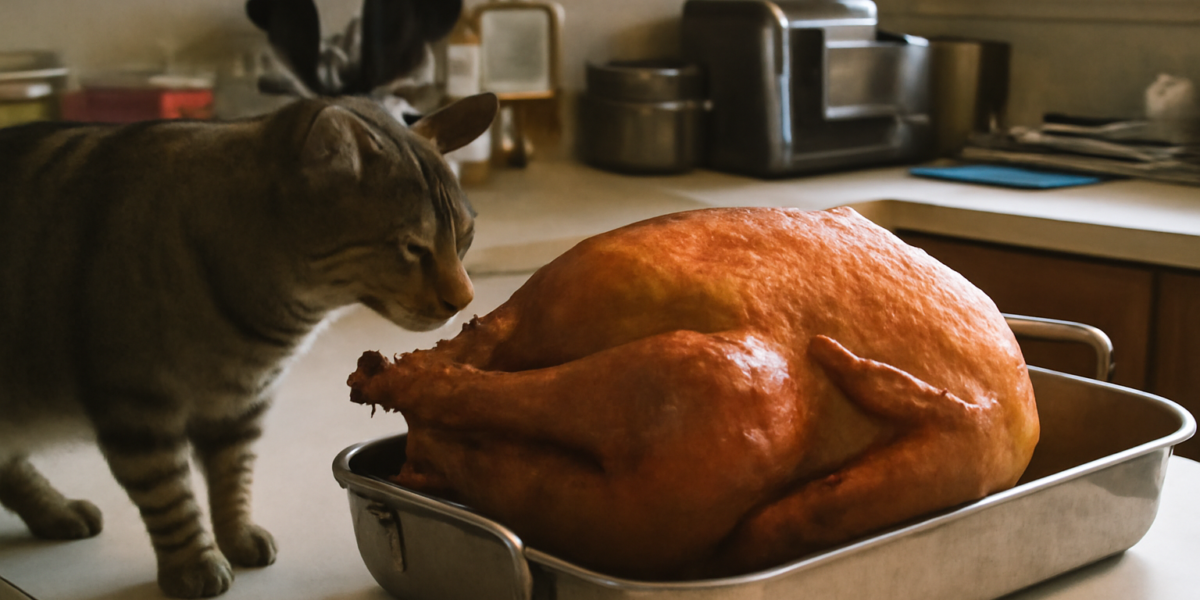
Can cats eat Thanksgiving turkey? Yes, with significant caution. Plain, unseasoned, fully cooked turkey breast in small amounts is a safe and even welcome treat for most healthy adult cats. The actual hazards on Thanksgiving Day are everything else on the bird and the table — the seasoned skin, the cooked bones, the gravy made with onion and garlic, the stuffing, the buttery basting drippings, and the wandering opportunities a curious cat finds when seven people are distracted by football and pie. The single most important rule is to set aside a small piece of plain turkey before the bird gets seasoned, basted, or carved.
If your cat steals a piece of seasoned turkey, watch her closely and call your veterinarian if she shows vomiting, diarrhea, weakness, or refusal to eat. Most one-time exposures resolve at home, but the holiday combination of fatty drippings and onion-garlic seasoning sends more than a few cats to the emergency clinic each November.
Plain Turkey Breast: Why This Part Works
Plain cooked turkey breast is one of the most cat-friendly meats on a Thanksgiving table. It is lean, high in protein, and similar in muscle composition to chicken breast, which is already a familiar protein for many cats. A pea-sized to thumbnail-sized piece of plain breast meat fits easily into an adult cat’s daily calorie budget and gives her a real holiday-treat moment without adding ingredients she should not have.
The keyword is “plain.” That means the piece comes off the bird before any salt, butter, herbs (especially sage and rosemary in larger amounts), garlic, onion, broth, wine, or pan drippings have touched it. The cleanest way to do this is to cut a small amount of breast aside while the turkey is raw, cook it separately in a small pan or oven dish in plain water or in its own juices, and reserve it for the cat. That requires planning, but it is the only way to guarantee a clean piece.
Turkey Skin: The Pancreatitis Problem
Turkey skin is the most common Thanksgiving mistake people make with cats. The skin is where most of the seasoning, salt, butter, and basting drippings concentrate during roasting. Even a piece of unseasoned skin is high in fat — much higher than the breast meat below it. For cats, sudden high-fat ingestion is a known trigger for feline pancreatitis, an inflammatory condition of the pancreas that can become serious quickly.
Pancreatitis in cats can be subtle. Early signs include lethargy, decreased appetite, vomiting, and dehydration. Severe cases require hospitalization with IV fluids, pain control, and anti-nausea medications. The risk is dose-dependent — a tiny piece of plain skin is unlikely to trigger an episode in a healthy cat, but a tablespoon of skin and drippings can. The simplest rule: no turkey skin for cats. Discard it or save it for a stock you don’t share with her.
Cooked Turkey Bones: Never, Under Any Circumstances
Cooked bones — including all turkey bones from a Thanksgiving bird — are dangerous for cats. Cooking dries out and brittles the bone structure, causing it to splinter when chewed or swallowed. Cats have a small esophagus, narrow throat, and modest stomach, all of which are easily damaged by sharp bone fragments. The risks include choking, oral cuts, esophageal perforation, gastric damage, intestinal obstruction, and intestinal perforation.
This rule is absolute. Do not give your cat the carcass to chew on, do not let her gnaw on the wing tips after dinner, and do not toss her a “bone with a little meat left.” If she manages to grab a bone, try to take it from her gently — but do not stick your fingers down her throat if she has already swallowed it. Call your veterinarian or the ASPCA Animal Poison Control Center for guidance, and watch for signs of obstruction (vomiting, refusal to eat, drooling, restlessness, abdominal pain) over the next forty-eight hours.
Gravy, Stuffing, and the Aromatic Hazards
Turkey gravy is one of the worst things a cat can lick on Thanksgiving. It typically contains pan drippings (high fat), onion or shallot, garlic, salt, broth often made with more onion and garlic, sometimes wine or sherry, and often flour or thickeners. Each of those ingredients alone is a concern. Together, in a single tablespoon of gravy, they are a real toxicity event for a small cat.
Turkey stuffing is similar trouble. Most stuffing recipes start with sauteed onion, celery, and garlic, then add bread, broth, butter, and herbs. The onion content alone can be enough to cause measurable red blood cell damage in cats, leading to anemia. For more on the mechanism, see our guide on onion toxicity in cats and garlic toxicity in cats. The same warnings apply to a holiday dish whether you label it “Thanksgiving turkey” or just “the bird.”
What If Your Cat Ate the Stuffing
If your cat got into the stuffing or gravy, do not wait for symptoms. Identify how much she ate, what was in it, and call your veterinarian or animal poison control. Onion and garlic toxicity in cats can take three to five days to show its full effect on red blood cells, so a cat who seems fine the day after may develop anemia later in the week. Bloodwork timing matters, and your veterinary team can guide what to do.
Symptoms to watch over the next several days include weakness, lethargy, pale or yellow gums, dark or red-tinged urine, fast breathing, decreased appetite, and reluctance to play. If you saw your cat eat a meaningful amount of stuffing or gravy, schedule a veterinary call even if she seems fine — early intervention is much easier than waiting for a hemolytic crisis. Our companion stuffing safety guide covers similar concerns for dogs.
How to Prepare a Cat-Safe Holiday Plate
The simplest holiday plan is to cook a small portion of plain turkey for your cat before the rest of the bird gets seasoned. Take one or two ounces of raw breast meat, cube it, and either poach in plain water for 8-10 minutes or bake at 350°F until the internal temperature reaches 165°F. Let it cool fully, then chop into small pieces. That is your cat’s holiday treat for the day, divided into two or three small portions.
An ounce of plain cooked turkey breast is roughly the equivalent of one extra meal of treats for a typical adult cat. If your cat has a stable weight on her usual diet, you may want to slightly reduce her regular dinner that night to compensate. If she is on a prescription therapeutic diet for kidney disease, diabetes, or food sensitivity, talk to your veterinarian before the holiday about whether she can have the turkey at all and how to portion it.
Cats With Specific Health Conditions
Cats with diagnosed pancreatitis or a history of pancreatic flare-ups should not get any turkey beyond a few shreds of completely fat-trimmed plain breast — and only with veterinary clearance. The fat content of even plain turkey can trigger another episode. Cats with chronic kidney disease usually need their protein and phosphorus carefully balanced, and adding turkey changes those numbers. Diabetic cats can typically have a small amount of plain lean turkey breast, but skip seasonings absolutely.
Cats with IBD may react unpredictably to a new protein. If turkey is not part of her usual diet, the holiday is a poor time to introduce it. Stick with her familiar food. Senior cats with multiple conditions should follow the most restrictive condition’s rules — when in doubt, smaller portions or skip entirely.
Practical Cat Management on Thanksgiving Day
Beyond the turkey itself, the day brings logistical risks. The doorbell rings repeatedly, doors open and stay open longer than usual, guests drop bits of food, and counters are crowded with hot dishes. Cats who normally never counter-surf may be tempted by an unguarded turkey on the cooling rack. Cats who never bolt for the door may slip out when guests arrive in coats and boots.
The simple solution is to give your cat a quiet, food-safe room for the day with her food, water, litter, and a comfortable bed. Close the door. Many cats appreciate the break from chaos, and you remove the risk of her snatching something off the counter or escaping outside. This is also a good time to do a single play session before guests arrive so she is settled and content. Indoor exercise routines are particularly helpful on disrupted days.
Better Cat Foods to Compare and Combine
If turkey is not available or you want a wider holiday treat repertoire, plain cooked chicken is the closest analog and a safe staple for most cats. Plain cooked salmon (skinless, no seasoning) and plain tuna in water (rinsed if salty) are alternatives some cats love, though tuna should be a small treat rather than a regular food because of mercury and nutritional balance concerns.
What you should not do is double up by giving turkey, chicken, and a fish treat all in one day on top of her regular food. The fat and protein loads add up, and a holiday weight bump or pancreatitis flare is a poor souvenir. Pick one small extra protein treat for the day and call it good.
What to Do After an Accidental Holiday Eating Event
If you find evidence that your cat ate something she should not have — a chewed-up turkey skin in a corner, signs of stuffing on her whiskers, gravy paw-prints leading to a dish — gather what information you can and call your veterinarian. Note the approximate amount, when it happened, and what was in the dish. The ASPCA Animal Poison Control Center is a good after-hours resource if your veterinarian’s office is closed.
For mild exposures (a single lick of unseasoned turkey skin, a few crumbs of buttered roll), home monitoring is usually sufficient. For onion or garlic exposure, fatty skin in larger amounts, or any bone ingestion, an in-person veterinary visit may be warranted. Bring the recipe, packaging, or ingredient list so the team can see exactly what your cat consumed. Speed matters more than perfect information — call first, gather details on the way to the visit if needed.
Frequently Asked Questions
How much plain turkey can my cat have on Thanksgiving?
For a typical ten-pound adult cat with no special health conditions, a thumb-sized piece of plain cooked breast meat divided into two or three offerings throughout the day is reasonable. Cats with health issues should follow their veterinarian’s guidance instead.
Can cats eat turkey deli meat?
Skip deli turkey. It is heavily salted, often contains preservatives like sodium nitrite, and may include garlic or onion powder in the seasoning. Plain home-cooked turkey breast is far better.
What about turkey-flavored cat food?
Commercial turkey-flavored cat foods that are formulated as complete-and-balanced for cats are perfectly safe and a fine year-round option. Just don’t confuse them with sharing actual Thanksgiving leftovers — those are different animals.
My cat ate a small turkey bone. What should I do?
Call your veterinarian or animal poison control immediately. Watch for choking, drooling, vomiting, refusal to eat, restlessness, or abdominal discomfort. Most cats who swallow a small bone fragment pass it without incident, but obstruction and perforation are real risks that need professional guidance.
Are smoked or deep-fried turkeys safe for cats?
Smoked turkey is heavily seasoned and salted; deep-fried turkey is high in oil residue and often seasoned with cajun blends containing garlic and pepper. Skip both for cats. Plain roasted unseasoned breast is the only Thanksgiving turkey preparation that fits a feline diet.


