
Last updated: May 4, 2026
In this article
- The Short Answer on Cats and Bitter Melon
- What Is Bitter Melon?
- The Hypoglycemia Risk for Cats
- Seeds, Red Pulp, and Cucurbitacins
- Why Cats Almost Always Refuse Bitter Melon
- Better Asian Vegetables for Cats
- Symptoms to Watch For After Bitter Melon Exposure
- Preparation Methods Make a Difference
- Bitter Melon Compared to Other Risky Foods
- Cucurbitacin Toxicity in More Detail
- Garden, Storage, and Household Safety
- Frequently Asked Questions
The Short Answer on Cats and Bitter Melon
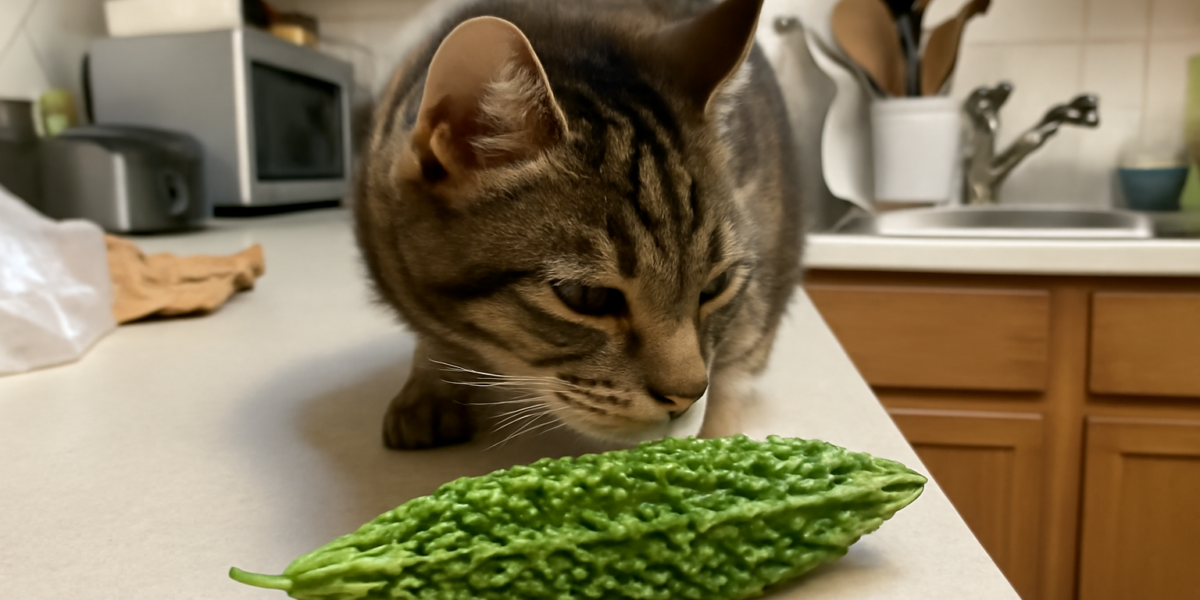
Cats should not eat bitter melon. Bitter melon (Momordica charantia), also called bitter gourd, karela, or pare, contains charantin, polypeptide-p, and vicine — compounds with documented blood-sugar-lowering effects in mammals. In cats, especially diabetic cats or kittens, those compounds can push blood glucose into hypoglycemic territory. The flesh itself is not acutely toxic in tiny amounts, but the seeds and red inner pulp contain higher concentrations of cucurbitacins and trace cyanogenic glycosides, both of which are problematic.
Most cats refuse bitter melon on their own — the bitterness is intense, and cats cannot taste sweetness to “balance” it the way humans do. The risk is mostly accidental ingestion of stir-fries, soups, or stuffed dishes that contain bitter melon. The answer to “can cats eat bitter melon” is a clear skip-it, with no benefit and meaningful downside.
What Is Bitter Melon?
Bitter melon is a tropical and subtropical vine in the cucurbit family, related to cucumber, zucchini, and pumpkin. It produces a knobby, oblong green fruit with deep ridges and a hollow interior filled with seeds surrounded by red pulp when ripe. It is widely used in South Asian, Southeast Asian, East Asian, and Caribbean cooking — typical preparations include stir-fries, stuffed with meat, fried as chips, or boiled in soups.
Nutritionally, bitter melon is low in calories and high in vitamin C, folate, and several plant compounds with measurable pharmacological activity. Human research has explored bitter melon for type 2 diabetes management because of its glucose-lowering effects. That same property is the issue for cats: a substance that lowers blood sugar in humans does the same thing in cats, and cats are tiny.
The Hypoglycemia Risk for Cats
Three compounds in bitter melon contribute to glucose lowering. Charantin is a steroidal saponin mixture that increases insulin sensitivity in muscle and liver tissue. Polypeptide-p (sometimes called plant insulin) acts directly on insulin receptors. Vicine is a glycoalkaloid that can also affect blood sugar regulation. In humans, these effects are studied as a possible adjunct to diabetes treatment. In cats, the same effects can be unwanted and harmful.
Diabetes mellitus affects roughly 0.5 to 1 percent of cats overall and up to 1 in 100 to 1 in 200 in some surveys, with higher rates in obese, indoor, and older cats. A cat already on insulin therapy who eats a bowl of bitter-melon stir-fry could see a dangerous drop in blood glucose. Symptoms of feline hypoglycemia include weakness, wobbliness, disorientation, seizures, and collapse — these are emergency-level signs. Our feline diabetes overview covers signs, monitoring, and what to do during a hypoglycemic event.
Seeds, Red Pulp, and Cucurbitacins
The seeds and the bright red inner pulp that surrounds the seeds in ripe bitter melon are more concentrated than the green flesh. Seeds contain trace cyanogenic glycosides that release small amounts of cyanide when chewed. The red pulp contains cucurbitacins — bitter terpenoid compounds also found in some squashes that cause GI upset, vomiting, and abdominal pain in mammals. Lectins are also present and can irritate the gut lining.
If a cat eats a few green-flesh trimmings, the dose of these compounds is usually low enough to be tolerated. If a cat eats the seeds or the red pulp, the risk is higher. Lectin and cucurbitacin GI symptoms typically appear within 6 to 12 hours and include vomiting, diarrhea, and lethargy. Severe cases warrant supportive vet care.
Why Cats Almost Always Refuse Bitter Melon
Cats are missing the functional sweet-taste receptor gene, so they cannot perceive sweetness. They do, however, perceive bitterness, and bitter melon is among the most intensely bitter common vegetables on earth. From an evolutionary standpoint, bitter taste is a “do not eat” signal — many toxic plants are bitter — so cats are wired to spit it out. This natural avoidance protects most cats from accidental ingestion.
The risk scenarios are usually: a cat steals food from a plate of stuffed karela where the bitter has been masked by meat and spices, a cat licks broth from a bitter-gourd soup, or a kitten chews on a fresh raw piece out of curiosity. In these cases the bitter taste does not always trigger refusal in time. Storing bitter melon and dishes containing it out of cat reach is straightforward and effective.
Better Asian Vegetables for Cats
If you want to share something from your Asian-cooking repertoire, several other vegetables are safer in tiny amounts than bitter melon. Plain steamed bok choy in pea-sized portions is generally well tolerated. Bok choy leaves specifically are softer and even easier to digest. Cooked plain okra or a sliver of plain steamed daikon are other options.
None of these are nutritionally needed — cats are obligate carnivores. Their primary diet should be a complete and balanced cat food, with treats limited to under 10 percent of daily calories. Vegetables are mostly novelty rather than nutrition. If your cat enjoys a tiny piece of plain cooked vegetable as enrichment, that is fine, but it should never replace a meal.
Symptoms to Watch For After Bitter Melon Exposure
If you suspect your cat ate bitter melon — particularly if seeds or red pulp were involved — watch closely for the following over the next 24 to 48 hours.
- Vomiting or repeated nausea
- Diarrhea, sometimes with mucus
- Lethargy, weakness, or wobbly walking
- Disorientation or unusual hiding
- Tremors, muscle twitches, or seizures (hypoglycemia)
- Excessive drooling or pawing at the mouth (bitter taste reaction)
- Pale gums or rapid breathing
Any neurological symptoms — wobbliness, seizure, collapse, profound lethargy — are emergency signs. Get to a vet immediately. For diabetic cats, a quick smear of corn syrup or honey on the gums can buy time during transport, but only do this if your cat is conscious enough to swallow. Always call ahead so the clinic is ready with IV access and dextrose on standby.
Preparation Methods Make a Difference
Different bitter-melon dishes carry different risk profiles for cats. Raw bitter melon is the most intense in active compounds. Pickled bitter melon adds salt and vinegar, both of which are problematic on their own. Stuffed bitter melon often combines bitter gourd with garlic, onion, and pork — and garlic and onions are toxic to cats independently. Bitter-melon tea or extract concentrates the active compounds dramatically and is the highest-risk form. See our cat garlic guide and onion safety guide for the allium component risks.
Traditional medicines and supplements containing bitter melon extract are sometimes marketed for human diabetes management. Keep these capsules and tinctures secured the same way you would prescription medications. A cat that chews open a capsule could ingest a far higher concentration than they would from any food source.
Bitter Melon Compared to Other Risky Foods
Among the foods cats encounter in mixed cuisines, bitter melon is in a “skip it” category similar to heavily seasoned tofu, salted edamame, and miso — not acutely toxic but with enough downsides to make sharing pointless. Compared to the parallel dog bitter melon discussion, the cat case is slightly more cautious because cats are smaller and more sensitive to many plant compounds.
Sibling B109 cat articles cover other Asian-influenced foods worth knowing. Bok choy leaves are a safer leafy-green option. Soy milk is a no-go for taurine reasons. The general pattern: stick to species-appropriate animal protein, and treat plant foods as occasional novelty at most.
Cucurbitacin Toxicity in More Detail
Cucurbitacins are a class of bitter triterpenoid compounds found in many plants of the cucurbit family. They are most concentrated in wild squash species and in the seeds and rind of bitter melon. In humans, large amounts cause “toxic squash syndrome” with severe cramping, vomiting, and diarrhea. In cats, the same compounds cause GI inflammation, increased salivation, and reduced appetite. The bitter taste itself causes profuse drooling — owners sometimes mistake this for a more serious neurological event.
Most cucurbit-related GI symptoms in cats resolve with supportive care over 24 to 48 hours. The treatment is symptomatic: anti-nausea medication, IV fluids if dehydration develops, and a brief return to bland feeding once vomiting stops. Cats that have eaten bitter melon seeds or red pulp specifically should be observed for an additional 24 hours because of the trace cyanogenic glycosides; cyanide toxicity from this source is rare but not impossible in small cats with concentrated exposure.
Garden, Storage, and Household Safety
If you grow bitter melon in your garden, fence the vine off from areas where cats roam. The fruit hangs accessibly at cat height when mature, and the unripe green fruit looks tempting in the way that any new object can to a curious cat. Fallen fruit is the most likely scenario for accidental ingestion — pick up windfall daily during the harvest season. Bitter melon vines themselves are not classified as toxic to cats, but the leaves contain similar compounds to the fruit and are best kept off the cat menu.
Store fresh bitter melon in the refrigerator in a sealed container or crisper drawer. Discard the seeds and red pulp in a covered trash bin. If you make bitter-melon dishes, plate them and clear plates promptly — leftover stir-fry or stuffed bitter gourd left on the counter is the most common accidental-exposure scenario. Cats are persistent counter-surfers, and the strong meat smell of stuffed karela can override their natural rejection of bitter taste.
Bitter-melon supplements and capsules deserve the same security as prescription medications. They concentrate the active compounds far above what fresh fruit contains. A cat that chews open a capsule can ingest a clinically significant dose. Store these high and out of reach, and never share human supplements with pets without explicit veterinary guidance.
Frequently Asked Questions
My cat ate a few small pieces of cooked bitter melon. What should I do?
If your cat is healthy, not diabetic, and ate only a small amount of plain green flesh, monitor for vomiting, diarrhea, and any wobbliness over 24 hours. If symptoms appear or your cat has any pre-existing condition, call your vet.
Is bitter melon safe in tiny amounts as a “natural” supplement?
No. There is no veterinary indication for bitter melon in cats. The hypoglycemic and GI risks outweigh any theoretical benefit, and any blood-sugar-related care for diabetic cats should come from a veterinarian’s prescribed plan, not a vegetable.
What about bitter melon juice or tea?
Both are concentrated forms of the active compounds and are higher risk than fresh fruit. Keep them out of cat reach.
Will my cat be sick if it just licked bitter-melon broth?
Probably not — small lick exposures rarely produce clinical symptoms in healthy adult cats. Watch for any vomiting or appetite changes over the next day. Diabetic cats are the exception and warrant a vet call regardless.
Are any cucurbit vegetables safe for cats?
Plain cooked pumpkin (without spices) is the most cat-friendly cucurbit, often used by vets to add fiber for digestive issues. Plain cucumber slices are usually tolerated. Skip bitter melon, raw zucchini in volume, and any spiced or seasoned squash dishes.


