
Last updated: May 16, 2026
In this article
- Quick Answer: Tiny Amounts Only, Plain Brie
- What Brie Is and Why Texture Matters
- Lactose Content: Moderate but Variable
- Fat Content and Pancreatitis Risk
- Safe Serving Size: Crumb-Size Only
- The Rind: Skip It
- Forms of Brie That Are Not Safe
- Comparing Brie to Other Cheeses for Cats
- Signs Your Cat Did Not Tolerate Brie
- Cats Who Should Skip Brie Entirely
- Practical Alternatives
- Frequently Asked Questions
Quick Answer: Tiny Amounts Only, Plain Brie
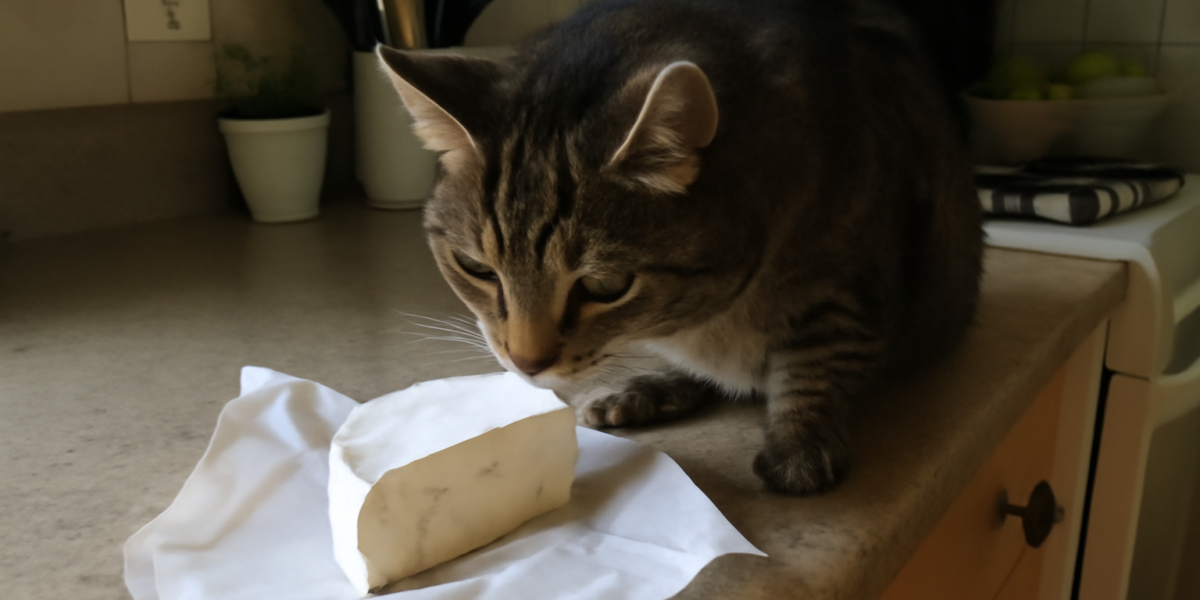
Cats can technically eat brie in tiny amounts, but brie is a cheese we approach with caution rather than enthusiasm. Brie is a soft, bloomy-rind cow’s milk cheese with around 28 percent fat content and moderate residual lactose. Most adult cats are at least somewhat lactose intolerant, and the high fat content makes brie a poor fit for cats with pancreatitis history or fat-sensitive digestive systems. The good news is that brie’s sodium content is moderate, not extreme like halloumi or parmesan, so the sodium-driven concerns that dominate aged cheese discussions are less pressing here.
If you want to share, limit your cat to a crumb-sized taste of plain brie on rare occasions. Skip flavored or topped brie entirely (no fig spread, no honey drizzle, no garlic-herb varieties), and skip the rind, which is white mold and offers no benefit. Brie is not a food cats need. It is a curiosity, and many cats are better off without it.
What Brie Is and Why Texture Matters
Brie is a French soft-ripened cheese with a distinctive white bloomy rind formed by Penicillium camemberti and Penicillium candidum molds. The rind is edible for humans and contributes much of the characteristic earthy, mushroomy flavor. The interior is creamy, sometimes runny when fully ripe, and the fat-to-protein ratio is high compared to fresh cheeses like ricotta or cottage cheese.
That texture matters for cats in two ways. First, soft cheese is easy to share accidentally. A finger swipe with the intention of “just a tiny bit” easily becomes a quarter-teaspoon, which is more than most cats should have. Second, soft cheese clings to surfaces in the mouth and stomach more than firmer cheeses, which can prolong the digestive workload for fat-sensitive cats. The sticky, fatty nature of brie is part of why we recommend extreme portion discipline if you offer it at all.
Brie sits in roughly the same texture and fat category as cream cheese and mascarpone, both of which have similar concerns. The cheese-category overview at our cheese guide for cats places brie in its broader context.
Lactose Content: Moderate but Variable
Brie’s lactose content varies with ripeness. Young brie has more residual lactose, around 0.4 to 0.6 grams per ounce, because the cultures have not had time to fully metabolize it. Fully ripe, runny brie has less, closer to 0.2 grams per ounce. Most supermarket brie sold in 8-ounce wedges is in the middle of that range when you buy it.
For comparison, fresh whole milk has roughly 12 grams of lactose per cup, which works out to about 1.5 grams per ounce. Brie is significantly lower than milk but not low enough to be considered lactose-friendly the way aged cheeses like parmesan or gouda are. Most adult cats are lactose intolerant to some degree, and the unpredictability of individual tolerance is the practical issue. A cat that handled a tiny bit of milk last week might still react to brie this week.
If your cat has a history of GI upset after dairy, skip brie. If your cat has tolerated other dairy in similar tiny amounts, brie is a borderline option you can test with the smallest possible portion.
Fat Content and Pancreatitis Risk
Brie is around 28 percent fat by weight, which is high for cats. Cats are obligate carnivores and tolerate dietary fat well in general, but acute high-fat meals can trigger pancreatitis in sensitive individuals. Feline pancreatitis is more common than was historically appreciated, and the condition can be acute (sudden, severe) or chronic (low-grade, ongoing).
A crumb-sized taste of brie is unlikely to trigger pancreatitis on its own. The concern is cumulative. Cats that get repeated high-fat treats (cheese, butter, deli meats, sausages) over weeks and months are at higher risk for developing fat-related digestive problems. Read our pancreatitis in cats guide for a fuller picture of why fat moderation matters even when individual treats seem small.
Cats with confirmed or suspected pancreatitis history should skip brie and other high-fat cheeses entirely. The risk of triggering a flare is not worth the flavor experience.
Safe Serving Size: Crumb-Size Only
For an adult cat with no known dairy or fat issues, the safe serving is a piece of brie roughly the size of a green pea, or about an eighth of a teaspoon. That is genuinely a crumb. Offer once, watch for 24 hours, and only repeat if your cat showed no signs of digestive upset.
Smaller cats, kittens, and cats with any health issues should skip brie entirely. There is no nutritional reason to offer it; the calories, fat, and lactose are all working against feline physiology rather than for it.
Never use brie as a regular treat. Even a cat that tolerates an occasional taste should not have brie weekly. Treats should make up no more than ten percent of total caloric intake, and brie’s calorie density makes it easy to overshoot quickly.
The Rind: Skip It
The bloomy white rind on brie is composed of intentional mold cultures, mostly Penicillium varieties. These are safe for human consumption in normal quantities, but cats have a different relationship with mold and fungal compounds. Some cats are sensitive to mold metabolites, and the rind contributes most of the strong flavor that may attract cats in the first place.
Skip the rind. Cut brie from the interior of the wedge, and offer only the soft cream-colored center. The rind is not toxic, but it adds risk without adding benefit. Compare this to blue cheese, where the mold cultures are even more concentrated and the recommendation is to skip entirely.
Forms of Brie That Are Not Safe
Plain brie is the only form worth considering. Several variants common at parties and on cheese boards are unsafe for cats:
- Brie en croute (baked in pastry). The pastry contains butter, flour, and sometimes egg wash. The brie itself is heated and softened, often topped with jams or nuts. Skip entirely.
- Fig-topped brie or honey-drizzled brie. Sugar concerns aside, fig and honey are not appropriate cat treats. Skip.
- Garlic-herb brie or pesto-stuffed brie. Garlic is toxic to cats at low doses. Skip.
- Cranberry brie or fruit-jam brie. Sugar-heavy and often contains other fruits or alcohol. Skip.
- Smoked brie. Smoking compounds add unnecessary risk and concentrate flavor compounds cats do not need. Skip.
- Triple-cream brie. Even higher in fat (around 40 percent), with proportionally higher pancreatitis risk. Skip.
If the brie is plated with crackers, charcuterie, fruit, nuts, or any spread, do not share it with your cat regardless of the brie itself.
Comparing Brie to Other Cheeses for Cats
In the broader cheese spectrum, brie sits in the moderate-lactose, high-fat, moderate-sodium zone. Cottage cheese and paneer are lower-fat fresh cheeses with their own concerns. Mascarpone is similarly fatty in the soft-cheese family. Feta and labneh sit in the fresh-to-moderate aged zone.
If your goal is sharing the smallest-risk cheese with your cat, plain cottage cheese in a tiny amount is closer to safer territory than brie. Cottage cheese has lower fat and sodium even though both have residual lactose. None of these are necessary; all are occasional curiosities at best.
Signs Your Cat Did Not Tolerate Brie
Watch for changes in the 24 to 48 hours after the tasting. Common signs of dairy intolerance or fat sensitivity include loose stool or diarrhea, gas, mild bloating, or a single episode of vomiting. These typically resolve as the offending food clears the gut.
More concerning signs that warrant a vet call include persistent vomiting, severe diarrhea, lethargy, abdominal pain (cats may hunch, vocalize, or hide), loss of appetite, or fever. These can indicate pancreatitis or another acute digestive problem and need professional assessment.
Itching, ear scratching, or skin redness in the days following the tasting points toward dairy protein allergy rather than lactose intolerance. The two are different mechanisms; both warrant skipping brie in the future.
Cats Who Should Skip Brie Entirely
Several profiles warrant complete avoidance. Cats with pancreatitis history should skip all high-fat cheeses, brie included. Cats with confirmed dairy allergy will react regardless of cheese type. Cats with chronic kidney disease are managed on phosphorus-controlled diets that brie disrupts. Cats with IBD or chronic GI sensitivity rarely tolerate dairy well and should skip.
Diabetic cats are not strictly off-limits to brie based on carb content (brie is low-carb), but the calorie density and fat content make it a poor fit for diabetic management. Senior cats with multiple chronic conditions should generally avoid dairy treats. Kittens under six months should stay on kitten food.
Practical Alternatives
If your cat looks longingly at the cheese board, consider species-appropriate treats first. A small piece of plain cooked chicken or salmon is closer to natural feline food. Commercial cat treats are formulated for cats with appropriate fat and sodium. Freeze-dried single-ingredient treats (like freeze-dried chicken liver in tiny portions) are flavorful, safe, and aligned with cat nutrition.
That said, the occasional crumb of plain brie is unlikely to harm a healthy adult cat. Frame it as a one-off curiosity rather than a routine, and watch the next litter box visit.
Frequently Asked Questions
How much brie can my cat have?
A pea-sized crumb of plain brie on rare occasions for a healthy adult cat. Smaller cats, kittens, and cats with health issues should skip entirely.
Is the white rind on brie safe for cats?
The rind is not toxic but is composed of mold cultures and concentrates flavor compounds. Skip the rind and offer only the soft interior.
What if my cat steals a piece of brie off the cheese board?
A small accidental serving is unlikely to cause acute problems in a healthy cat. Watch for vomiting, diarrhea, or lethargy over 24 hours. Call your vet if symptoms develop or if the cat has known health conditions.
Is double-cream or triple-cream brie safer than regular brie?
No. Higher-cream versions are even higher in fat, which increases pancreatitis risk. Stick to standard brie or skip entirely.
Can I use brie to hide medication?
No. The fat content makes it a poor pill carrier, and you risk training your cat to refuse the food it associates with medication. Use a vet-approved pill pocket or commercial pill paste instead.


