
Last updated: May 4, 2026
In this article
- The Short Answer on Cats and Mascarpone
- What Is Mascarpone?
- The Fat Problem and Pancreatitis Risk
- Who Should Skip Mascarpone Entirely
- Lactose Considerations
- Safe Serving Size for Healthy Cats
- Why You Cannot Share Tiramisu
- How Mascarpone Compares to Other Cat Cheeses
- Symptoms to Watch For After Mascarpone
- What to Avoid Entirely
- Fat Math for Cat Owners
- Frequently Asked Questions
The Short Answer on Cats and Mascarpone
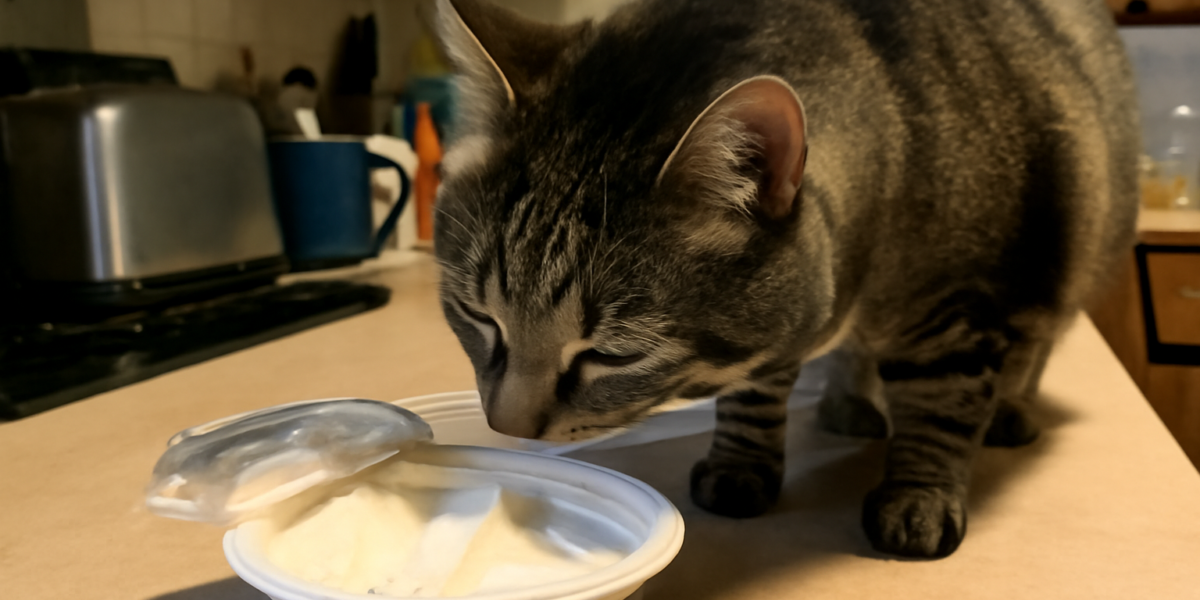
Cats can have a tiny crumb-sized taste of plain mascarpone occasionally, but it is on the edge of “more risk than reward” because of its very high fat content. Mascarpone is an Italian cream cheese made by adding citric acid or tartaric acid to heavy cream and gently heating it until the cream thickens. The result is a smooth, rich, buttery-tasting cheese that is roughly 44 percent fat — among the fattiest cheeses commonly available. Lactose content is lower than many fresh cheeses, but the fat is the issue.
The answer to “can cats eat mascarpone” is yes, in tiny amounts, only for healthy adult cats with no history of pancreatitis, no weight issues, no diabetes, and no GI sensitivity. Skip mascarpone entirely for kittens, seniors, overweight cats, diabetic cats, or cats with any pancreatitis history. Never share tiramisu — the espresso (caffeine), Marsala wine (alcohol), sugar, and sometimes raw eggs are all problems for cats.
What Is Mascarpone?
Mascarpone originated in northern Italy, particularly the Lombardy region, where it has been made since at least the 16th century. Unlike most cheeses, it is not made by curdling milk with rennet. Instead, heavy cream is heated to about 85°C (185°F), and citric or tartaric acid is added. The acid causes the cream to thicken without forming distinct curds — it stays smooth and silky. The thickened cream is then cooled and drained briefly to remove excess whey.
The result is a soft, spreadable cheese with about 44 percent fat content, a mild slightly-sweet flavor, and a very smooth texture. It is the key ingredient in tiramisu and is also used in cream sauces, cheesecakes, fillings, and as a finishing touch on pastas. Sodium is low (about 35 mg per ounce), and lactose is moderate at around 3 grams per 100 g.
The Fat Problem and Pancreatitis Risk
Feline pancreatitis is more common than once thought, and many cases are subclinical or chronic. The pancreas inflammation can be triggered by a high-fat meal, an underlying disease (like diabetes or IBD), or sometimes idiopathically. Cats with one episode of pancreatitis are more likely to have future episodes, often triggered by dietary fat. Mascarpone, at 44 percent fat, delivers about 12 grams of fat per ounce — a significant load for a 10-pound cat with a daily fat budget around 5 to 12 grams depending on activity and food type.
Symptoms of feline pancreatitis are subtle compared to canine pancreatitis. Cats often present with reduced appetite, lethargy, mild dehydration, low-grade fever, and intermittent vomiting. Pain is usually present but harder to detect — cats hide pain. Our feline pancreatitis guide covers the diagnostic approach. If your cat has had pancreatitis before, mascarpone is not worth the risk.
Who Should Skip Mascarpone Entirely
Several categories of cats should never have mascarpone, even in tiny amounts.
- Cats with a history of pancreatitis (acute or chronic)
- Diabetic cats — see our feline diabetes guide
- Overweight or obese cats (body condition score 6 or higher out of 9)
- Cats with inflammatory bowel disease — see our IBD overview
- Senior cats with chronic GI symptoms or weight loss
- Kittens — see our kitten feeding guide
- Cats on a prescription diet for any chronic condition
For these cats, even a small fat indulgence can flare an underlying problem. Stick to your vet’s prescribed treats or skip extras entirely. The number of cats that fall into “perfectly healthy adult with no GI history” is smaller than many owners think — when in doubt, skip the mascarpone.
Lactose Considerations
Mascarpone has moderate lactose content. Most adult cats produce only small amounts of lactase enzyme after weaning, so any meaningful dairy serving can trigger gas, loose stool, or diarrhea. The lower lactose of mascarpone (compared to fresh milk) makes it slightly more tolerable than a saucer of milk, but the fat issue overshadows the lactose issue here.
For cats that tolerate dairy, alternative lower-fat options include cottage cheese and plain yogurt. Cream cheese is similar to mascarpone but slightly lower in fat (about 33 percent versus 44 percent). All are best in tiny amounts and only for healthy cats.
Safe Serving Size for Healthy Cats
If you decide to share mascarpone with a healthy adult cat that has no medical conditions, here is the conservative approach.
- Use plain mascarpone — no flavorings, no sweeteners, no toppings
- Offer a crumb-sized taste, less than a quarter-teaspoon
- Use a clean spoon or your finger, never let the cat eat from the container
- Limit to once a month or less
- Watch for vomiting, soft stool, lethargy, or reduced appetite over 24 to 48 hours
- Stop offering mascarpone if any GI symptoms appear
The risk-reward ratio for mascarpone is poor compared to other dairy options. If you have to choose a dairy treat, plain cottage cheese or plain yogurt offers similar novelty value at a much lower fat load.
Why You Cannot Share Tiramisu
Tiramisu is the most famous mascarpone dish, and for cats it is one of the worst possible foods. The list of problems goes well beyond the cheese.
- Espresso or strong coffee — caffeine is toxic to cats, even small amounts cause restlessness, rapid heart rate, tremors, and seizures
- Marsala wine or rum — alcohol is highly toxic to cats; small amounts cause severe symptoms
- Sugar — diabetic and overweight cats; cats cannot taste sweetness but absorb sugar
- Raw or partially-cooked eggs — Salmonella risk and avidin which binds biotin
- Cocoa powder dusting — chocolate is toxic to cats
- Lady fingers — wheat-based, often with added sugar
If your cat steals a bite of tiramisu, the caffeine and alcohol exposure are usually the most urgent concerns. Call your vet or the Pet Poison Helpline (855-764-7661) immediately and bring the package or recipe to give them an ingredient list.
How Mascarpone Compares to Other Cat Cheeses
Mascarpone is the highest-fat fresh cheese most cats encounter. Among the cheeses covered in this batch, the comparative profile is roughly:
- Paneer — moderate fat, low lactose, low sodium (better choice)
- Labneh — moderate fat, low lactose, variable sodium (better unsalted)
- Feta — moderate fat, very high sodium (skip)
- Mascarpone — very high fat, moderate lactose, low sodium (skip for fat-sensitive cats)
For a broader view of cat cheese options, see our general cheese guide and blue cheese article. Aged hard cheeses like parmesan are lower in lactose but very high in sodium — different problem, similar caution.
Symptoms to Watch For After Mascarpone
If your cat has tried mascarpone for the first time, watch for the following over 24 to 48 hours.
- Vomiting, especially repeated
- Soft stool or diarrhea
- Reduced appetite at the next regular meal
- Lethargy or hiding
- Abdominal tenderness when picked up
- Hunched posture or reluctance to move
- Increased thirst (less likely than with salty foods)
Mild GI upset usually resolves within 24 hours with bland food (plain boiled chicken) and water. Persistent vomiting, repeated soft stool, or any signs of pain warrant a vet call. Cats showing pancreatitis-like symptoms (reduced appetite plus lethargy plus mild dehydration) need same-day evaluation.
What to Avoid Entirely
Several mascarpone-containing foods are unsafe for cats and should be kept fully out of reach.
- Tiramisu (caffeine, alcohol, sugar, raw egg, cocoa)
- Cheesecake with mascarpone (sugar, often graham cracker crust)
- Mascarpone-stuffed pastas with garlic and onion
- Sweet mascarpone fillings with chocolate or fruit syrups
- Mascarpone whipped cream or dessert toppings with added sugar
- Coffee-flavored mascarpone preparations of any kind
If your cat eats any of these, the most urgent concern depends on the recipe. Caffeine, alcohol, chocolate, garlic, and onion are all toxicities that may need immediate vet attention regardless of how much mascarpone was eaten.
Fat Math for Cat Owners
Understanding feline fat tolerance helps put mascarpone in context. A healthy 10-pound cat eating about 200 to 250 calories per day needs roughly 9 to 14 grams of fat from a balanced diet. Commercial complete-and-balanced cat foods deliver this fat in the right ratio of saturated to unsaturated, with omega-3 and omega-6 fatty acids supplied through animal sources. A single tablespoon of mascarpone (about 14 grams) contains 6 grams of fat — half a healthy cat’s daily fat budget in one bite, in a form (saturated dairy fat) that is not optimal for feline metabolism.
Cats with subclinical pancreatitis can be tipped into clinical disease by a single high-fat indulgence. Cats with weight problems compound the issue: extra body fat raises insulin resistance, which raises diabetes risk, which compounds pancreatitis vulnerability. Each fatty treat builds on previous metabolic stress. For overweight cats, structured weight management with vet supervision plus environmental enrichment from puzzle feeders and structured exercise works far better than restricting one specific treat.
Multi-cat households need extra vigilance because food often gets shared between cats. A “treat for one” frequently becomes a treat for all. If one cat in your household has pancreatitis, diabetes, or weight issues, the household standard becomes “no high-fat treats for any cat.” Our multi-cat feeding guide covers strategies for managing different dietary needs under one roof.
Frequently Asked Questions
How much mascarpone is too much?
For a healthy adult cat, more than a quarter-teaspoon is too much. For an at-risk cat (any of the categories above), any amount is too much.
My cat ate a small piece of plain mascarpone. Should I worry?
For a healthy cat, no — watch for vomiting or soft stool over 24 hours and your cat will likely be fine. For a cat with pancreatitis history, diabetes, or weight issues, call your vet for tailored advice.
Is reduced-fat mascarpone safer for cats?
It would lower the fat issue, but reduced-fat mascarpone is uncommon and the gains are modest. The category overall is not a recommended cat treat — choose cottage cheese or plain yogurt instead.
Can mascarpone cause weight gain in cats?
Yes — at roughly 120 calories per ounce, even a tablespoon adds meaningful calories to a cat’s daily intake. Repeated indulgences contribute to obesity, which raises diabetes and pancreatitis risk. Indoor exercise and puzzle feeders are better enrichment than fatty treats.
What if my cat ate tiramisu?
Call your vet or the Pet Poison Helpline immediately. The caffeine and alcohol content are the urgent concerns, regardless of how much mascarpone was in the bite.


