
Last updated: May 16, 2026
In this article
- The Short Answer on Cats and Labneh
- What Is Labneh?
- Lactose, Live Cultures, and Cat Tolerance
- Salt Is the Bigger Issue Than Lactose
- IBD and Sensitive Stomachs
- Safe Serving Size for Healthy Cats
- Probiotic Benefits — Real or Marketing?
- How Labneh Compares to Other Cat Dairy
- Symptoms to Watch For After Labneh
- What to Skip Entirely
- Middle Eastern Mezze and Cat-Safe Sharing
- Frequently Asked Questions
The Short Answer on Cats and Labneh
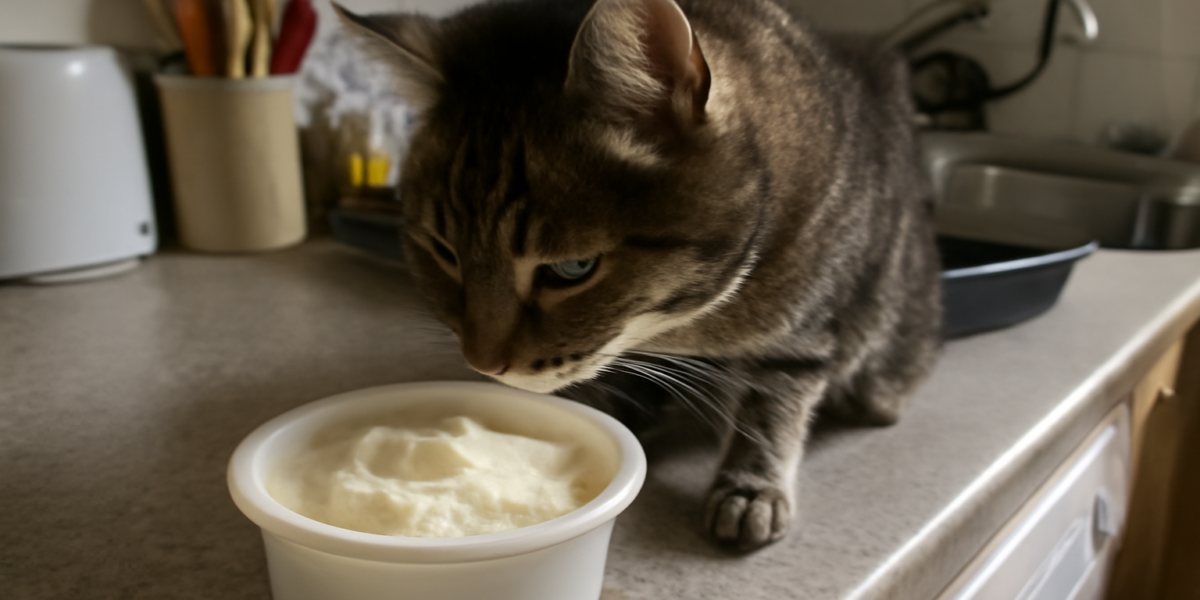
Cats can have a tiny taste of plain unsalted labneh occasionally. Labneh is a Middle Eastern strained yogurt cheese — yogurt that has been hung in cheesecloth or muslin to drain off most of the whey, leaving a thick, creamy product somewhere between Greek yogurt and cream cheese in texture. The straining removes a meaningful portion of the lactose along with the whey, and live yogurt cultures have already pre-digested some of what remains. That makes labneh more tolerable for adult cats than fresh milk or many other dairy products.
Still, dairy is dairy, and cats are obligate carnivores. The answer to “can cats eat labneh” is yes in very small amounts, only for healthy cats, and only the plain unsalted version. Salt-cured labneh balls (preserved in olive oil with sea salt) and seasoned labneh dips with garlic, mint, or za’atar are off the table. The right portion size is roughly a quarter-teaspoon at most, no more than once or twice a month.
What Is Labneh?
Labneh (also spelled labna, labanya, or strained yogurt cheese) is a staple across Lebanese, Syrian, Palestinian, Jordanian, Israeli, Turkish, and broader Middle Eastern and North African cuisines. To make it, plain yogurt is salted lightly and poured into a cloth-lined sieve, then hung over a bowl to drain in the refrigerator for 12 to 48 hours. The whey drips out, leaving a thick spreadable cheese. It can be used immediately or rolled into balls and preserved in olive oil with herbs and salt.
Plain unsalted labneh has a tangy, refreshing flavor and a soft cream-cheese-like texture. It is high in protein per calorie compared to most fresh cheeses, contains live probiotic cultures (typically Lactobacillus bulgaricus and Streptococcus thermophilus), and has lower lactose content than the yogurt it was made from. Sodium varies — homemade unsalted labneh has very little, while traditional salted versions can have 200 to 400 mg of sodium per 100 g.
Lactose, Live Cultures, and Cat Tolerance
Most adult cats are lactose intolerant to varying degrees. They produce far less lactase enzyme as adults than they did as nursing kittens. The undigested lactose ferments in the colon, producing gas, drawing water into the bowel, and causing diarrhea. The good news for labneh is that it has two factors working in its favor.
First, the straining process removes most of the whey, which is where the lactose lives. Plain Greek-style yogurt has about 4 g of lactose per 100 g; labneh, after extended straining, can have under 2 g per 100 g. Second, the live cultures in yogurt actively ferment lactose into lactic acid, further reducing the lactose your cat would need to digest. Some cats with mild lactose intolerance handle yogurt and labneh better than they handle straight milk for these reasons. That said, individual sensitivity varies, and some cats simply do not tolerate any dairy.
Compare with our cat yogurt guide — labneh is essentially a more concentrated, lower-lactose version of yogurt with similar tolerance considerations.
Salt Is the Bigger Issue Than Lactose
Traditional labneh recipes salt the yogurt before straining, often at a rate of about half a teaspoon of salt per cup of yogurt. Labneh balls preserved in oil are typically much saltier still, because salt acts as the preservative. For a cat, this is the more pressing concern than the lactose. A teaspoon of salted labneh contains roughly 50 to 80 mg of sodium, which is meaningful for a 10-pound cat with a daily sodium budget around 40 to 50 mg from food.
Cats with chronic kidney disease (around 30 to 50 percent of senior cats), heart disease, or hypertension benefit from sodium-conscious diets. Cats with hypertrophic cardiomyopathy — the most common feline heart disease — should avoid added-sodium foods entirely. See our HCM guide and CKD guide for diet considerations. If you make homemade labneh, an unsalted batch (made by simply omitting the salt during preparation) is the only version appropriate for any cat sharing.
IBD and Sensitive Stomachs
Cats with inflammatory bowel disease (IBD) often react poorly to dairy regardless of lactose level. The proteins in dairy — casein and whey proteins — can trigger immune responses in cats with food sensitivities. Symptoms include chronic intermittent diarrhea, vomiting, weight loss, and reduced appetite. Our IBD overview covers the diagnostic and dietary approach.
If your cat has been diagnosed with IBD, food sensitivity, or chronic GI symptoms, skip labneh and all dairy. Probiotic supplementation, when indicated, is better delivered via vet-approved feline probiotic products that do not carry the dairy protein load. Cats with sensitive stomachs without a formal diagnosis should also approach dairy cautiously — a labneh trial in a sensitive cat can flare symptoms for days.
Safe Serving Size for Healthy Cats
If you choose to share a tiny taste of plain labneh with a healthy adult cat, here is the conservative approach.
- Use plain unsalted labneh — homemade or specifically labeled “no salt added”
- Offer about a quarter-teaspoon (the size of a pencil eraser)
- Use a clean dish or your finger; do not let the cat eat from the container
- Limit to once or twice a month at most
- Watch for diarrhea, vomiting, gas, or appetite change over 24 hours
- Stop offering if any GI symptoms appear
Do not add za’atar, olive oil, garlic, mint, or other Middle Eastern flavorings. Garlic in particular is toxic to cats — see our garlic safety guide. The plain unsalted version is the only one appropriate for occasional cat sharing.
Probiotic Benefits — Real or Marketing?
Live yogurt cultures are sometimes marketed as probiotic boosters for pets. The reality is more nuanced. Cats do have a gut microbiome that benefits from balanced flora, but the human-derived strains in most yogurts and labnehs are not necessarily the most appropriate for the feline gut. Veterinary-grade probiotics formulated for cats use species-specific strains and verified colony-forming-unit counts.
A tiny taste of labneh is unlikely to harm a healthy cat and may provide a small probiotic effect, but it is not a substitute for vet-prescribed probiotics if your cat needs them. For cats with chronic diarrhea, antibiotic recovery, or stress-related GI issues, ask your vet about feline-specific probiotic products like FortiFlora or Proviable rather than relying on dairy.
How Labneh Compares to Other Cat Dairy
Among the dairy products cats might encounter, labneh is in the more tolerable tier alongside yogurt and cottage cheese — all three have lower lactose and live cultures. Cream cheese is similar in texture but generally has higher fat. Aged cheeses are lower in lactose but higher in sodium and saturated fat. Blue cheese is best avoided entirely because of the mold cultures.
Sibling B109 articles cover related cheeses with their own profiles: paneer (similar fresh-cheese category), feta (very high sodium), and mascarpone (very high fat). For a dairy-free probiotic-style option, coconut yogurt is sometimes used — though plant milks come with their own considerations.
Symptoms to Watch For After Labneh
If your cat has tried labneh for the first time, watch for the following over 12 to 24 hours.
- Vomiting
- Loose stool or diarrhea
- Excessive gas or visible abdominal discomfort
- Refusal of the next meal
- Lethargy or hiding
- Increased thirst (could indicate sodium load if salted)
Mild symptoms usually pass within 24 hours with fresh water and a return to the regular diet. Persistent vomiting or diarrhea lasting more than 24 hours, signs of dehydration, or any unusual behavior warrants a vet call. Cats with pre-existing conditions should be assessed sooner.
What to Skip Entirely
Several labneh products and dishes should be kept fully out of cat reach.
- Salted labneh balls preserved in olive oil — too much sodium
- Garlic-labneh dips and spreads — allium toxicity
- Za’atar-topped labneh — contains thyme, salt, sumac, and sometimes sesame
- Labneh wraps or sandwiches with seasoned meats or pickles
- Sweet labneh desserts with honey and pistachios — sugar and nut shells can choke
- Flavored commercial labneh with fruit added — sugar load
If your cat steals a bite of seasoned labneh, identify the seasonings. Garlic exposures may warrant a vet call independent of the dairy issue.
Middle Eastern Mezze and Cat-Safe Sharing
Mezze platters — small-plate spreads typical of Middle Eastern hospitality — combine many ingredients that are problematic for cats. A typical mezze includes labneh dip with garlic and olive oil, hummus with garlic and tahini, baba ganoush with garlic, tabbouleh with onion and parsley, olives in brine, pickled vegetables, and pita bread. Most of these have one or more cat-unfriendly components — garlic and onion are the most concerning.
If you host mezze meals, treat them as cat-free zones. Eat at a table the cat cannot reach. Cover any plates that need to sit out. Clear leftovers within an hour. The combination of strong savory smells, social distraction, and accessible serving plates makes mezze events one of the higher-risk scenarios for cat households. A cat that licks garlic-laden labneh off a plate has been exposed to allium toxins regardless of how much labneh was actually consumed.
For your own cooking, separate a small portion of plain unsalted yogurt or labneh before adding garlic, salt, or seasonings. That tiny clean portion can be your cat’s enrichment treat (if you choose to share at all), while the seasoned version goes on the family table. This pre-seasoning split is the simplest way to avoid accidental garlic exposure during dairy sharing.
Frequently Asked Questions
Is labneh safer than yogurt for cats?
Slightly — labneh has lower lactose because of the straining. Both are tolerated in tiny amounts by most healthy adult cats; both can cause diarrhea in lactose-sensitive cats.
Can my cat eat the salted labneh balls from the deli?
No. The salt content is too high, and many are flavored with garlic or herbs. Skip these.
How often can I offer plain labneh?
Once or twice a month at most, in quarter-teaspoon portions, for healthy adult cats only. Less is better.
Will labneh help my cat’s digestion?
Probably not in any meaningful way. The probiotic effect from a tiny taste is minimal, and feline-specific probiotics are a more reliable option if your vet thinks they would help.
Can kittens or senior cats have labneh?
No. Kittens should stick to a balanced kitten food. Seniors are more likely to have kidney or GI conditions that make any dairy a poor choice. See our senior cat care guide for diet adjustments.


