
Last updated: May 16, 2026
In this article
- Quick Answer: Avoid Halloumi for Cats
- What Halloumi Is and Why Brining Matters
- The Sodium Problem in Detail
- Why HCM-Prone Breeds Are Particularly at Risk
- Halloumi’s Other Problems for Cats
- What If My Cat Already Ate Halloumi?
- Halloumi Compared to Other Brined Cheeses
- Why We Recommend Skipping Halloumi Entirely
- Cats Who Must Not Have Halloumi
- Practical Alternatives for Cheese-Curious Cats
- Frequently Asked Questions
Quick Answer: Avoid Halloumi for Cats
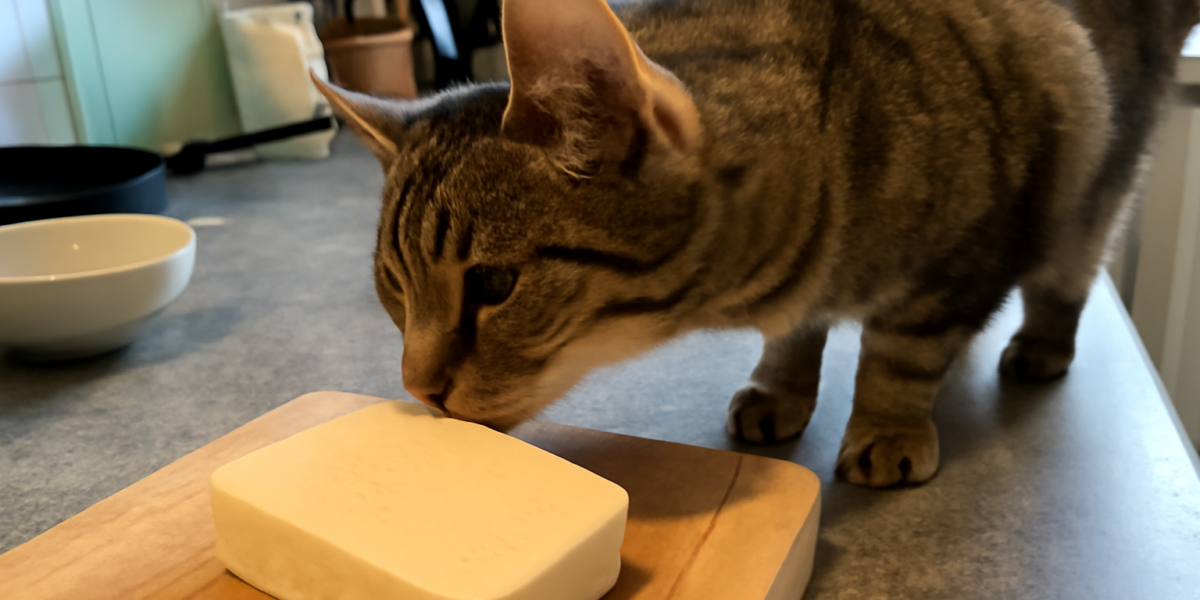
Halloumi is one of the cheeses we recommend cats avoid. It is a brined semi-hard cheese from Cyprus, traditionally made from sheep and goat milk (sometimes with cow’s milk added), and brining is the dominant flavor and preservation strategy. The result is a cheese with extraordinarily high sodium, around 1,100 milligrams per ounce, which is more than double the sodium of parmesan and nearly triple the sodium of typical aged cheddars. For cats, that sodium load is genuinely dangerous, especially for cats with HCM, CKD, hypertension, or HCM-prone breeds like Maine Coons, Ragdolls, British Shorthairs, and Persians.
If a tiny crumb is unavoidable (a child sharing, a cat licking a forgotten plate), a healthy cat will likely be fine with a one-time exposure of a quarter-pea-sized piece. The right approach for any deliberate sharing is to skip halloumi entirely. The texture, salt level, and frequent presence of olive oil and herbs in halloumi preparations all stack risks. There is no nutritional reason to share halloumi with your cat, and the alternatives among soft cheeses are clearly safer.
What Halloumi Is and Why Brining Matters
Halloumi originated in Cyprus and has been made in essentially the same way for centuries. Curds are formed from sheep, goat, or cow milk (or a blend), pressed into rectangular blocks, and then immersed in salty brine for storage. The brine both flavors the cheese and preserves it, allowing halloumi to be stored at warm Mediterranean temperatures before refrigeration was common.
The brining is what creates the extreme sodium concentration. Other cheeses are salted during cheesemaking; halloumi is essentially saturated with salt because it sits in salt water for storage. The cheese also has a higher melting point than most cheeses, which is why halloumi can be grilled or fried without melting into a puddle. That grillable texture is part of halloumi’s culinary appeal, but it also means halloumi rarely arrives unaccompanied by olive oil, lemon juice, or herbs in human dishes.
Halloumi sits at the high-sodium extreme of the cheese spectrum. Compare to feta, another brined cheese, which is also high in sodium but typically lower than halloumi. The cheese-category overview at our cheese guide for cats places halloumi at the avoid end.
The Sodium Problem in Detail
Halloumi contains approximately 1,100 to 1,200 milligrams of sodium per ounce. To put that in perspective, an average ten-pound adult cat needs about 42 milligrams of sodium per day for maintenance. A single ounce of halloumi delivers more than 25 times that daily minimum. Even a single small bite of halloumi (a quarter ounce) delivers 275 to 300 milligrams of sodium, more than six times the daily need.
Healthy cats can excrete excess sodium through urine, but the kidneys do work to do so, and chronic sodium overload contributes to hypertension and accelerates kidney function decline over time. For cats with already-compromised kidney function (CKD), the sodium load is worse. For cats with cardiac disease, particularly HCM, increased blood volume from sodium retention adds workload to a heart that is already struggling to pump efficiently.
Read our HCM guide and CKD overview for the disease-specific implications. The short version: halloumi is inappropriate for these cats.
Why HCM-Prone Breeds Are Particularly at Risk
Hypertrophic cardiomyopathy has a known genetic component in several cat breeds. Maine Coons and Ragdolls have identified mutations (MYBPC3) that increase HCM risk. British Shorthairs, Persians, and Sphynx are also overrepresented in HCM populations. Mixed-breed cats can develop HCM as well; the disease is the most common heart disease in cats overall, affecting roughly 15 percent of all cats.
For a cat in any of these breed categories, or any cat with a known heart murmur, dietary sodium discipline is part of long-term management. Halloumi’s sodium content makes it incompatible with that discipline. The same logic applies to cured meats (prosciutto, salami), salted snacks, and brined olives, all of which deliver too much sodium for heart-sensitive cats.
If you do not know whether your cat has HCM, screening with echocardiography is the gold standard, and many breeders test breeding cats. For owners of HCM-prone breeds, sodium-heavy treats like halloumi should simply be off the table.
Halloumi’s Other Problems for Cats
Beyond sodium, halloumi has several other issues that compound the risk:
Lactose: Halloumi has moderate lactose because it is not aged. The lactose content varies by milk source (sheep, goat, cow), but it is high enough to trigger GI upset in lactose-intolerant cats. Goat-milk halloumi has slightly less lactose than cow-milk halloumi, but the difference is small.
Fat: Halloumi is around 25 percent fat, putting it in the high-fat cheese category. For cats with pancreatitis history, this adds risk on top of the sodium problem.
Preparation context: Halloumi is almost always served grilled or pan-fried, often with olive oil, lemon juice, herbs (mint, oregano), garlic, or honey-mint dressing. Olive oil is calorie-dense, lemon juice contains essential oils unsafe for cats, mint is borderline, and garlic is toxic. The way halloumi appears in meals is rarely cat-friendly.
Squeaky texture: Halloumi has a distinctive squeaky chew texture that comes from its high melting point and protein structure. The texture is harder for cats to chew through, increasing choking risk for cats that gulp.
What If My Cat Already Ate Halloumi?
If your cat had a small accidental taste of halloumi, perhaps from a child’s plate or a forgotten dinner, do not panic. A single small exposure is unlikely to cause acute toxicity in a healthy adult cat. Provide fresh water and watch for the next 12 to 24 hours.
Symptoms to watch for include excessive thirst, increased urination, vomiting, diarrhea, lethargy, tremors, or disorientation. The first three are common with sodium loads and usually resolve as the cat clears the salt. The latter symptoms suggest more significant sodium toxicity and warrant immediate vet attention.
If your cat has known HCM, CKD, or hypertension, even a small accidental exposure to halloumi should prompt a call to your vet. The vet may want to monitor blood pressure or run a quick blood panel depending on the cat’s baseline status. Do not induce vomiting at home unless directed by a professional.
Halloumi Compared to Other Brined Cheeses
Halloumi is at the extreme end of the brined-cheese category, but other brined cheeses share similar concerns. The feta cheese family is also brined and high in sodium, though typically lower than halloumi. Blue cheese is salted heavily during production but not brined the same way; we recommend skipping blue cheese for different reasons (mold cultures). Fresh cheeses like cottage cheese and paneer are made without brining and tend to be much lower in sodium, which is why they sit in the “tiny amounts may be tolerated” zone instead of the avoid-entirely zone halloumi occupies. Even cultured fresh styles like labneh stay below halloumi’s sodium load by an order of magnitude.
If you are looking for a brined-cheese alternative that is somewhat less risky, fresh mozzarella in tiny amounts is lower in sodium and lower in lactose than halloumi. None of these are species-appropriate cat food, but mozzarella is closer to the “tolerable in tiny amounts” category than halloumi is. Our yogurt guide for cats covers the broader cultured-dairy spectrum and helps explain why heavily brined products sit at the avoid end while plain cultured options land in tolerable territory.
Why We Recommend Skipping Halloumi Entirely
The decision tree for sharing food with cats has a few questions: Is it nutritionally beneficial? Is it safe? Will it cause problems for cats with common health issues? Is there a safer alternative?
For halloumi, the answers are: no, marginally for healthy cats but no for sick cats, yes for the substantial fraction of cats with HCM or CKD, and yes (almost any other cheese is safer in tiny amounts). When all four answers point one direction, the prudent recommendation is to skip.
This is different from cheeses we describe as “tiny amounts only.” Those cheeses (cottage cheese, ricotta, mild gouda, plain brie) have profiles where a small portion is unlikely to harm a healthy cat. Halloumi’s sodium content makes even small portions clinically meaningful for the meaningful percentage of cats with subclinical heart or kidney disease.
Cats Who Must Not Have Halloumi
Several profiles warrant absolute avoidance:
- Cats diagnosed with HCM or any cardiac condition
- Cats diagnosed with CKD at any stage
- Cats with hypertension
- Cats with hyperthyroidism (often have hypertension)
- HCM-prone breeds (Maine Coon, Ragdoll, British Shorthair, Persian, Sphynx) without recent echocardiogram screening
- Cats with pancreatitis history
- Cats with confirmed dairy allergy
- Senior cats (over 10 years), who have higher background risk of CKD and HCM
- Kittens under six months
That list covers a substantial fraction of household cats, which is part of why we recommend skipping halloumi as a general rule.
Practical Alternatives for Cheese-Curious Cats
If your cat shows interest in cheese smells and you want to offer something cheese-flavored, consider commercial cat treats with cheese flavor formulated for feline nutrition. Several brands offer cheese-flavored crunchy treats that deliver the umami flavor without the sodium load. Read the label for sodium per treat; under 5 milligrams per treat is reasonable.
If you want to share something from your plate, plain cooked chicken, plain cooked salmon, or plain cooked turkey are species-appropriate options. A small piece of plain unsalted scrambled egg is another reasonable share. None of these come with halloumi’s risk profile.
Frequently Asked Questions
Is goat-milk halloumi safer than cow-milk halloumi?
Slightly, because goat milk has marginally lower lactose. The sodium content is similar, so the dominant concern is unchanged. Skip both for cats.
What if I rinse halloumi to reduce the salt?
Rinsing reduces surface salt but the sodium is distributed throughout the cheese, not just on the surface. Rinsing helps marginally but does not make halloumi safe for cats. Skip.
Can I give my cat halloumi if I cook it without oil or seasoning?
Plain pan-cooked halloumi without oil still has the sodium and lactose problems. Cooking does not change the salt content. Skip.
My cat licked a halloumi crumb off the floor. Should I worry?
A single tiny lick is unlikely to cause acute problems in a healthy cat. Provide water and watch for symptoms. Call your vet if your cat has HCM, CKD, or other diagnosed conditions.
Are there any cheeses I can share with my HCM cat?
For cats with diagnosed HCM, the safest answer is no cheese at all. Talk to your vet about appropriate treats; commercial cardiac-prescription treats exist and are formulated for sodium control.


