
Last updated: May 16, 2026
In this article
Quick Answer: Yes, in Tiny Unsalted Portions
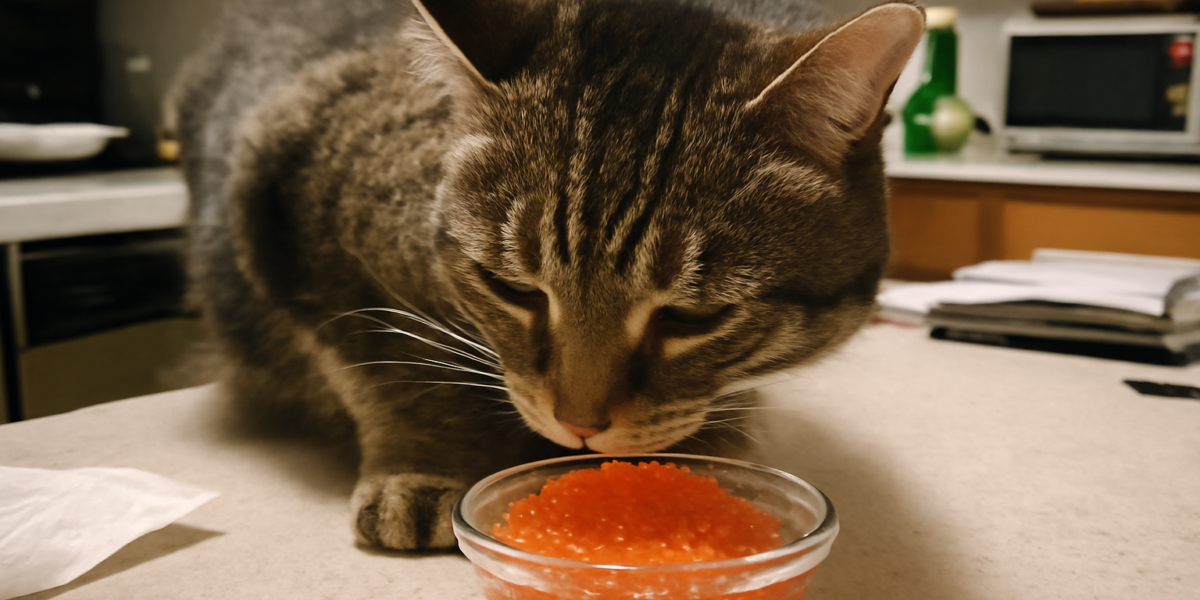
Yes, cats can eat salmon roe in moderation, but only the right kind. Plain, unsalted, lightly cured or fresh salmon roe in pea-size portions is fine for most healthy adult cats. The sodium concern is enormous: most commercial salmon roe sold for human sushi (the bright orange “ikura”) is heavily salt-cured, and a single tablespoon can carry over 1,500 mg of sodium — far more than a cat should eat in a day. The mercury and parasitic concerns of salmon roe are lower than for many fish, but the salt cure is the deal-breaker for most retail products.
If your cat snatched a couple of roe beads off your plate, that’s not an emergency. If you want to add salmon roe to a feline diet for variety or omega-3, sourcing matters more than serving size. This article walks through how to choose, prep, and portion roe so it’s actually safe.
What Salmon Roe Is
Salmon roe is the unfertilized egg mass from female salmon, typically harvested from chum, coho, or king salmon. In Japanese cuisine the bright orange beads are called “ikura,” meaning the eggs have been separated from the membrane and cured in salt or salt-and-soy brine. “Sujiko” is the salt-cured intact egg sac (whole roe still on the membrane). Russian-style red caviar is closely related: salt-cured salmon eggs.
Per ounce of plain (uncured) salmon roe you get roughly:
- 40-50 calories
- 7-8 grams of protein
- 2-3 grams of fat (mostly omega-3 DHA and EPA)
- Vitamin D, vitamin B12, selenium, and iodine
- Cholesterol (about 100 mg per ounce)
- Sodium content highly variable — under 100 mg/oz for fresh, over 1,500 mg/oz for some cured products
The omega-3 profile is genuinely good for cats — DHA supports brain function, EPA supports skin and joint health, and roe is one of the more bioavailable sources. The catch is that all of this comes with a salt and cholesterol package that has to be managed.
Why Sodium Is the Main Issue
An average healthy adult cat needs only about 21 mg of sodium per day from food. A cat eating a complete commercial diet already gets that and more. A teaspoon of salt-cured ikura can deliver several hundred milligrams of sodium — more than a week’s worth of dietary requirement in a single bite. Repeat exposures, or larger servings, can push a cat into hypernatremia (high blood sodium), with symptoms including:
- Excessive thirst and increased urination
- Vomiting and diarrhea
- Lethargy or weakness
- Tremors at very high doses
- Disorientation or seizures (severe cases only)
Cats with chronic kidney disease are especially vulnerable. The aging feline kidney handles sodium poorly, and cured roe represents a fast track to fluid retention and worsened CKD. Cats with hypertrophic cardiomyopathy or any heart condition should also avoid cured roe entirely.
The right approach is to source plain, unsalted roe from a fishmonger or sushi-grade supplier and rinse before serving. If the only roe you can find is salt-cured, accept that it’s a human sushi ingredient and not for your cat.
Mercury and Heavy Metals
Salmon are mid-trophic predators, meaning they accumulate less mercury than top predators like tuna and swordfish. Salmon roe specifically tends to have lower mercury than the muscle meat because eggs are produced relatively quickly and don’t bioaccumulate in the same way. For comparison, see our note on tuna in cat diets, where mercury is a much larger consideration.
That said, “lower mercury” doesn’t mean “no mercury.” Routine large servings of any fish product over months and years can build up. For cats, salmon roe should be a treat or topper a few times per month at most, not a daily addition.
Parasites and Raw Roe
Wild salmon can carry parasites, most notably Anisakis larvae, which can survive in the muscle and occasionally in roe. Commercial sushi-grade fish in the US is required to be flash-frozen at -4°F (-20°C) for at least 7 days, or -31°F (-35°C) for 15 hours, to kill parasites — this is why sushi-grade designation matters. Properly frozen ikura from a reputable supplier has had this treatment.
For cats, the safest choice is sushi-grade salmon roe that has been frozen per FDA Compliance Policy, then thawed and served. Avoid:
- Raw fresh salmon roe of unknown origin
- Roe from streams or backyard caught fish without freeze treatment
- Aged or “ripened” roe products that have a strong smell
If you’re not sure about the source, gently poach the roe in plain water for 30-60 seconds. The eggs will firm up slightly and any parasites are killed. Cooked roe is less prized in human cuisine but perfectly fine for cats.
Safe Serving Size
For a healthy adult cat with no kidney or heart issues, plain unsalted salmon roe makes a reasonable occasional topper. A safe portioning approach:
- 1/4 to 1/2 teaspoon plain roe sprinkled over wet food
- Up to twice per week, not daily
- Skip on weeks where you’ve also fed other fish (sardines, salmon, tuna)
- Always rinse cured roe in cold water briefly, even if you plan to portion small
Treats should make up no more than 10% of a cat’s daily calories. For a typical 10-pound cat eating about 250 calories per day, treats cap at 25 calories — a small spoonful of roe fits within that easily. The limit usually isn’t calories; it’s sodium.
Watch your cat after the first introduction. Some cats love the texture and smell, others ignore it. A small subset of cats are allergic to fish proteins and develop itchy skin or vomiting after exposure — discontinue if you see any reaction.
Roe Compared to Other Fish Options
Cats are obligate carnivores, and small amounts of fish fit naturally into their diet, but each fish source has trade-offs:
- Plain cooked salmon is a more practical regular fish than roe — same omega-3 benefits, lower sodium, easier to source.
- Sardines in spring water (no salt added) are an excellent low-mercury option packed with omega-3.
- Anchovies are similar to sardines but smaller and even lower mercury; watch sodium in salt-cured versions.
- Tuna should be infrequent because of mercury bioaccumulation.
- Caviar (sturgeon roe) is similar in nutrition but typically saltier than salmon roe and far more expensive.
If you’re feeding salmon roe occasionally as a treat, treat it as one slot in a varied fish rotation rather than the daily protein. Variety helps prevent any single contaminant or nutrient excess from building up.
Avoid These Forms of Salmon Roe
Several products labeled as salmon roe shouldn’t be fed to cats:
- Sushi-rolled roe: rice contains added sugar/vinegar; the wrap may contain seasoned soy paste; some rolls have added wasabi or scallion (allium — see onion toxicity in cats).
- Roe in soy sauce or teriyaki cure: extreme sodium, plus possible additional flavorings.
- Dyed orange “imitation roe”: often made from seaweed or potato starch with synthetic colors and high sodium.
- Smoked salmon products with roe: smoked salmon adds sodium and possible nitrate cures.
- Caviar or roe with onion or garlic garnish: a frequent restaurant presentation; both alliums are toxic to cats.
If a roe product comes with any sauce, garnish, or rice, treat it as a human dish, not a cat-safe ingredient.
Cats with Health Conditions
Several conditions make even small servings of cured salmon roe unwise. Skip if your cat has:
- Chronic kidney disease (any stage): sodium and phosphorus considerations
- Heart disease (HCM, dilated, or other): sodium drives fluid retention
- Inflammatory bowel disease: novel proteins should be introduced one at a time under vet guidance — see IBD in cats
- Pancreatitis history: see pancreatitis in cats guide — fatty fish products can trigger flares
- Diabetes: any high-fat treat affects glycemic control; clear with vet
- Hyperthyroidism: ask your vet about iodine in fish and roe
- Diagnosed fish allergy: skip entirely
For senior cats without confirmed disease, ask your vet for baseline bloodwork before adding rich treats. Senior cat health checks (see our senior cat care checklist) often reveal subclinical kidney issues that change the calculation.
Practical Sourcing Tips
If you want to add unsalted salmon roe to your cat’s rotation:
- Buy from a fishmonger that supplies sushi restaurants — ask specifically for “sushi-grade, unsalted” or “wild salmon roe, fresh”
- Check the ingredient list on packaged roe — it should say “salmon roe” only, not “salmon roe, salt, sodium, sodium tripolyphosphate, color”
- Pay attention to packaging dates; fresh roe spoils within 5-7 days of opening
- Freeze unused portions in small ice-cube trays for single servings
- Rinse briefly in cold water before serving to wash off any residual cure
For a wider view of feline nutrition, browse the cat care library. Cats benefit from variety done right, and roe done right is a small but valuable addition for adventurous eaters.
Frequently Asked Questions
My cat ate a piece of sushi with ikura on top. Should I worry?
For a healthy adult cat, a single small exposure to ikura is unlikely to cause serious harm — expect possible vomiting or excess thirst over the next few hours. The bigger risk is the rest of the sushi: rice with vinegar/sugar, possible scallion or onion garnish, or wasabi. If your cat ate a full sushi piece, watch for any GI upset. Call Pet Poison Helpline at 855-764-7661 if you see lethargy, repeated vomiting, or any sign of allium exposure.
Is it true salmon roe has too much vitamin A for cats?
Salmon roe contains some vitamin A, but the levels per serving size cats actually eat are not in the hypervitaminosis A range. The bigger vitamin A concern in cat diets is excessive liver feeding — see our companion articles on chicken liver pate and pork liver.
Can kittens have salmon roe?
Best to skip until adulthood. Kittens need a tightly balanced kitten formula and don’t need extras with sodium and cholesterol. Once your cat is on an adult maintenance diet, you can experiment with very small amounts.
How do I store leftover salmon roe?
Refrigerate in an airtight container for up to 3-5 days, or freeze in small portions for up to 2 months. Do not refreeze previously frozen roe. Smell test on opening — fresh roe has a clean ocean smell; off roe smells sharply fishy or sour.
Is roe better raw or cooked for cats?
Both work nutritionally. Raw roe (sushi-grade and properly frozen) preserves more enzymes and a slightly fresher flavor; lightly poached roe is texturally firmer and removes any residual parasite concern. For cats with weakened immune systems, kittens, or seniors, lightly cooked is the safer default.
What about lumpfish or whitefish “caviar”?
These are usually heavily salted, dyed, and contain preservatives. They’re closer to candy than to fresh roe nutritionally. Skip the dyed lumpfish products; if you want feline-friendly roe, stick with plain salmon or trout roe from a reputable source.


