
Last updated: May 16, 2026
In this article
- The Short Answer on Parsnips for Cats
- Why Parsnips Are More Carb-Heavy Than They Look
- Cooked Plain Parsnip: How to Offer a Taste
- Why Raw Parsnips Are a Problem
- Parsnips in Common Holiday and Comfort Recipes
- Diabetic Cats Should Avoid Parsnips
- Other Cats Who Should Skip Parsnips
- Better Vegetable Options for Curious Cats
- Quick Comparison: Parsnips vs Carrots vs Sweet Potato
- What to Do If Your Cat Eats Too Much Parsnip
- The Sugar Profile and Why Cats Rarely Beg for Parsnip
- Frequently Asked Questions
The Short Answer on Parsnips for Cats
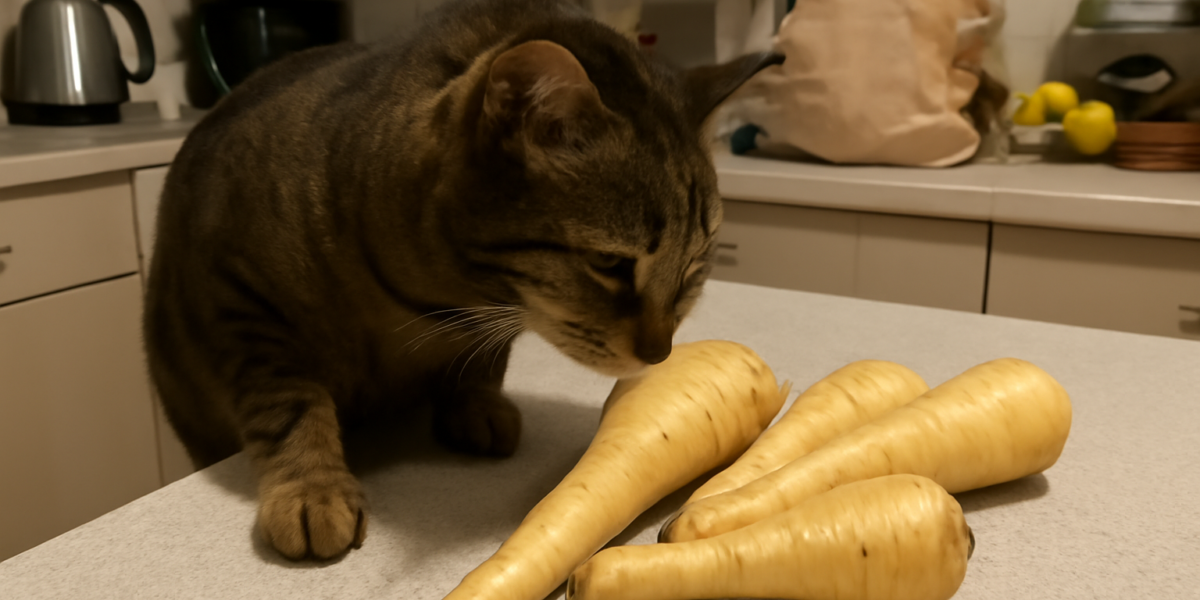
Can cats eat parsnips? Yes, in tiny moderation, when they are plain and fully cooked. A small piece of soft cooked parsnip is generally safe for a healthy adult cat to taste, but parsnips are a starchy root vegetable that brings nothing nutritionally essential to a feline diet. Cats are obligate carnivores, and starchy roots sit on the very edge of “tolerable” rather than “useful.” Raw parsnips, parsnips in butter or cream, parsnips with garlic and onion (the most common preparation), and any version with significant seasoning are not appropriate for cats.
The plain answer is that parsnips are an occasional curiosity food at best. If your cat steals a chunk off your roasting pan, you do not need to panic, but there is also no reason to make parsnips a feature of her diet. Save the calories and the digestive work for foods her body actually uses.
Why Parsnips Are More Carb-Heavy Than They Look
Parsnips look like pale carrots, and most people assume they have similar nutritional profiles. They do not. Parsnips contain meaningfully more starch and natural sugar than carrots, which is part of why they taste sweet when roasted and why they caramelize so dramatically in the oven. By weight, cooked parsnip is closer to a potato in carbohydrate content than to a leafy green or even a carrot.
For an obligate carnivore, that carb load is the central reason parsnips do not earn a regular place at the bowl. Cats evolved to extract energy from animal protein and fat. Their pancreas and liver are not as efficient at handling sudden carbohydrate spikes as a dog’s or a human’s. A small piece is fine for most healthy cats; a regular ingredient is unnecessary work for a body designed for a different fuel.
Cooked Plain Parsnip: How to Offer a Taste
If you want your cat to sample parsnip, the right preparation is straightforward. Peel a fresh parsnip, cut a small chunk, and either steam, boil, or bake it in plain water until completely soft when pierced with a fork. Let it cool fully. Mash a little or chop a piece smaller than the tip of your pinky finger and offer it on a plate or your finger. No butter, oil, salt, garlic, onion, honey, maple syrup, herbs, or pan drippings.
One pea-sized piece is a reasonable maximum for a tasting moment. Some cats will eat it; many will sniff and walk away. If your cat eats the piece, watch over the next day for vomiting, soft stool, drooling, or appetite changes. If she handles it cleanly and you want to repeat, treat parsnip as an occasional curiosity rather than a regular weekly food. There is no benefit to scaling up.
Why Raw Parsnips Are a Problem
Raw parsnips are firm, fibrous, and challenging for a cat’s digestive system. Cats lack the long, fermenting hindgut that lets a ruminant or a rabbit break down raw root vegetables, and they don’t produce the salivary or pancreatic enzymes needed to handle raw starch efficiently. A cat who eats raw parsnip is likely to get a piece of mostly intact vegetable matter through her gut, with possible vomiting, diarrhea, or constipation as the body works to clear it.
Raw parsnips also contain compounds called furanocoumarins (psoralens), present in higher concentrations near the skin and in damaged or stressed roots. In humans, contact with raw parsnip skin can cause photosensitive rashes (parsnip dermatitis). For cats, the dose involved in eating a small piece of raw root is unlikely to cause systemic photosensitivity, but it is one more reason to keep parsnip cooked. Heat reduces these compounds significantly.
Parsnips in Common Holiday and Comfort Recipes
Almost every parsnip dish humans love is unsuitable for cats. Roasted parsnips with olive oil, salt, and rosemary can be tolerated in tiny plain pieces if you separate one before adding seasoning, but the version on the table is too oily and salty. Mashed parsnip puree with butter and cream layers in dairy fat that many cats handle poorly. Parsnip-and-leek soup contains onion-family vegetables that damage feline red blood cells. Honey-glazed parsnips dump unnecessary sugar onto a vegetable already high in natural sugars.
The simplest rule for sharing: if you want your cat to taste parsnip, steam a piece before the rest of the parsnips meet the oil, salt, garlic, or anything else. After seasoning, the dish belongs to the humans only.
Diabetic Cats Should Avoid Parsnips
If your cat has been diagnosed with diabetes mellitus, parsnips should be off the menu entirely. The carbohydrate density and natural sugar content can complicate glycemic control, even in small amounts, especially for a small body where each gram of carbohydrate has a larger relative effect. Diabetic cats are typically managed on low-carb, high-protein diets specifically because reducing carbohydrate load helps stabilize blood sugar and may reduce insulin needs.
The same caution applies, with less urgency, to overweight cats and cats with insulin resistance markers on bloodwork. Adding starchy vegetable calories to a weight management plan undermines the structure your veterinarian has built. Stick to lean protein treats and the prescribed therapeutic diet.
Other Cats Who Should Skip Parsnips
Cats with chronic digestive issues, including inflammatory bowel disease, recurrent pancreatitis, or food sensitivities, do better without parsnip experiments. The fiber and starch can destabilize a gut that is already inflamed. Cats with chronic kidney disease are usually on tightly controlled prescription diets, and adding random table foods can disrupt protein, phosphorus, or potassium targets that matter for slowing disease progression.
Pregnant queens, nursing mothers, and kittens under a year should not get parsnip. The first two are working hard nutritionally and need a clean, predictable diet. Kittens are still developing digestive maturity and gain nothing from a starchy root.
Better Vegetable Options for Curious Cats
If your cat shows interest in vegetables and you want a low-risk taste to offer, several options are gentler than parsnip. Plain cooked broccoli florets, cauliflower, and cabbage are all leafy or floral structures with less starch than parsnip. Asparagus tips and celery ribs are tender and lower in carbohydrate.
For a leafy green moment, bok choy or arugula works as a tiny tasting. None of these vegetables are required, but they are simpler choices for an obligate carnivore than a starchy root.
Quick Comparison: Parsnips vs Carrots vs Sweet Potato
Among the orange-and-pale root family, carrots are the lowest in starch and sugar, parsnips are in the middle, and sweet potatoes are at the top. For cats, this means carrots are the most defensible curiosity vegetable in this group, parsnips are tolerable but unnecessary, and sweet potato is more of a stretch. Cooked plain carrot pieces or bell pepper strips are easier to share without worrying about glycemic load.
None of these vegetables provides the protein your cat actually needs. The point of an occasional vegetable taste is novelty and enrichment, not nutrition. Keep portions tiny, preparations plain, and frequency low.
What to Do If Your Cat Eats Too Much Parsnip
If your cat steals a large piece of cooked plain parsnip, the most likely outcome is mild digestive upset over the next day. Soft stool, gas, possibly a single bout of vomiting, and a temporary appetite dip can all be normal. Offer plenty of fresh water, hold extra treats, and stay on her usual feeding schedule. Most cats settle within twenty-four hours.
Call your veterinarian if vomiting persists, if she eats parsnip from a seasoned dish containing onion or garlic, if you see weakness or pale gums, or if she has a chronic condition that makes any dietary disruption risky. With diabetic cats specifically, an unexpected starch load can shift insulin needs; check her blood glucose if you have a home glucometer and call your veterinarian for guidance.
The Sugar Profile and Why Cats Rarely Beg for Parsnip
Parsnips taste sweet for a reason. They contain meaningful natural sugar even when raw, and the sugar concentration increases dramatically with cooking as starches break down into simpler sugars. A roasted parsnip glazed with honey or maple syrup can rival a small dessert in carbohydrate content per gram. Even a plain steamed parsnip has more readily available sugar than most owners realize.
For cats, this matters because feline metabolism is built around protein and fat as primary fuels. Cats do not get a meaningful insulin response from carbohydrate the way dogs and humans do, but they do convert excess dietary carbohydrate into fat efficiently. A regular dose of parsnip therefore translates to extra body weight in cats much more readily than the calories on a label might suggest. This is one reason starchy roots are not used as treats in feline weight management programs.
Cats also lack the sweet taste receptor that gives parsnip its appeal to humans. Without the sweetness, what is left is a starchy, slightly fibrous root vegetable with a mild aroma. Most cats sniff a parsnip and walk away, the same way most cats sniff a banana or a sweet potato and walk away. The cats who do investigate are usually responding to the warm cooked-vegetable smell — the buttery, oily aroma of a roasting tray rather than the parsnip itself.
If your cat is hovering around your roasted parsnips, what she actually wants is the butter and salt on the outside of the parsnip, not the parsnip itself. Giving her a piece of butter is worse than giving her a piece of plain parsnip, and giving her a piece of salty roasted parsnip combines the two problems. The simplest answer is to keep her away from the prep area on roasting day.
Frequently Asked Questions
Are parsnip greens safe for cats?
Parsnip greens (the leafy tops) contain higher concentrations of furanocoumarins than the root and can cause skin reactions on contact in humans. They are not a recommended food for cats. Stick to the cooked root if you are sharing parsnip at all.
Can cats eat parsnip chips or crisps?
No. Parsnip chips are fried, salted, and sometimes seasoned with garlic, onion, or vinegar. They are far too high in fat and sodium for a cat, and the seasonings can be outright toxic. Skip them entirely.
What about parsnip baby food?
Plain parsnip puree without onion or garlic might be tolerated in tiny amounts, but most savory baby foods include onion or garlic powder hidden in the ingredient list. Always check the label, and even then, parsnip baby food is not a recommended cat treat.
My cat licked parsnip soup. Should I worry?
If the soup contains onion, leek, garlic, or shallot, watch for vomiting, weakness, or pale gums over the next several days and call your veterinarian for guidance. Plain parsnip-and-cream soup without alliums is more likely to cause mild digestive upset than systemic toxicity, but the dairy content can still trigger loose stool.
Are roasted parsnips with rosemary safe?
The rosemary in tiny amounts is generally not a concern for cats, but the olive oil, salt, and any garlic make roasted parsnips a poor cat food. If you want her to taste parsnip, set aside an unseasoned cooked piece before the rest of the dish gets dressed.


